Shortcut-heavy settlement builders
You want camera, construction, management or interface commands within reach of your mouse hand, and you are willing to set up button assignments.


Choose a gaming mouse that fits your hand and puts useful controls within reach before focusing on maximum DPI. For long settlement-building sessions, programmable buttons help only if you can reach and remember their assignments, while the right scroll-wheel feel depends on how you navigate maps and menus. Wired suits a fixed desk without battery management; wireless is worth considering if cable freedom matters more to you.
You want camera, construction, management or interface commands within reach of your mouse hand, and you are willing to set up button assignments.
You spend extended periods placing buildings, managing resources and navigating menus, so hand fit matters more to you than a headline DPI figure.
You often move across maps or long menus and want to assess whether a configurable scroll wheel feels right for those actions.
Start with hand fit and the commands you would actually assign, then consider wheel behaviour and whether you want a wired or wireless desk setup.
| Concern | What to check | Who this matters to |
|---|---|---|
| Reachable shortcuts | Check the exact button layout and how assignments are configured; a higher button count is useful only if you can reach the controls. | If I regularly switch between building tools and management commands, I want a few shortcuts I can find without shifting my grip. Around 42% of consumers put reachable shortcut controls first. |
| Grip fit during long sessions | Compare handedness, shape and dimensions with your grip; check the seller’s returns terms if you cannot try the mouse. | When I spend a long session placing buildings, I need a shape that feels manageable in my hand rather than one chosen for its advertised sensitivity. Grip fit comes first for around 33% of consumers. |
| Map and menu navigation | Check for tactile or free-spin wheel modes where relevant, and whether you can adjust sensitivity to suit the game. | If I move through long menus and across the map frequently, I want scrolling that feels quick without losing control of small movements. Around 25% of consumers prioritise map and menu navigation. |
A large screen does not dictate one maximum DPI requirement. Grip fit, in-game sensitivity and how movement feels at your desk also affect control.
Set a comfortable in-game sensitivity, then make small mouse-setting adjustments if needed. Do not treat the highest advertised DPI as a reason to buy on its own.
Extra controls can help with recurring commands, but closely packed buttons may be hard to distinguish or easy to press accidentally.
List the actions you want to assign and inspect the exact side-button layout before choosing a mouse. Begin with a few bindings you can remember.
Hand size, handedness and grip vary. A mouse can offer useful controls yet still have a shape that does not suit you.
Check the dimensions and shape, try the mouse where possible, and read the seller’s change-of-mind returns terms before ordering.
GOV.UK guidance distinguishes product-marking frameworks for Great Britain and Northern Ireland; the applicable information depends on the product and where it is supplied.
For an imported or marketplace listing, confirm the intended UK region, seller, included connection accessories and relevant product information before ordering.
The G502 line is relevant if you want configurable controls. Logitech G describes the wired G502 X as having an adjustable DPI-shift button, a dual-mode scroll wheel and a stated weight of 89 g.
The right-handed Basilisk line is relevant if extensive button assignments and scroll-wheel options appeal to you.
The Rival 5 is relevant if you want mouse-hand shortcuts, including a quick-action side control.
These wired and wireless gaming mice offer different ways to approach a fixed-desk settlement-building setup. Compare their stated controls and connection options with your preferred grip, shortcut plan and scrolling needs.
 No image available
Consider this wireless model if you want to assign recurring settlement commands to mouse buttons and prefer a stated low weight. Its listing names 10 programmable buttons and a weight of 53 g; check the shape against your grip.
The advertised battery life of up to 750 hours applies at 1000 Hz with low-power mode enabled after a driver update. If fast map or menu scrolling matters to you, confirm the wheel behaviour before choosing it.
 No image available
Consider this model if you want a choice of connections at your desk: its title lists Bluetooth, 2.4G wireless and USB-C modes. Check that its shape and available button assignments suit the commands you use.
The listing gives conflicting weights of 63 g and 65 g, so confirm the weight for this variant if it affects your choice. Check the wheel behaviour if rapid map or menu scrolling is important to you.
 No image available
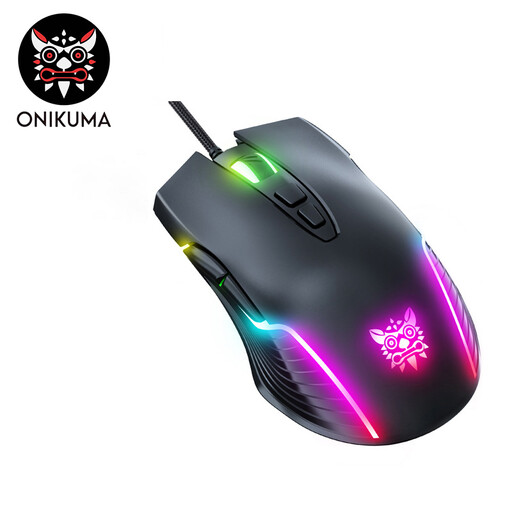
Consider this wired mouse for a fixed desk if you prefer not to manage a wireless battery. Its title identifies adjustable levels and programmable buttons; confirm how assignments are set up before relying on them for game shortcuts.
Check the shape and button reach for your hand, and confirm the wheel behaviour if you frequently scroll through maps or menus.
No particular maximum DPI follows from screen size alone. Choose a sensitivity that gives you comfortable control in the game; Logitech G’s G HUB guidance says compatible devices allow DPI adjustment.
They can help if you have repeated actions worth assigning and can reach the buttons without disturbing your grip. Razer lists 11 programmable buttons for the Basilisk V3, while SteelSeries lists nine for the Rival 5; the counts alone cannot tell you which layout will suit your hand.
Choose wired if you want a straightforward fixed-desk setup without battery management, or wireless if cable freedom matters more. SCAN UK’s gaming-mouse guidance says high-end wireless models can be competitive with wired models for latency; still check the particular mouse’s connection and charging arrangements.
Statutory remedies for faulty goods under the Consumer Rights Act 2015 are separate from a retailer’s voluntary change-of-mind returns policy. Keep your order details and contact the seller promptly about the fault; the applicable remedy depends on the circumstances.
Check that the listing is intended for your UK region and provides the relevant product information. GOV.UK guidance sets out distinct product-marking frameworks for Great Britain and Northern Ireland by sector, so a UK-facing listing alone does not settle which requirements apply to a particular mouse.