Players short on desk space
If your keyboard and other equipment leave little room beside them, mouse footprint and cable clearance may matter more than a long feature list.


For point-and-click adventures at a small desk, choose around the space available for mouse movement and the commands you want within thumb reach. A compact wireless design can keep a cable out of the way; more programmable controls make sense if you have shortcuts to assign, while a simpler wired mouse remains an option if its cable has a clear route.
If your keyboard and other equipment leave little room beside them, mouse footprint and cable clearance may matter more than a long feature list.
If you regularly open an inventory or map, or use other repeated interface commands, reachable programmable buttons may reduce trips to the keyboard.
If pointing, clicking and a few familiar buttons cover your games, a dense button grid may add setup work without serving a recurring need.
Measure the clear area beside your keyboard, then decide how many commands you would actually assign to mouse buttons. Check connection and cable arrangements after those two decisions.
| Concern | What to check | Who this matters to |
|---|---|---|
| Desk clearance | Compare mouse dimensions with your clear mousing area; check receiver space or the route a cable would take. | When my keyboard fills most of the desk, I need room to move the mouse without a cable catching. Roughly 46% of consumers would put desk clearance first. |
| Shortcut controls | Count the commands you would assign, then check button reach and the software needed to configure them. | I regularly use inventory and map commands, so I want buttons I can reach without changing my grip; around 27% of consumers would prioritise shortcut access. |
| Simple setup | Check whether a familiar button layout meets your needs and whether a wired cable can be routed clear of the mouse. | If clicking and a few basic controls cover my games, I would rather avoid configuring unused buttons. Simple controls would come first for roughly 27% of consumers. |
Razer describes the Orochi V2 as compact, but that does not establish whether its shape suits your hand, grip or available desk space.
Measure your mousing area and compare published dimensions where available. If fit remains uncertain, check the seller’s return conditions before ordering.
Razer lists 21 programmable controls for the Naga V2 HyperSpeed and nine for the Basilisk V3 X HyperSpeed. Those controls add little to your decision if you cannot identify recurring actions for them.
List the commands you use, then consider whether the buttons you would need are within comfortable reach.
Razer’s stated battery-life figures for the Orochi V2 and Basilisk V3 X HyperSpeed vary with connection mode; the Orochi V2 figures also specify a battery type.
Check the connection mode and battery used for any quoted figure, and consider where a receiver or charging equipment would sit.
Depending on the model, wireless use also means managing replacement batteries or charging time.
CORSAIR lists a 1.8 m cable for the wired M75. Without a clear route, excess cable can occupy the same area needed for mouse movement.
Check the path from your computer to the mouse area before choosing a wired model.
Its Orochi V2 offers a compact wireless route, while the Basilisk V3 X HyperSpeed and Naga V2 HyperSpeed offer more programmable controls.
The wireless G305 and wired G203 offer different ways to keep the control layout relatively straightforward.
The M75 line offers an ambidextrous shape in wired and wireless versions for buyers considering a seven-button layout.
These wireless gaming mice offer ways to keep a mouse cable off a crowded desk. Compare their physical fit and shortcut controls before choosing; some also offer a wired connection mode.
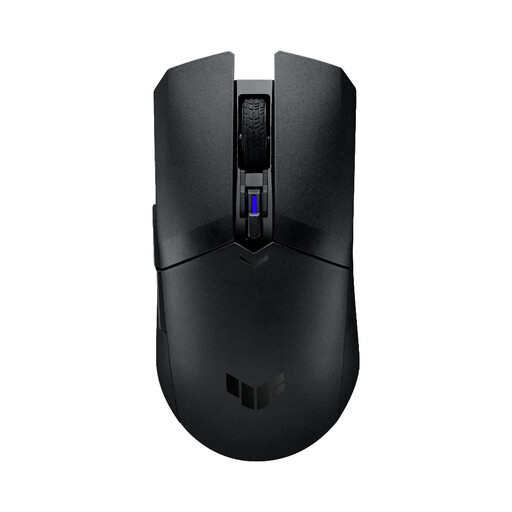 No image available
Consider this wireless model if keeping a mouse cable off the desk is a priority. Compare its footprint with your available area, and check the weight of the battery configuration you intend to use.
 No image available
The charging dock is worth considering if you have a place for it away from the mouse’s travel area. The title lists a PAW3311 sensor and 24,000 DPI; confirm the connection modes and weight before choosing, as the listing gives conflicting details.
 No image available
This is a wireless option to consider if you have several commands to assign. Its title lists ten programmable buttons and a 53 g weight; check its dimensions and whether you can reach the buttons you plan to use.
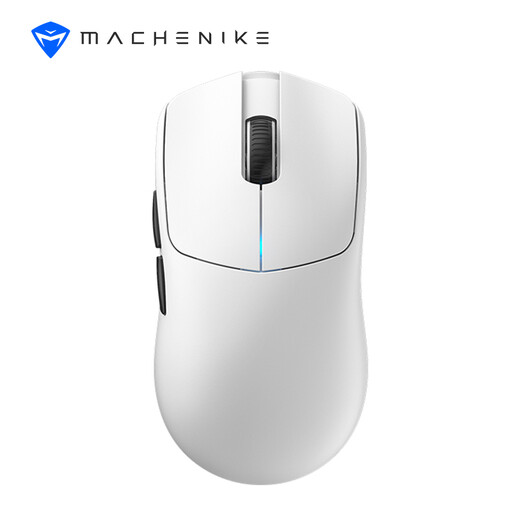 No image available
Its title lists wired, 2.4 GHz and Bluetooth modes, plus a 49 g weight. If shortcut mapping matters, check the available buttons; compare the full footprint with your desk rather than relying on weight alone.
 No image available
Allow room for the charging base as well as the mouse. The title lists a 56 g weight and 2.4 GHz and wired modes; confirm the connection modes, button layout and mouse dimensions before choosing.
A high maximum DPI is not the deciding feature for this choice. Look for sensitivity you can adjust to your screen, available mouse space and preferred pointer control; a higher quoted ceiling alone does not establish a better fit.
Choose enough reachable buttons for commands you repeatedly use. A six-button layout may cover a few shortcuts, while a denser layout is worth considering if you have a longer binding list and are willing to configure it.
UK online purchases normally have a limited change-of-mind cancellation period, as GOV.UK explains, but that is not an unlimited opportunity to use the mouse. Check the applicable timing and the seller’s handling conditions before trying it extensively; remedies for a faulty or misdescribed item are a separate matter.
Report the fault to the seller and keep your order details. Highland Council Trading Standards describes a right to reject faulty goods within its stated conditions, while the remedy available later can differ; a manufacturer’s voluntary warranty does not replace your statutory rights.