Push-to-talk shortcut users
Students who repeatedly use push-to-talk and other team-game commands and want those controls within reach without returning to a keyboard key.


Choose a mouse with reachable buttons for the team commands you actually use: one well-placed control may cover push-to-talk, while several frequent binds make a multi-button layout more relevant. A wired mouse avoids battery maintenance at a fixed desk; wireless reduces cable clutter but makes battery arrangements and device connectivity part of the decision. If clicks could disturb someone sharing the room, check noise evidence for the exact model rather than assuming a gaming mouse is quiet.
Students who repeatedly use push-to-talk and other team-game commands and want those controls within reach without returning to a keyboard key.
Students who move between study and gaming devices, or want fewer cables on a small desk, and are willing to manage a mouse battery.
Players who prefer a lighter, compact right-handed mouse and need only a limited number of remapped controls.
Start with the commands you need within reach, then decide whether a cable suits your desk and check how the mouse fits your hand. Treat click noise as a separate requirement if you share the room.
| Concern | What to check | Who this matters to |
|---|---|---|
| Reachable team controls | Count the commands you will bind, and check button reach and remapping support in your game or voice app. | When I use push-to-talk and pings repeatedly, I want controls I can reach without changing my grip; around 40% of consumers put reachable commands first. |
| Cable-free flexibility | Check the battery arrangement and whether your devices need a receiver, Bluetooth or both. | If I move between a study laptop and a gaming desk, fewer cables matter more to me than extra buttons; approximately 30% of consumers make cable-free use their primary concern. |
| Hand fit | Compare dimensions, weight, handedness and side-button placement with your usual grip. | During longer practice sessions, I need a shape I can hold comfortably without struggling to reach the controls; for around 30% of consumers, fit takes priority. |
A dense layout adds controls you may never use and can make unintended presses more likely. Extra buttons are useful only if the intended game or voice-app binds work and you can reach them comfortably.
List your frequent commands, then check the position and remapping options of the buttons you would assign to each one.
Logitech G specifies up to 250 hours for G305 on one AA battery, while SteelSeries gives a different stated battery-life figure for Rival 3 Wireless. The battery arrangement and conditions behind a claim matter to day-to-day use.
Check the exact model’s battery type, stated operating conditions and connection options before choosing wireless.
A replaceable-battery model also means keeping suitable batteries available and arranging for their recycling.
Razer describes Cobra as compact, while SteelSeries describes Rival 3 as a right-handed shape intended for claw or fingertip grip. Neither description establishes how a mouse will fit your hand.
Check dimensions, handedness, weight and your usual grip, and read the applicable retailer return terms before relying on a trial at home.
Button layouts, weight and connectivity do not establish whether clicking will be unobtrusive to someone else in a student room.
If noise could decide the purchase, look for a credible click-noise test or published measurement for the exact model and its stated test conditions.
G305 represents a battery-powered wireless choice, while G502 HERO is a wired option for several team-game shortcuts.
Cobra is a compact wired option; Naga V3 Pro addresses a substantially denser shortcut layout.
The Rival 3 family offers a choice between a wired right-handed design and a wireless model with two connection approaches.
These mice offer wireless choices with different control and charging details, alongside a wired Cobra variant. Match each one to your required team-command binds, desk arrangement and hand fit; check exact-model click noise separately if you share the room.
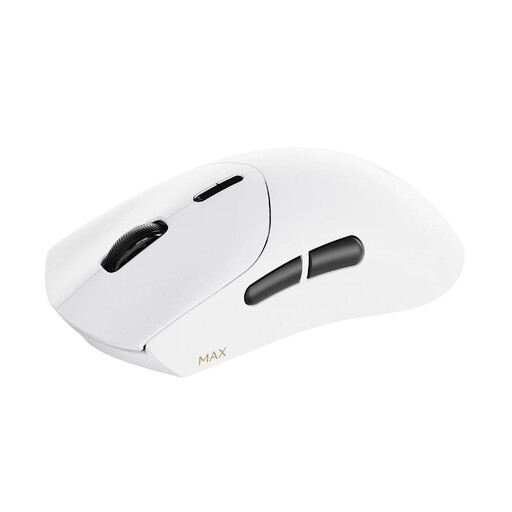 Image unavailable
Consider this wireless model if you need several buttons for team commands without adding a mouse cable to your desk.
The product name specifies 10 programmable buttons and a 53 g weight. Its stated battery life reaches up to 750 hours at 1000 Hz in low-power mode after a driver update; check which settings you would use. Check the dimensions and button reach for your hand, and seek exact-model click-noise evidence if room noise matters.
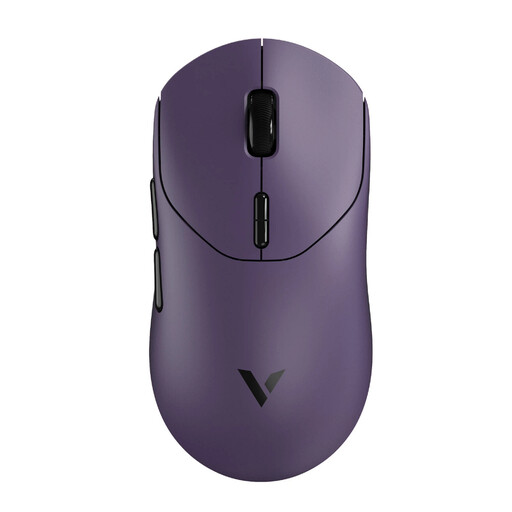 Image unavailable
This wireless option is relevant if you want multiple assignable controls and a desk without a mouse cable.
The product name specifies 10 programmable buttons and a 53 g weight. The stated up-to-750-hour battery life applies at 1000 Hz in low-power mode after a driver update. This version is described as retaining the click feel and sound of mechanical switches; check its actual click noise if someone nearby could be disturbed.
 Image unavailable
The charging dock makes this a model to consider if you want a wireless mouse that has a designated place on your desk between sessions.
Before planning to switch it between study and gaming devices, confirm the connection modes for this exact variant: its descriptions differ. They also give conflicting weights of 63 g and 65 g. Check whether its controls accept your intended communication binds and whether its click noise suits a shared room.
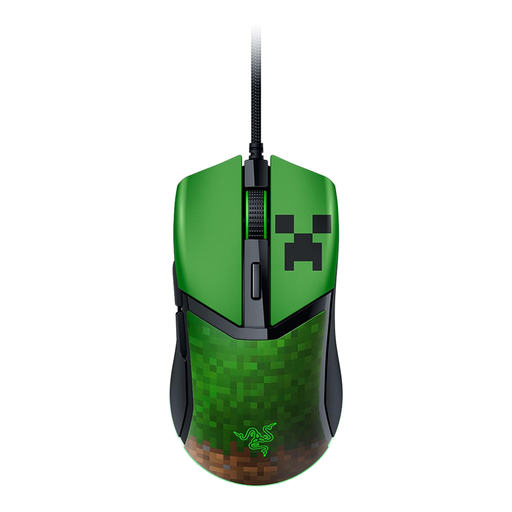 Image unavailable
This wired variant suits a fixed desk if avoiding battery maintenance matters more than removing the mouse cable.
Check how many controls on the Minecraft Edition you can assign to push-to-talk and other commands, and whether they are within reach for your grip. If room noise is important, assess the clicks of this exact variant rather than relying on its gaming designation.
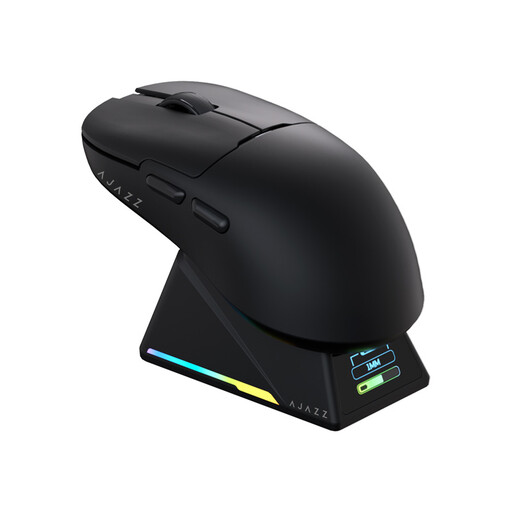 Image unavailable
Consider this model if a wireless mouse with a desk-based charging arrangement appeals to you.
The product name specifies a 56 g weight and a magnetic charging base. Check its exact connection modes before using it across devices, as its title and descriptions differ on Bluetooth support. Also confirm the number and placement of assignable controls for your team commands and check exact-model click noise if necessary.
No: one comfortably placed side button may cover a single push-to-talk command. If you also use frequent pings, maps or other team-game binds, count those commands and check whether the additional buttons are reachable; Logitech G specifies 11 programmable buttons on G502 HERO, while Razer specifies up to 23 on Naga V3 Pro.
Yes, if the mouse supports the required remapping and your game or voice application accepts that mouse input as a bind. Logitech G says G HUB can remap buttons; check the behaviour in the particular application you intend to use.
Wired avoids mouse-battery maintenance at a fixed desk; wireless can reduce cable clutter or make moving between devices easier. For a wireless model, check its battery arrangement and whether each device supports the connection method you plan to use.
Use an appropriate electrical or battery recycling route rather than putting them in household rubbish. UK guidance from the Office for Product Safety and Standards says electrical waste and batteries should not go into household rubbish; check your local collection options for the item you have.