Large-screen aquarium navigators
If you move between controls across a large display, look for sensitivity you can adjust to your layout and a shape you can handle comfortably. SCAN UK identifies grip and comfort as important mouse-selection checks.


Choose a mouse with adjustable sensitivity and a shape that suits your grip; a large screen alone is not a reason to choose the highest advertised DPI. A wired mouse can suit occasional clicking and scrolling, while wireless removes the cable but brings battery considerations. If you regularly use camera controls or menus, extra buttons are useful only when your aquarium software supports the commands you want to assign.
How often you interact with the aquarium matters more than whether the mouse is labelled for competitive gaming.
If you move between controls across a large display, look for sensitivity you can adjust to your layout and a shape you can handle comfortably. SCAN UK identifies grip and comfort as important mouse-selection checks.
If you frequently change camera views, open menus or zoom, configurable buttons and scrolling options may be worth considering. Check that your aquarium application accepts the commands before choosing a more elaborate layout.
If the aquarium mainly runs as a display, grip comfort, a connection that suits your desk and straightforward clicking may matter more to you than a long feature list.
Start with how you move the pointer and hold the mouse. Then decide whether your aquarium software gives you a use for extra controls and whether you prefer a cable or battery management.
| Concern | What to check | Who this matters to |
|---|---|---|
| Comfortable cursor control | Check grip shape and adjustable sensitivity; try a comfortable setting on your display rather than judging by maximum DPI. | When I move between distant controls and make small adjustments, I want the pointer to feel manageable without straining my grip; around 40% of consumers put comfortable, controllable movement first. |
| Menus and shortcuts | Identify the commands you repeat, then check application support for button assignments and wheel input. | If I keep opening panels or changing the view, I would rather reach a useful control on the mouse than repeat an awkward sequence; shortcuts are the primary need for around 30% of consumers. |
| Cable-free positioning | Check the connection mode, receiver requirements and how the exact mouse is powered. | With my display and desk arranged apart, I want room to position the mouse without its cable getting in the way; around 20% of consumers chiefly favour a cable-free setup. |
| Simple operation | Compare the actions you actually use with the mouse’s controls; confirm that its connection and sensitivity options suit your setup. | If I mostly click, drag and scroll, I want to get on with using the aquarium rather than configure controls I rarely touch; simplicity comes first for around 10% of consumers. |
A sensor’s upper setting does not tell you whether the mouse will fit your hand or whether its everyday pointer movement will feel comfortable. SCAN UK highlights shape and grip as particularly important to get right.
Compare the shape with your usual grip, then choose adjustable sensitivity so you can tune cursor movement on your own display.
Manufacturers including Razer, SteelSeries and Logitech G list mice with numerous configurable controls. Those controls have little practical value here if your aquarium application cannot usefully respond to them.
Write down the camera, menu and zoom actions you repeat, and check the application, operating system and mouse software before choosing a multi-button model.
Wireless modes and power arrangements differ by model. Razer’s battery-life figure for the Basilisk V3 X HyperSpeed is a manufacturer specification, not a promise for every setting or use pattern.
Check the exact variant’s connection mode, whether a receiver is included, available ports and how its battery is maintained.
Depending on the model, using a wireless mouse may also mean allowing time to charge it, replacing batteries or keeping a USB port free for a receiver.
GOV.UK explains that UKCA and CE markings indicate the manufacturer believes a product meets relevant requirements in Great Britain; product-marking processes differ in Northern Ireland.
Check the seller, exact model and accompanying product information for the location where you are buying, rather than relying on an image alone.
These named product lines illustrate different control layouts; the right fit depends on your grip and the commands your aquarium software accepts.
Logitech G lists the wired G502 X with an adjustable DPI-shift control, dual-mode wheel and stated 89 g weight. Its wireless G502 X LIGHTSPEED lists 13 customisable controls.
Razer lists 10+1 programmable buttons and several wheel behaviours for the Basilisk V3. The Basilisk V3 X HyperSpeed offers both 2.4 GHz wireless and Bluetooth.
SteelSeries lists nine programmable buttons and a stated 85 g weight for the wired Rival 5.
Corsair describes the wired M65 RGB ULTRA as a tunable-weight mouse with eight programmable buttons and iCUE configuration support.
These mice cover wired cursor control, wireless desk arrangements and different grip shapes for a large-screen aquarium. Compare their controls with your actual application before choosing.
 No image available
Consider this if you prefer a vertical grip and want to adjust cursor sensitivity without a mouse cable.
The product name specifies 2.4 GHz and Bluetooth connection options, six buttons and an adjustable sensor with a stated 1600 DPI setting.
Check whether the vertical shape fits your hand and whether your aquarium application can use any additional buttons you intend to assign.
 No image available
This is an option if removing the cable matters more to you than having a direct wired connection.
The product name specifies USB wireless use and five adjustable DPI settings.
The listing says its side buttons are unavailable on Mac. Check its power arrangement and whether your aquarium software accepts the controls you want to use.
 No image available
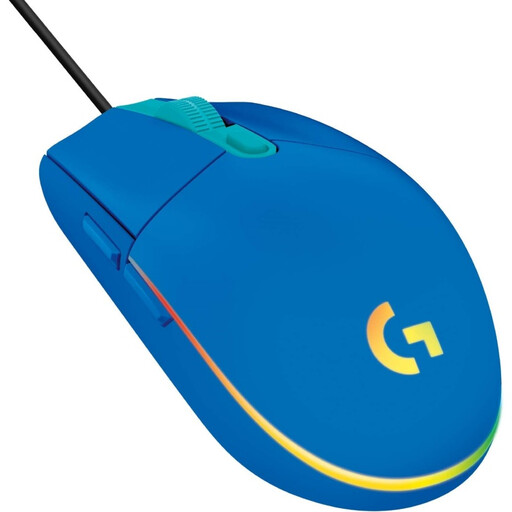
Consider this for a straightforward wired setup where a USB mouse suits your computer and desk layout.
It is the blue G102 USB variant. If you plan to assign aquarium commands to mouse buttons, confirm that the application and your operating system support them.
 No image available
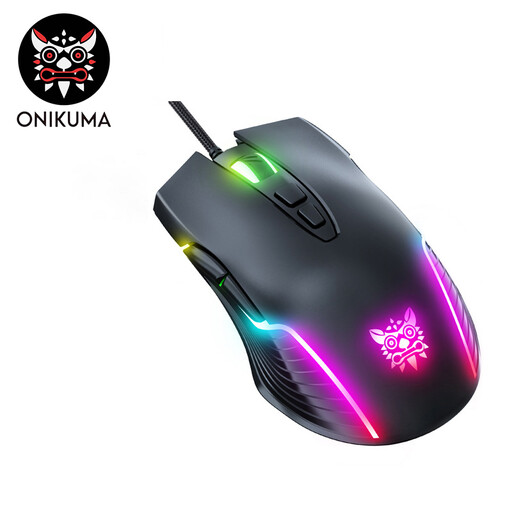
This wired model is worth considering if you want to tune pointer movement and use additional navigation controls.
The product name identifies adjustable sensitivity, programmable buttons and RGB lighting; lighting is not a reason to expect better aquarium control.
Check button support in your application and operating system. The listing advises using a mouse pad rather than a highly reflective or glass surface.
 No image available
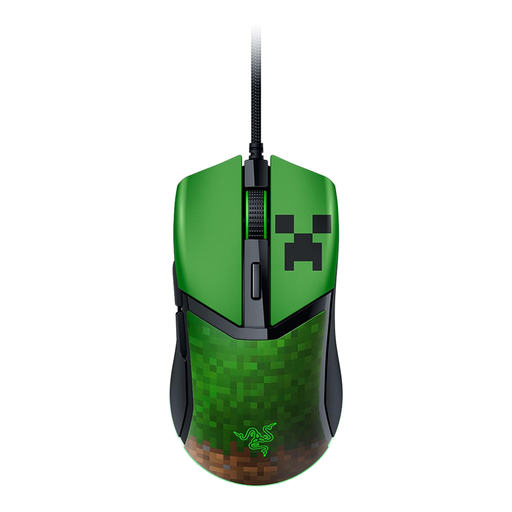
Consider this variant if you want a wired mouse and prefer the stated symmetrical shape.
Confirm that its adjustable controls suit your aquarium software. If mouse weight affects your grip choice, check the exact figure before buying: the listing gives conflicting weight information.
No particular maximum DPI follows from screen size alone. Choose adjustable sensitivity and tune pointer travel to your display and comfort; also check how the mouse fits your grip. Logitech G lists an adjustable DPI-shift control on the G502 X, while SCAN UK emphasises the importance of shape.
Either can suit a virtual aquarium: wired avoids battery management if a cable fits your desk, while wireless can give you more freedom to position the mouse. For a wireless model, check its connection mode, receiver and power arrangement rather than assuming all models work alike.
Extra buttons are useful when your aquarium application supports commands you repeat, such as opening panels or changing camera views. If you mainly click and scroll, check grip and sensitivity first; a higher button count alone will not make those basic actions easier.
Check the exact product information and the requirements for where you are buying. GOV.UK says that, in Great Britain, UKCA and CE markings indicate the manufacturer believes a product meets relevant requirements; Northern Ireland follows different processes, so the Great Britain guidance should not be applied there without checking the applicable route.