Players with many recurring commands
You want frequently used game actions within thumb reach and are willing to learn a denser button layout. Corsair’s SCIMITAR range illustrates this type of layout.


Choose an MMO-style mouse if you have enough recurring virtual-hospital commands to make a dense thumb-button panel useful. If you need only several shortcuts alongside ordinary desktop work, a less crowded multi-button layout may be easier to live with. Check that the buttons suit your grip, that your intended assignments work with the game and software, and that the connection method fits your desk.
You want frequently used game actions within thumb reach and are willing to learn a denser button layout. Corsair’s SCIMITAR range illustrates this type of layout.
You switch between a management game and everyday desktop tasks. Several shortcuts and adaptable scrolling may matter more to you than a full thumb keypad; the Logitech G502 X and Razer Basilisk V3 illustrate those controls.
You put reachable controls and a relaxed grip ahead of the largest button count. The Health and Safety Executive advises keeping the mouse within easy reach so it can be used with a straight wrist.
Start with the commands you would actually move to the mouse, then consider hand fit and how the mouse will connect at your home-office desk.
Choose when: You can make regular use of many distinct bindings; Corsair lists repositionable 12-button side panels on its SCIMITAR RGB ELITE and SCIMITAR ELITE WIRELESS.
Trade-off: The grid takes time to learn and must be reachable without disrupting your grip.
Choose when: Several shortcuts and flexible scrolling would serve both game menus and desktop tasks; Razer’s Basilisk V3 and Logitech G’s G502 X illustrate this approach.
Trade-off: Fewer direct thumb bindings may leave some commands on the keyboard, and a sculpted right-handed shape will not suit every grip.
Choose when: You mainly want essential shortcuts rather than a full command panel; SteelSeries lists nine programmable buttons on the Rival 5.
Trade-off: A shorter command list is easier to accommodate than numerous actions that each need their own mouse button.
| Concern | What to check | Who this matters to |
|---|---|---|
| Command access | Count the actions you would bind, test whether the buttons are reachable, and check that the game permits your intended assignments. | If I repeatedly open menus or trigger the same actions, I want those commands close to my mouse hand. Around 36% of consumers would put command access first. |
| Long-session comfort | Assess shape and button reach with your grip; keep the mouse close enough to use without stretching your wrist. | When I use the same desk for work and play, I need a grip and position I can maintain comfortably. For around 29% of consumers, hand and workstation comfort comes first. |
| Connection method | Check the required USB connection or wireless mode, and whether charging or a receiver suits your setup. | If I move the mouse around my desk or between compatible devices, the cable and connection choices shape how I use it. Desk flexibility is the main concern for around 21% of consumers. |
| Setup effort | Check whether your chosen assignments need software or saved profiles, and whether the default controls suffice. | If I only need a few shortcuts, I would rather avoid configuring controls I will never use. Around 14% of consumers would prioritise a straightforward setup. |
A dense side panel helps only when you can identify and press its controls without changing your grip. A mouse with fewer buttons may cover a short list of recurring commands.
Write down the actions you want to assign before deciding whether a 12-button thumb grid is worthwhile.
Logitech G states that the wired G502 X weighs 89 g, while SteelSeries lists 85 g for the Rival 5. Neither figure establishes how either shape will fit your hand. The Health and Safety Executive advises placing the mouse within easy reach for use with a straight wrist.
Check grip and button reach as well as weight, then position the mouse so you do not have to stretch towards it.
Assignments or profiles may depend on the manufacturer’s software. Extra controls are less useful if your computer or intended game cannot use them as planned.
Confirm operating-system compatibility, how settings are saved and whether the default controls meet your needs before buying.
The SCIMITAR range is relevant when many game commands need their own controls.
The Basilisk V3 line offers several shortcuts without a 12-button side panel.
The wired G502 X combines multiple controls with an adjustable DPI-shift button and dual-mode tilt wheel.
The Rival 5 represents a moderate-button option for a shorter shortcut list.
These mice offer different combinations of configurable controls and wired or wireless desk use. Compare their button layouts with your own command list rather than treating the number of controls as a comfort rating.
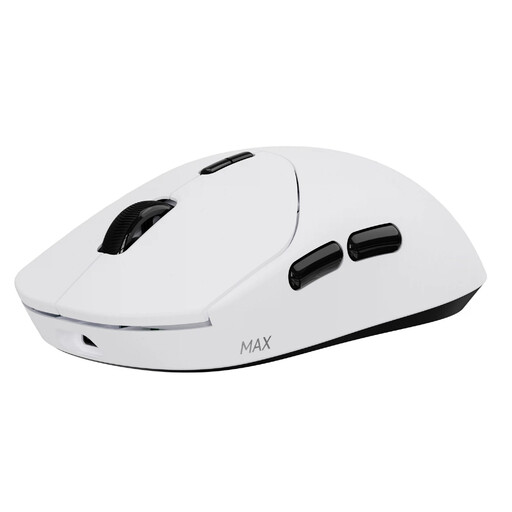 Image unavailable
Consider its configurable controls if you want recurring game actions on a wireless mouse rather than a stated 12-button thumb grid.
The listing states 10 programmable buttons, macro support and a 53 g weight. Check whether the button positions suit your grip and whether your intended assignments work with the game. Its stated low-power mode requires a driver update.
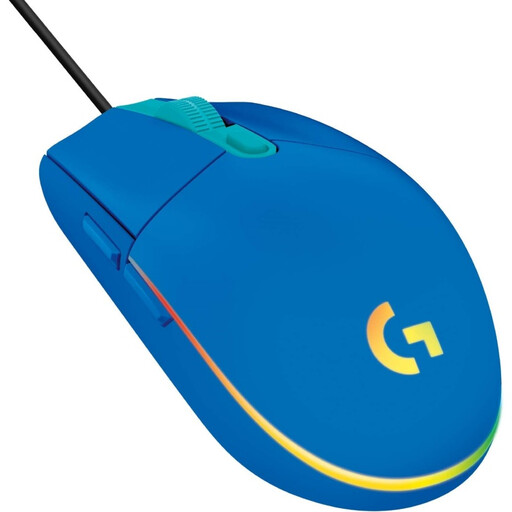 Image unavailable
This wired option suits a short list of repeated commands if a cable works at your desk.
The product description specifies six buttons and USB connectivity. It says commands or macros can be assigned through G HUB; confirm that the software and your intended game accommodate your setup.
 Image unavailable
Consider this model if connection choice matters and you need a modest set of configurable game controls.
The listing describes USB-C, 2.4 GHz and Bluetooth modes, button remapping and macros; its specification table lists six buttons. Check their placement and the required driver before planning your assignments. The descriptions give conflicting weights of 63 g and 65 g, so confirm the figure if weight affects your choice.
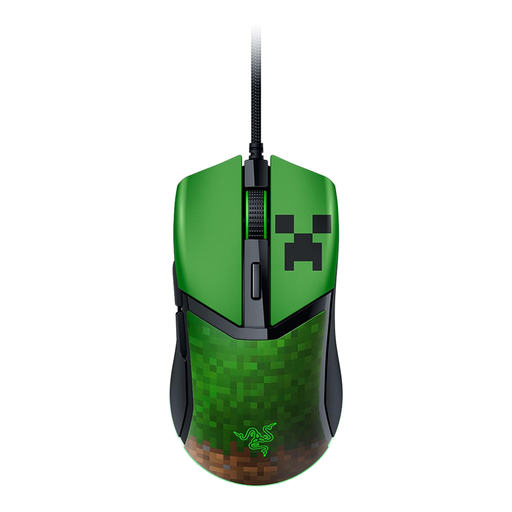 Image unavailable
Its symmetrical shape and wired USB connection may appeal if you want configurable controls at a fixed desk.
The description says its buttons can be customised through Razer Synapse. Check their number and placement against your command list, and confirm software compatibility. The descriptions give conflicting weight figures of 58 g and 5.1 ounces, so confirm the weight before comparing it with other mice.
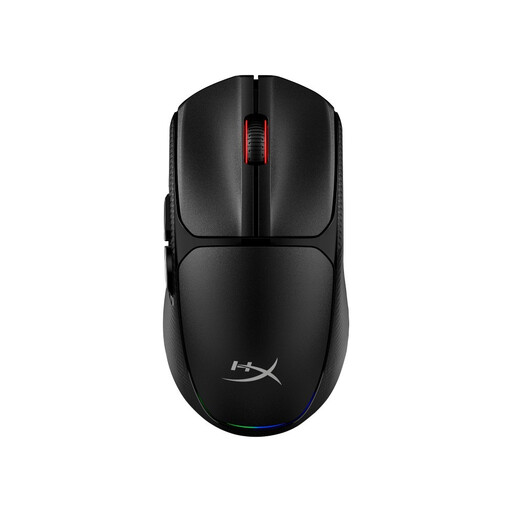 Image unavailable
This is an option for a cable-free desk if its configurable buttons cover the commands you use most.
The listing specifies 2.4 GHz wireless connectivity through a USB receiver, a right-handed shape and button customisation through HyperX software. Check the button count and placement, along with software compatibility, before relying on it for a particular set of shortcuts.
You need enough reachable buttons for the actions you genuinely want to move off the keyboard, not necessarily the largest available count. List those actions first: a dense layout can accommodate many bindings, while a nine- or 11-control layout may be sufficient for a shorter list. Check how easily you can distinguish the controls by feel.
Choose the connection that fits your computer and desk arrangement. A wired mouse avoids charging; for a wireless model, check whether your computer supports its receiver or Bluetooth mode and how you will manage charging. Corsair lists all three connection options for the SCIMITAR ELITE WIRELESS, but connection choices vary by model.
A different mouse may fit your hand better, but the mouse alone is not a complete answer to discomfort. The Health and Safety Executive advises positioning it within easy reach so you can use it with a straight wrist; assess your grip and desk arrangement alongside the mouse’s shape.