For mainly 2D tile-set work, choose a desktop with clearly stated processor, memory, storage and graphics specifications rather than relying on the gaming label. If you also use Blender, work on complex engine projects or run demanding play-tests, compare memory and dedicated-graphics configurations more closely; Unity notes that editor performance varies with project complexity, so no component list guarantees the result for your project.
Who is this for?
2D pixel-art tile creators
If you mainly draw tiles, organise layers and animate sprites, start with the components your art software and file library need. Aseprite documents layers, frames and animation tools; a gaming label alone says little about the desktop configuration.
Game-engine creators
If you assemble tiles in an engine while keeping art tools open and testing the game, compare the complete desktop specification against your project. Unity says editor performance and rendering quality vary with project complexity.
3D-assisted environment artists
If Blender is part of making assets, materials or scene references, compare the stated processor, memory, graphics and storage of each configuration. Check your intended software version and project requirements before deciding how much hardware you need.
What to check when buying
Mainly 2D tile creation
Choose this route when: Your work centres on drawing, layering and animating sprites, with modest engine use.
Trade-off: Leave room to reconsider the configuration if you plan to add complex Unity projects, Blender work or demanding play-tests later.
3D-assisted creation and play-testing
Choose this route when: Blender, heavier engine scenes or frequent play-testing are regular parts of creating your tiles.
Trade-off: A dedicated GPU and more memory do not establish how your particular project will run; check the exact parts and software requirements.
| Concern |
What to check |
Who this matters to |
| Concurrent-work headroom |
Compare the exact processor and RAM capacity, then check whether the selected build allows memory changes. |
If my art editor and game engine will be open together, I want to know what the desktop actually contains before choosing it. Around 31% of consumers put concurrent-work headroom first. |
| Graphics and 3D work |
Confirm the GPU model and graphics-memory specification against your Blender, engine and play-test plans. |
When I add 3D assets or demanding play-tests, I need to judge the graphics configuration against those tasks. For around 31% of consumers, graphics and 3D work are the primary concern. |
| Storage and setup |
Check SSD capacity and the supplied operating system; confirm peripherals separately if you need them. |
I need space for project files, software and games, and I want to know what will be ready when the tower arrives. Storage and setup come first for around 23% of consumers. |
| Configuration and support |
Review the final itemised parts, permitted substitutions and warranty terms. |
If I am selecting parts for a built-to-order PC, I want the delivered configuration and support terms to be clear. Around 15% of consumers make configuration and support their main concern. |
Buying pitfalls
-
Choosing from the gaming-PC title alone
Listings in the same broad category can specify different processors, graphics cards, memory and storage. The category name cannot tell you whether the components fit your tile-set workflow.
Compare the final itemised processor, GPU, RAM, SSD and operating system, and keep a copy of the configuration you order.
-
Assuming the GPU solves every creation bottleneck
Aseprite-centred drawing and Blender-assisted work involve different tasks. Unity also says performance and rendering quality vary with project complexity.
List the art tools, engine work and play-tests you actually plan to run, then check the relevant software requirements alongside the complete PC specification.
-
Treating a build image as the final parts list
AWD-IT says its configurable systems can have cosmetic component revisions and that images may not exactly represent the received system.
Check the final basket or order confirmation for the selected parts, operating system and warranty before ordering.
-
Relying on warranty paperwork alone if a PC is faulty
Citizens Advice explains that warranties and guarantees add to legal rights; a warranty does not replace the route for dealing with faulty or misdescribed goods.
Keep your proof of purchase, confirmed specification and warranty documents. If a problem arises, contact the seller and check the Citizens Advice guidance applicable to your UK nation.
Brands to compare
CyberPowerPC UK
A builder whose catalogue includes prebuilt and configurable gaming desktops alongside creator and workstation categories.
- CyberPowerPC UK lists configurations with differing processors, graphics cards, memory and SSD capacities, giving you itemised builds to compare.
- Its catalogue does not establish how a particular build will handle your tile-set project. Confirm the final components, delivery details and warranty for the system you select.
AWD-IT
A builder offering prebuilt and built-to-order desktops for consumers who want to review or select components.
- AWD-IT says buyers can configure components including memory, graphics and storage, and advertises a three-year parts-and-labour warranty for its gaming systems.
- AWD-IT says component appearance can change and product images may differ from the delivered system. Check the itemised order and the warranty terms for your chosen build.
ionz
A prebuilt option for comparing a stated desktop configuration with the components you need for your own workflow.
- An ionz listing specifies a Ryzen 5 7600, RTX 4060, 32GB DDR5-6000 memory and a 1TB PCIe Gen 4 SSD.
- Those listed parts are not a measured result for tile-set creation or Blender. Check your software and project needs before treating the configuration as a fit.
Joybuy desktops for hybrid workflows
These listed desktops have stated memory, storage and dedicated graphics to compare if your tile-set work also involves an engine, Blender or play-testing. Match the exact configuration to your software and project rather than treating the product order as a performance ranking.
 No image available
CyberPowerPC JOYB1010, Core Ultra 7 265KF, RTX 5070
Consider this configuration if you use art tools alongside an engine or plan to add graphics-intensive work; check your applications' requirements before choosing.
The listed configuration includes 32GB DDR5 RAM, a 1TB NVMe SSD, an NVIDIA GeForce RTX 5070 with 12GB graphics memory and Windows 11 Home.
Arrange a monitor and input devices separately, and review the warranty terms.
View on Joybuy
 No image available
Lenovo Legion T7 34IAS10, Core Ultra 7 265K, RTX 5070 Ti
Compare this tower if your tile-set process includes several creative applications or 3D-assisted work; project requirements remain the deciding factor.
The listed configuration has 32GB RAM, a 1TB SSD, an RTX 5070 Ti and Windows 11 Home.
Confirm which peripherals come with the tower and check the seller's warranty terms.
View on Joybuy
 No image available
Stormforce Cyclone, Intel Core i7, RTX 5080
If the same desktop will hold creation files and games, compare its stated storage with your existing library and planned projects.
The product name specifies 32GB RAM, a 2TB SSD, an RTX 5080 and Windows 11.
Arrange a monitor, keyboard and mouse separately. Check that you have a suitable place for the stated 22kg tower.
View on Joybuy
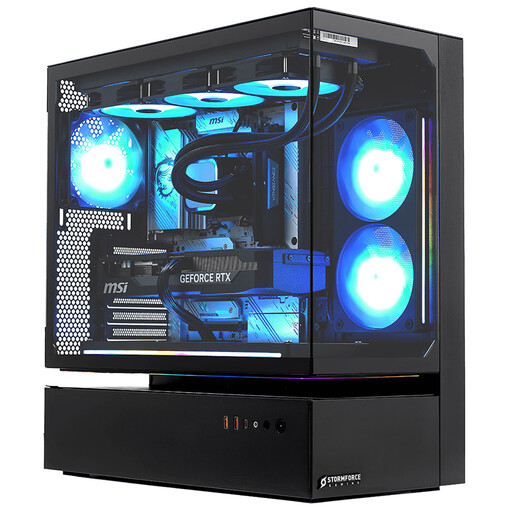 No image available
Stormforce Cyclone, AMD Ryzen 7, RTX 5080
This is another configuration to compare for a workflow that combines tile creation with 3D work or play-testing; check the requirements of the programs you intend to use.
The product name specifies 32GB RAM, a 2TB SSD and an RTX 5080.
Confirm the exact delivered graphics-card specification and which peripherals come with the desktop.
View on Joybuy
 No image available
Stormforce Defiance, Ryzen 7 5700X, RTX 5070
Compare this desktop if you plan to keep creative software and project files on the same PC as your games.
The product name specifies 32GB RAM, a 2TB SSD, an RTX 5070 and Windows 11.
Check the graphics-memory amount, warranty terms and included peripherals before ordering.
View on Joybuy
Common questions
Do I need a high-end gaming PC for a 2D tile set?
Not necessarily: choose for the software and project you will actually use. Aseprite documents layer and animation tools, while Unity says editor performance varies with project complexity. Compare the stated processor, RAM, SSD and graphics rather than assuming a gaming label establishes what you need.
Which specification details should I confirm before ordering?
Confirm the exact processor, graphics card, RAM, primary SSD, operating system and final bundle contents. If the build is configurable, also check whether components may be substituted and retain the itemised order; UK builder listings show that gaming desktops can have different memory and storage configurations.
Should I use only the manufacturer warranty if my PC is faulty?
No. Citizens Advice says warranties and guarantees add to legal rights rather than replacing them. Keep proof of purchase and the confirmed specification, contact the seller about the fault, and check the Citizens Advice guidance applicable to your UK nation for the relevant remedy.


