What should you check first?
Choose the way you will buy the computer alongside its specification: assembly responsibility and portability can change which route makes sense.
Pre-built desktop
Choose it when: An available configuration meets your confirmed course and game requirements and you want a completed system.
Accept: You may have less choice over the precise components and expansion layout.
Configured custom desktop
Choose it when: You want to specify components around coursework and games but have a builder assemble the system.
Accept: Builder checks do not replace reviewing the final component list and support terms.
Self-built desktop
Choose it when: Component choice and future changes matter enough for you to handle compatibility, assembly and testing.
Accept: Diagnosing faults and dealing with individual component support remain your responsibility.
Gaming laptop
Choose it when: Carrying the computer between study locations is a requirement.
Accept: Check the exact laptop’s memory and graphics configuration; desktop specifications cannot be transferred to a laptop by name alone.
| Concern |
What to check |
Who this matters to |
| Creative-software readiness |
For Windows Substance 3D Painter work, compare installed RAM, GPU memory and available SSD space with Adobe’s recommended 32 GB, 16 GB and 50 GB respectively. Confirm which applications and projects the course actually requires. |
If 3D texturing is central to my coursework, I need to plan around that workload rather than a general gaming label. Around 33% of consumers would put creative-software readiness first. |
| Performance in the intended games |
Check each game’s current requirements against the exact CPU and graphics card, using your intended resolution, settings and frame-rate target. |
I want to know whether the games I play will suit my chosen display and settings before selecting a graphics card. For around 27% of consumers, that gaming target would be the primary concern. |
| Assembly and support |
Check who assembles and tests the system, then read the selected seller’s terms for parts, labour, returns and exclusions. |
If I am not comfortable diagnosing a desktop fault, I want a clear route to support after purchase. Assembly and support would come first for around 20% of consumers. |
| Upgrade options |
Check the motherboard format, memory-slot layout, spare storage connections and case clearance on the exact configuration. |
I want room to change components later without assuming every desktop offers the same expansion options. Around 20% of consumers would make upgrade flexibility their main priority. |
Joybuy product choices
These choices include pre-built gaming desktops for a single coursework-and-gaming computer, plus a laptop for students who need to carry theirs. Compare each exact configuration with the course applications and intended games before choosing.
 No image available
Stormforce Cyclone Core i7, 32 GB RAM, 2 TB SSD, RTX 5080
This pre-built desktop is worth checking if you want one system for coursework and games without assembling it yourself.
The listed configuration has 32 GB RAM, a 2 TB SSD, RTX 5080 graphics and Windows 11. Confirm its graphics memory against Painter’s requirements, and check the motherboard and power supply if future upgrades matter.
View on Joybuy
 No image available
CyberPowerPC JOYB1013, Ryzen 7 9800X3D, RTX 5080 16 GB, 32 GB DDR5
Consider this pre-built desktop if your course uses Painter and you want a configuration whose stated memory figures can be compared with Adobe’s Windows recommendation.
The title specifies an RTX 5080 with 16 GB graphics memory, 32 GB DDR5 RAM, a 2 TB NVMe SSD and Windows 11 Home. Check available SSD space after setup and the requirements of your chosen games.
View on Joybuy
 No image available
Stormforce Defiance Ryzen 7 5700X, 32 GB RAM, 2 TB SSD, RTX 5070
This pre-built desktop offers a stated 32 GB RAM for a student comparing gaming and creative-course configurations.
Its title also lists a Ryzen 7 5700X, RTX 5070 graphics, a 2 TB SSD and Windows 11. Check the exact graphics-memory capacity against Adobe’s 16 GB Painter recommendation and read the system’s warranty terms.
View on Joybuy
 No image available
CyberPowerPC JOYB1010, Core Ultra 7 265KF, RTX 5070 12 GB, 32 GB DDR5
This pre-built desktop is an option to assess if you want a completed system and your course projects do not require Painter’s recommended graphics-memory tier.
The title lists 32 GB DDR5 RAM, a 1 TB NVMe SSD and Windows 11 Home. Its RTX 5070 has a stated 12 GB graphics memory, below Adobe’s 16 GB Windows recommendation for Painter; check the course’s actual projects before choosing it for texturing work.
View on Joybuy
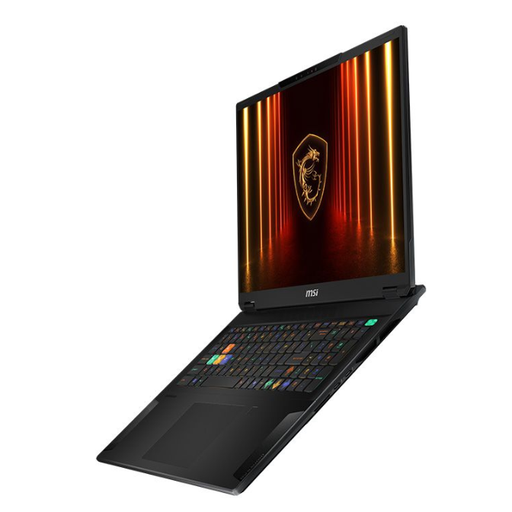 No image available
MSI Stealth 18 AI Studio A1VGG-001UK, 18-inch, RTX 4070
Consider this laptop only if carrying your computer between study locations matters more than choosing a desktop.
Its title lists 32 GB RAM, a 2 TB SSD, Intel Core Ultra 9 and RTX 4070 graphics. Confirm the exact graphics-memory capacity, available storage space and compatibility with your course applications and games before buying.
View on Joybuy
Common questions
What specification should I start with for Substance 3D Painter coursework?
For Painter on Windows, Adobe recommends 32 GB RAM, 16 GB graphics memory and an SSD with 50 GB available space; its guidance also names recommended processor and graphics-card models. Use those as Painter-specific reference points, then check the course projects and intended games rather than treating them as a complete specification for every student.
Does Maya coursework require a Windows gaming PC?
No: Autodesk lists supported Windows, macOS and Linux options for Maya 2026. Your computer still needs to run the rest of your course software and chosen games, so check the course’s required operating system and applications before deciding.
Can I leave another 3D application open while using Painter?
You can, but Adobe warns that other 3D applications may use graphics memory dynamically and conflict with Painter. If you expect to work in several applications at once, consider that workflow when checking the graphics card’s memory rather than relying on a single-application requirement.
What should I compare in a pre-built PC warranty?
Compare what the selected seller covers for parts, labour and returning the computer, as well as when that cover changes. Chillblast, for example, states three years of parts and labour followed by two years of return-to-base labour cover for its PCs; read the terms applicable to the system you choose.


