Long-session desk players
If you play at one desk for extended periods, check that the tower fits your space and connects to your display, keyboard, headset and network. Plan breaks and changes of activity as well as the PC setup.


Choose a desktop for the deck-building games you intend to play and the other tasks you run during a session, rather than buying a higher-spec graphics card because you play for hours. An integrated-graphics PC may suit a focused game list once you have checked each game’s requirements; a 16GB desktop with an SSD and discrete graphics makes more sense if you also play more demanding games or regularly use background apps. Check the exact configuration, connections and desk setup before ordering.
If you play at one desk for extended periods, check that the tower fits your space and connects to your display, keyboard, headset and network. Plan breaks and changes of activity as well as the PC setup.
If card and strategy games are your main use, compare their published requirements with a proposed PC before paying for graphics capability you may not use. Check the exact games before choosing integrated graphics.
If you also play more demanding games or keep chat, browser tabs and other apps open, installed memory, SSD capacity and the exact graphics configuration deserve closer attention.
Start with your named games: an entry-level configuration is worth considering only if it meets their requirements, while extra graphics capability should serve games or workloads beyond deck-builders.
Consider it: Your confirmed games meet the exact PC’s published CPU, graphics and memory requirements.
Trade-off: Do not assume the same configuration will suit more demanding games or extensive background use.
Consider it: Deck-builders share your sessions with background apps or a wider game library.
Trade-off: The graphics-card name alone does not establish how a particular game will run at your chosen display settings.
Consider it: You also intend to play demanding games or use the PC for substantial creation workloads.
Trade-off: Deck-building sessions alone do not establish a need for higher-end components; assess the exact tower’s cooling and space requirements.
| Concern | What to check | Who this matters to |
|---|---|---|
| Desk setup and connections | Match display outputs and USB ports to your peripherals; check network options and tower dimensions. | If my monitor and peripherals cannot connect conveniently, or the tower will not fit my desk, extra graphics power will not solve the setup problem. Around 30% of consumers put desk compatibility and long-session comfort first. |
| Fit for confirmed games | Compare each intended game’s published requirements with the final PC’s CPU, graphics, memory and operating system. | When I mainly play deck-builders, I want the games on my list to run without paying for graphics capability I have no plans to use. Roughly 30% of consumers prioritise that confirmed-game fit. |
| Apps and game-library capacity | Check installed RAM and SSD capacity, rather than a product line’s maximum options. | I keep chat and browser tabs open and store several games locally, so available memory and drive space matter to my choice. Around 20% of consumers place those everyday capacity needs first. |
| Broader gaming use | Check your other games and display goals against the exact GPU configuration; inspect the tower’s cooling description. | Deck-builders are only part of what I play, and I want this PC for more demanding games too. Roughly 20% of consumers make that wider use their primary concern. |
Models within one desktop range can have different processors, graphics cards, memory and storage. The range name cannot establish whether your games suit the PC in your basket.
Compare each game’s published requirements with the final product configuration before ordering.
Browser tabs, chat, downloads and connected peripherals can make installed memory, SSD capacity and ports more relevant to your session than a higher-tier graphics card.
Check those details against the apps, game library and accessories you actually plan to use.
PC specifications do not address monitor placement or the need to change position during extended screen use.
Arrange the display and input devices before ordering. The Health and Safety Executive’s display-screen work guidance favours frequent short breaks over fewer long ones.
Lenovo Legion Tower desktops include configurations with clearly identified gaming components. Lenovo UK lists a Legion Tower 5i Gen 10 configuration with 16GB DDR5 memory, a 512GB SSD and RTX 5060 8GB graphics.
Dell positions its Alienware Aurora and Area-51 desktop ranges around higher-performance gaming and cooling options.
Acer describes Nitro 50 configurations with varying memory, SSD storage and graphics options.
These desktops offer 16GB or 32GB of installed memory, SSD storage and discrete graphics for players whose sessions include background apps or games beyond deck-builders. Check each intended game’s requirements and the components of the exact model; a long session alone does not call for a higher-spec tower.
 No image available
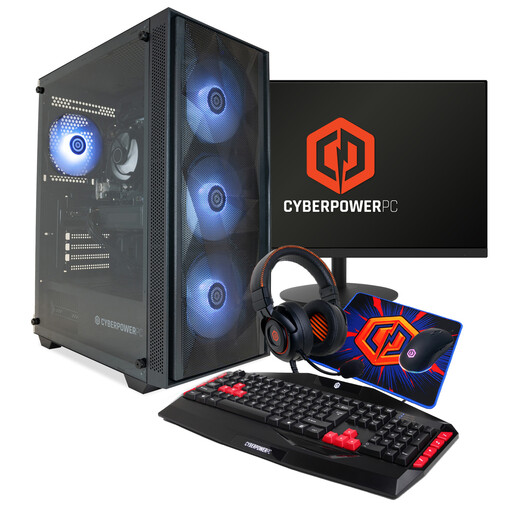
Consider this if you want a desktop, monitor and main peripherals together for gaming alongside background apps.
The listed configuration has 16GB DDR5 memory, a 1TB NVMe SSD and Windows 11 Home; the bundle names a keyboard, mouse, headset and mousepad. Check the monitor’s exact specifications and your games’ requirements before ordering.
 No image available
Consider this configuration if your use extends beyond deck-builders to a wider game library and substantial local storage.
It lists 32GB RAM, a 2TB SSD and Windows 11. Check your intended games against the exact configuration and confirm that the tower fits its planned position with room for ventilation.
 No image available
This is a tower to assess if you also play more demanding games or keep several applications open.
Its listed configuration has 32GB DDR5 memory, a 1TB NVMe SSD and Windows 11 Home. Check game requirements and plan for your display and input devices; a monitor, keyboard and mouse are not included.
 No image available
Assess this tower against games and workloads beyond deck-builders, where its higher-spec configuration has a purpose.
It lists 32GB RAM, a 1TB SSD and Windows 11 Home. The 34L tower weighs 18kg, so check placement and the requirements of your intended games.
 No image available
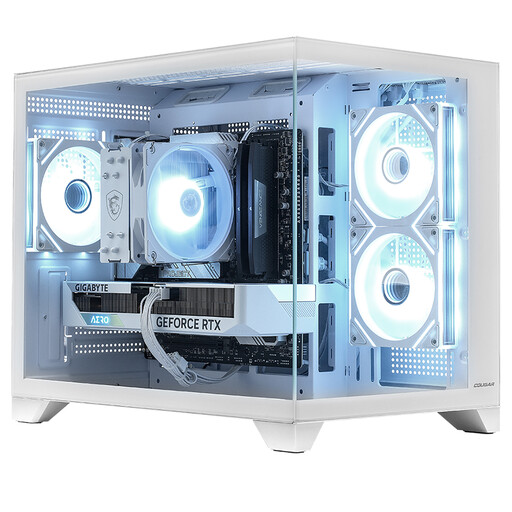
Consider this 16GB desktop if you want discrete graphics for a game library beyond deck-builders.
It lists 16GB DDR4 memory, a 1TB NVMe SSD and Windows 11 Home. Compare it with your games’ requirements, and confirm display outputs, USB connections and case dimensions for your desk setup.
No: session length alone does not determine the graphics card you need. Compare each game’s published requirements with the exact PC, then consider whether you also plan to play more graphics-heavy games or use the machine for other demanding work.
Check the installed CPU, graphics, memory and SSD, plus display connections, networking, warranty and included accessories for that exact configuration. If Windows 11 setup arrangements matter to you, confirm them before purchase rather than assuming every desktop bundle is supplied in the same way.
Not by itself. Check that your monitor, input devices and tower fit the workstation, and make room to move or change activity. The Health and Safety Executive advises frequent short breaks for display-screen work; that workplace guidance is a practical reference, not a consumer gaming requirement.
Confirm the seller, the exact model, its supplied mains lead and plug, and its warranty and return arrangements before checkout. Great Britain’s electrical-equipment rules concern products placed on that market; do not assume a listing intended for another market has the same supplied components or arrangements. Northern Ireland has separate regulatory arrangements.