Choose a PC against the recommended requirements of the historical strategy games you play, rather than by graphics-card name alone. Paradox Interactive recommends 16 GB RAM and an SSD or NVMe drive for Crusader Kings III; if battle visuals matter most, compare the exact graphics card too. Check headphone connections separately on the PC you intend to buy.
Who is this for?
Long-campaign grand-strategy players
If you spend hours on maps and dynasty management, compare the processor, memory and storage before paying extra for graphics features. Paradox Interactive recommends 16 GB RAM and an SSD or NVMe drive for Crusader Kings III.
Players focused on battle visuals
If visual detail on your chosen display matters most, compare discrete graphics cards after checking the game’s processor, memory and storage requirements. NVIDIA lists Ada Lovelace architecture for its GeForce RTX 4060 family, but a GPU family name does not establish performance in a particular game.
Wireless-headphone players
If you usually play with Bluetooth headphones, check the exact PC and headset together. Microsoft Support notes that Bluetooth Low Energy Audio support on Windows 11 devices can depend on manufacturer driver updates.
What matters when choosing?
Start with the requirements of your own games, then weigh display ambitions, headphone connections and future upgrades. Paradox Interactive’s recommendations for Crusader Kings III are a baseline for that game, not for every historical strategy title or mod.
| Concern |
What to check |
Who this matters to |
| Campaign baseline |
Compare the exact CPU, installed RAM and storage with your games’ requirements. Paradox Interactive recommends 16 GB RAM and an SSD or NVMe drive for Crusader Kings III. |
If long campaigns are my priority, I want the processor, memory and storage to suit the games I actually play. Roughly 31% of consumers would put that campaign baseline first. |
| Battle visuals |
Compare the exact GPU and graphics memory against your display resolution and the requirements or relevant tests for your chosen game. |
When I care most about how battles look on my display, I need to judge graphics capability without neglecting the rest of the PC. Around 31% of consumers would make battle visuals their primary concern. |
| Headphone connection |
For wired use, check the required USB or 3.5 mm ports. For wireless use, check the PC’s Bluetooth hardware, drivers and your headset’s compatibility. |
I usually play through headphones, so an awkward connection would affect every session. About 15% of consumers would put headphone compatibility first. |
| Upgrade flexibility |
Check the exact CPU and motherboard platform, memory type, available slots, cooling and warranty terms before planning upgrades. |
If I expect to change components later, I want to know what the current platform will let me keep. Roughly 23% of consumers would prioritise that upgrade flexibility. |
Buying pitfalls
-
Choosing by GPU name alone
A graphics-card family does not tell you whether the complete PC meets your strategy game’s memory, processor and storage requirements, or how it performs at your chosen settings.
Check your games’ published requirements first. For Crusader Kings III, Paradox Interactive recommends 16 GB RAM and an SSD or NVMe drive; assess graphics options against the games and display you will use.
-
Assuming Bluetooth covers every headset feature
Wireless audio behaviour depends on the PC, its drivers and the headset. Microsoft Support notes that Windows 11 Bluetooth Low Energy Audio support varies by device.
Check compatibility for your specific headset and PC. If you prefer a wired connection, confirm the required USB or analogue ports on the exact model.
-
Overlooking cooling and memory-platform details
Processor branding alone does not identify a desktop’s installed memory type or cooling arrangement. AMD specifies DDR5 for the Ryzen 7 7800X3D and says its boxed processor does not include a cooler; Intel’s 14th-generation desktop documentation covers both DDR4 and DDR5 platforms.
Compare the complete configuration, including the exact CPU, installed RAM, cooling and motherboard details, rather than assuming similarly named PCs have the same upgrade options.
Relevant brands to consider
AMD
Relevant when comparing Ryzen-based configurations whose exact processor and memory platform are identified.
- AMD lists 8 cores, 16 threads, an AM5 socket and DDR5 memory support for the Ryzen 7 7800X3D specifically.
- AMD says the boxed Ryzen 7 7800X3D has no included cooler; check cooling in a build or prebuilt specification.
Intel
Relevant when comparing Core-based PCs with different processor and memory-platform configurations.
- Intel’s 14th-generation desktop guide lists support for DDR4 up to 3200 MT/s and DDR5 up to 5600 MT/s, depending on the platform.
- Confirm the motherboard and installed RAM: the processor family name alone does not identify which memory type a particular PC uses.
NVIDIA
Relevant when comparing PCs with discrete GeForce RTX graphics for display-oriented gaming.
- NVIDIA lists Ada Lovelace architecture, ray tracing and DLSS 3 for its GeForce RTX 4060 and RTX 4060 Ti family.
- Those features do not establish performance in a particular historical strategy game, at a chosen resolution or in a specific prebuilt PC.
Joybuy product choices
These gaming laptops and desktops offer different starting points for campaign play, graphics-focused setups and playing with headphones. Compare each configuration with your games and confirm the connection your own headset needs.
 No image available
Lenovo LOQ Essential 15ARP11 gaming laptop
Consider this laptop if you want a built-in display alongside the 16 GB memory and SSD storage recommended for Crusader Kings III by Paradox Interactive.
Its listed configuration has an AMD Ryzen 7 170, 16 GB RAM, a 1 TB SSD, a GeForce RTX 5050 and a 15.6-inch 144 Hz FHD display. Check your chosen games’ requirements and your headset’s connection needs.
Joybuy
 No image available
Stormforce Defiance desktop, Ryzen 7 5700X and RTX 5070
Consider this desktop if you are comparing a discrete graphics card alongside memory and storage for long campaigns.
Its listed configuration has a Ryzen 7 5700X, 32 GB RAM, a 2 TB SSD and an RTX 5070. Check what display is included, the connections for your headset and performance information for your chosen games.
Joybuy
 No image available
CyberPowerPC JOYB1004 desktop bundle with RTX 5060
Consider this bundle if you need a monitor and headset with the desktop, while still checking the recommended requirements of your strategy games.
The listed configuration has a Ryzen 5 7500F, GeForce RTX 5060 8 GB, 16 GB DDR5 and a 1 TB NVMe SSD; the bundle also lists a monitor, keyboard, mouse, headset and mousepad. Confirm the included headset’s model and connection type if you intend to use it.
Joybuy
 No image available
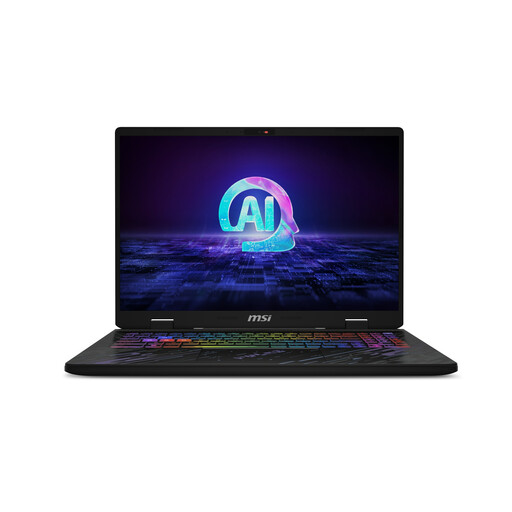
MSI Pulse 16 AI laptop, Core Ultra 7 155H and RTX 4060
Consider this laptop if a built-in QHD+ display suits where you play, and compare its configuration with the requirements of your games.
The listed variant names a 16-inch 240 Hz QHD+ display, Intel Core Ultra 7 155H, GeForce RTX 4060, 16 GB DDR5 and a 1 TB SSD. Confirm the exact variant and its ports before relying on a wired headset; check compatibility for wireless headphones too.
Joybuy
 No image available
CyberPowerPC JOYB1013 desktop, Ryzen 7 9800X3D and RTX 5080
Consider this desktop if you are comparing graphics-focused configurations, but assess its exact components against your chosen games and display rather than assuming a performance result.
The listed configuration has a Ryzen 7 9800X3D, GeForce RTX 5080 16 GB, 32 GB DDR5 and a 2 TB NVMe SSD. Check the monitor and peripherals you will use, as well as the desktop’s headphone connections.
Joybuy
Frequently asked questions
How much RAM should I look for to play Crusader Kings III?
Paradox Interactive lists 16 GB RAM in its recommended Windows specification for Crusader Kings III. Check the requirements of your other historical strategy games and any mods you plan to use rather than treating that figure as a universal target.
Will any Bluetooth gaming PC work with all my wireless headphones’ features?
No: a Bluetooth listing alone does not establish support for every headphone feature. Microsoft Support notes that Windows 11 Bluetooth Low Energy Audio support can depend on device hardware and manufacturer drivers, so check the exact PC and headset for the features you need.
Do I need to check audio ports for a wired headset?
Yes. Match your headset’s USB or 3.5 mm connector to the ports on the exact PC, checking the front and rear connections where relevant before ordering.


