What to check before buying
Settle the software requirements first, then decide whether your room can safely accommodate a separately powered display or whether you would use a laptop’s built-in screen.
Desktop tower
Choose when: You have room for a separate monitor and can arrange power safely for the full setup.
Account for: The monitor and other mains-powered equipment when counting sockets; a tower alone does not resolve a socket shortage.
Gaming laptop with its built-in screen
Choose when: An integrated screen makes the core setup easier to accommodate and the exact laptop meets your software requirements.
Account for: An external monitor or dock if you plan to add one; check laptop graphics specifications rather than assuming a desktop card with a similar name is equivalent.
Compact desktop
Choose when: Desk space is tight but you still want a desktop and separate peripherals.
Account for: A separate display and its power needs. A smaller case does not establish a lower electrical load.
| Concern | What to check | Who this matters to |
|---|
| Simulation headroom |
Compare the exact CPU, graphics card and graphics memory with your chosen software’s minimum and recommended requirements. |
If I plan detailed parks, I want to check the recommended tier rather than rely on a gaming label. Around 42% of consumers put simulation headroom first. |
| Safe socket use |
Count mains-powered devices and compare their combined load with any extension device’s marked rating; do not chain extension leads. |
With few wall sockets, I need a setup I can power without overloading an extension device; for around 33% of consumers, safe socket use is the primary concern. |
| Software baseline and accessories |
Check whether the exact configuration meets the named game’s intended tier and which peripherals are included. |
If I am starting with one park simulator, I want a configuration that meets its requirements and a clear list of what else I need. Meeting that baseline comes first for around 25% of consumers. |
Joybuy product choices
These laptops can be used with their built-in screens, while the towers suit a separately planned display setup. For either approach, compare the exact configuration with your chosen software and account for every mains-powered part of the setup.
 No image available
Lenovo Legion Pro 7 16IAX10H, 83F5000UUK
Consider this laptop if you would use its built-in screen instead of powering a separate monitor for the core setup.
The listed configuration has a 16-inch display, Intel Core Ultra 9 processor, NVIDIA GeForce RTX 5090 graphics, 64 GB RAM, a 2 TB SSD and Windows 11 Home. Check the exact software requirements and the adapter’s electrical demand when planning connections.
View on Joybuy
 No image available
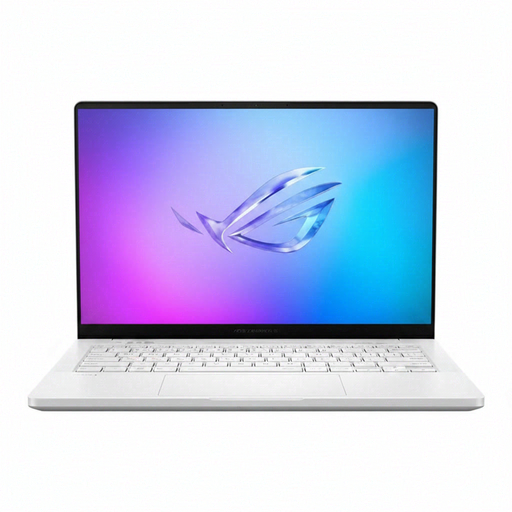
ASUS ROG Zephyrus G14 GA403WR-QS088W
This is a laptop option if a built-in screen suits your socket and desk arrangement.
The listed configuration has a 14-inch WQXGA+ display, AMD Ryzen AI 9 HX 370, NVIDIA GeForce RTX 5070 Ti graphics, 32 GB LPDDR5x memory, a 2 TB SSD and Windows 11 Home. Check your software requirements and the adapter’s electrical demand; confirm the finish if it matters to you.
View on Joybuy
 No image available
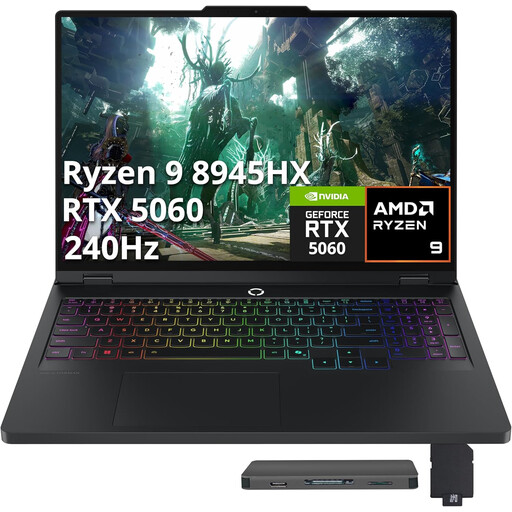
Lenovo Legion Pro 5 LEG P5 R9, 32 GB, 2 TB, 5060
Its built-in display offers a laptop setup without a separate monitor for core use.
The product name identifies the R9, 32 GB memory, 2 TB storage and 5060 variant. Before choosing it for a particular game, confirm the exact processor and graphics specifications, including graphics memory, and check the adapter’s electrical demand for your socket plan.
View on Joybuy
 No image available
CyberPowerPC JOYB1013 gaming desktop
Consider this tower if you can accommodate and safely power a separate display.
It lists an AMD Ryzen 7 9800X3D, NVIDIA GeForce RTX 5080 with 16 GB graphics memory, 32 GB DDR5, a 2 TB NVMe SSD and Windows 11 Home. A monitor, keyboard and mouse are not included; check the intended application’s requirements and the connected equipment’s electrical load.
View on Joybuy
 No image available
Lenovo Legion T7 34IAS10 gaming tower
This tower suits a workspace where you can plan separately for a display and its power connection.
It lists an Intel Core Ultra 7 265K, NVIDIA GeForce RTX 5070 Ti, 32 GB RAM, a 1 TB SSD and Windows 11 Home. Compare the exact configuration with your software; check the computer’s actual electrical demand rather than using its power-supply rating as its consumption.
View on Joybuy
Frequently asked questions
What PC specifications does Planet Coaster 2 call for?
Frontier Developments lists 16 GB RAM and 25 GB available storage at both minimum and recommended tiers. The minimum names an Intel i5-6600K or AMD Ryzen 5 2600 and a GTX 1060 6 GB, RX 5600 XT 6 GB or Arc A750 8 GB; the recommended tier names an Intel i7-10700K or AMD Ryzen 7 5800 and an RTX 2070 Super 8 GB, RX 6700 XT 12 GB or Arc A770 16 GB, and requires an SSD. Check another game or design application against its own requirements.
Can I use an extension lead for the computer and monitor?
Yes, provided the combined connected load stays within the extension device’s marked rating and the setup follows its instructions. Electrical Safety First advises against plugging one extension lead into another; count the computer, monitor and any other connected equipment rather than judging the load by the number of free outlets.
Does a cable reel need to be fully unwound?
Unwind a cable reel fully when you need its stated full current rating. Electrical Safety First also advises using a reel with a thermal cut-out and checking its marked rating against the connected load.
Is a gaming laptop the simpler choice when sockets are limited?
A laptop used with its built-in screen can avoid a separately powered monitor in the core setup, but that does not establish whether its exact configuration will run your chosen software. Compare its CPU, graphics, memory and storage with the application’s requirements, and count any external monitor or dock you plan to add.
Will a prebuilt desktop include a monitor, keyboard and mouse?
Check the exact product listing rather than assuming those accessories are included. The CyberPowerPC JOYB1013 listing identifies its monitor, keyboard and mouse as not included, so a setup using that tower needs those items planned separately.


