Quiet-study tile artist
You mainly draw, export and test 2D tiles and want fan noise to be as unobtrusive as practical while you work. The case and the complete cooling configuration both matter.


Choose a gaming PC for the tile-set software and project size you will actually use, then check the case and cooling configuration for a quiet study. Unity’s documented 8 GB RAM recommendation is a starting point for its editor, not a target for every project; if Unreal Engine is part of your work, Epic Games recommends 32 GB RAM and at least 8 GB graphics memory for its Windows hardware. Neither a gaming label nor a sound-damped case establishes how loud a complete PC will be under your workload.
You mainly draw, export and test 2D tiles and want fan noise to be as unobtrusive as practical while you work. The case and the complete cooling configuration both matter.
You use tiles in a Unity project and need to check the editor’s requirements against your version, operating system and project size. Unity says larger, more complex projects require more memory.
You expect the same PC to handle Unreal Engine work, substantial 3D tasks or demanding games. Epic Games’ recommended Windows hardware gives you a different memory and graphics-memory reference point from basic 2D tile creation.
Start with the applications and project size, then decide how much attention the study’s noise level needs before comparing individual desktops.
| Concern | What to check | Who this matters to |
|---|---|---|
| Noise in the study | Check the exact case, cooler, fans and graphics card. Ask what workload and listening distance any noise claim describes. | If I draw tiles in a quiet room, distracting fan noise matters even when a PC can run my software. Around 40% of consumers put low-distraction operation first. |
| 2D and Unity workflow | Check your Unity version, supported operating system and graphics requirements, project memory needs and SSD space. Unity recommends high-IOPS storage for build activity. | While exporting art and testing a small Unity project, I want the editor and my other open applications to run comfortably. For around 30% of consumers, that workflow is the primary need. |
| Heavier-project headroom | For Unreal Engine, compare RAM and graphics memory with Epic Games’ recommended Windows figures of 32 GB and at least 8 GB; check cooling for the selected configuration too. | If my tile set belongs to a larger Unreal or 3D project, I need to plan for that workload rather than buy solely for drawing tiles. Around 30% of consumers prioritise this headroom. |
Unity recommends a minimum of 8 GB RAM for its editor but says larger, more complex projects need additional memory. The figure alone cannot tell you how much room your own project and simultaneous applications need.
List the tools you will keep open and the likely project size before choosing memory.
Choosing too little headroom may bring a memory upgrade forward as the project grows.
A sound-damped case or a builder’s quiet-PC positioning does not establish the noise of a complete gaming desktop while it is rendering or playing a game. Fractal Design’s Define 7 materials describe both damping and a ventilated-panel option, illustrating why enclosure and airflow choices need to be considered together.
Ask the seller for the selected cooler, fan layout and graphics-card details, and for the workload and distance behind any noise figure.
Change-of-mind cancellation and remedies for faulty or misdescribed goods are different questions. GOV.UK identifies custom-made items as an exception to the usual change-of-mind refund obligation; that does not remove remedies for faults or misdescription.
Check whether the proposed build is treated as custom-made, read the seller’s cancellation and fault-return terms, and keep the final component list.
Unity says creating builds reads and writes many small files and recommends high-IOPS storage. Capacity still needs to accommodate Windows, applications, games and project files.
Check the exact SSD and the space you will have available for your work, rather than comparing graphics-card names alone.
Running short of usable space can mean moving project files or adding storage later.
A custom gaming-PC builder relevant if you want to choose components rather than accept a fixed specification.
A builder with quiet-PC positioning relevant to a noise-sensitive study.
A custom gaming-PC range to consider if you want to specify a system around both creative work and gaming.
These Joybuy desktops include configurations to assess for heavier Unreal or 3D projects and a bundle to assess for a lighter 2D and Unity workflow. For every option, check software compatibility and the selected system’s cooling and noise characteristics before deciding whether it belongs in a quiet study.
 No image available
Consider this configuration if Unreal Engine or heavier 3D work is part of your intended workload; confirm the software and project requirements before choosing it.
The listed configuration has 32GB DDR5 RAM, a 2TB NVMe SSD and Windows 11 Home. Ask for the exact case, cooler, fans and workload-specific noise information before placing it in a quiet study.
 No image available
Assess this desktop for a heavier project or gaming workload, rather than assuming those components are needed for tile drawing alone.
The listed configuration has 32GB RAM, a 2TB SSD and Windows 11. Check its dimensions and placement requirements, along with the exact cooling setup and noise under a relevant workload.
 No image available
Consider it if your tile-set work extends into Unreal Engine or 3D tasks and the configuration meets your particular software requirements.
The listed system has 32GB DDR5 RAM, a 1TB NVMe SSD and Windows 11 Home. Confirm the case, cooler, fan arrangement and noise conditions for the complete desktop.
 No image available
Assess this system if your planned engine, games or 3D work call for more than a lightweight tile-art setup.
The listed configuration has 32GB RAM, a 2TB SSD and Windows 11. Confirm the graphics-memory specification for your intended software, as well as the cooling components and workload-specific noise.
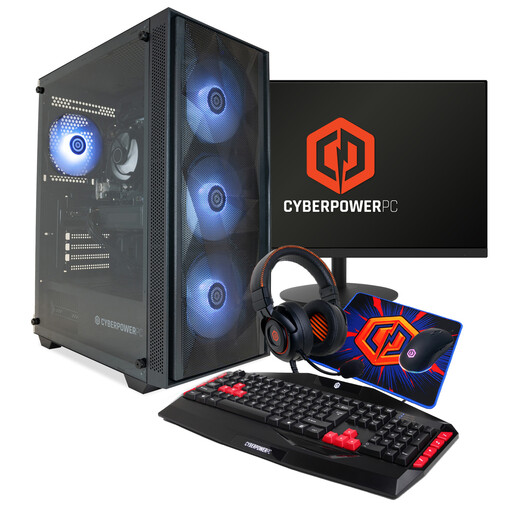 No image available
Consider this bundle for drawing and testing tiles in a comparatively small Unity project, subject to your editor version and project requirements.
It lists 16GB DDR5 RAM, a 1TB NVMe SSD and Windows 11 Home, plus a monitor, keyboard, mouse, headset and mousepad; confirm the exact supplied accessories. Its 16GB RAM is below Epic Games’ 32GB recommendation for Unreal Engine Windows hardware. Check the cooling and noise conditions for study use.
Unity recommends a minimum of 8 GB RAM for running its editor, but says larger and more complex projects require more. Check your project size and the applications you will run alongside Unity before treating that minimum as a purchase target.
Use those figures as checks if your tiles belong to an Unreal Engine workflow: Epic Games lists 32 GB RAM and at least 8 GB graphics memory in its recommended Windows hardware. They are not a requirement for every 2D tile-set task.
A sound-damped case alone cannot establish how quiet the complete PC will be while gaming or rendering. Fractal Design describes damping in its Define 7 case, but you should also check the selected graphics card, cooler, fans and the conditions behind any system-noise claim.
Check whether the seller treats your configuration as custom-made and read its cancellation terms before ordering. GOV.UK distinguishes the change-of-mind position for custom-made items from remedies for faulty or misdescribed goods; keep a copy of the agreed component list in case the delivered system differs.