What matters when choosing?
Decide whether you need basic planning, general 3D modelling or rendering-led visualisation before comparing PC configurations. Workspace fit is a separate check whichever workload you choose.
Basic garden planning
Consider this when: Your selected application is for modest layouts or plans and has relatively modest published hardware requirements.
Trade-off: Meeting one planning tool’s requirements does not establish that the PC can run detailed SketchUp projects or a real-time renderer.
3D garden modelling
Consider this when: You will build and navigate garden models in SketchUp or another desktop 3D application.
Trade-off: A configuration suited to general modelling is not automatically suited to unusually detailed scenes or a separate rendering tool.
Rendering-led visualisation
Consider this when: Your chosen workflow calls for detailed rendered scenes or real-time visualisation.
Trade-off: Check the renderer’s specific graphics and video-memory requirements rather than assuming that any discrete GPU qualifies; Lumion View’s ray-traced workflow has an additional hardware-capability requirement.
| Concern | What to check | Who this matters to |
|---|
| Reliable 3D modelling |
Identify the application and version; compare its Windows, GPU, video-memory and system-memory requirements with the exact PC configuration. |
If I mainly want to build and navigate a garden model, I need the chosen application to run without buying hardware intended for a different workflow. Roughly 29% of consumers put reliable modelling first. |
| Detailed rendering |
Check the renderer’s required GPU and video memory, plus ray-tracing capability if the application calls for it. |
When detailed rendered scenes are the goal, graphics capability determines what I need to investigate before choosing a tower. Around 36% of consumers place rendering capability first. |
| Growing projects |
Compare system memory, CPU and storage with the application’s requirements; check available storage expansion if projects will be kept locally. |
With larger project files and other office applications open, I want a configuration that accommodates the work I plan to keep on this PC. Roughly 21% of consumers make project size and multitasking their primary concern. |
| Home-office fit |
Measure the intended space and check chassis dimensions, display connections, ports and the selected model’s expansion options. |
If the computer must fit beside an existing desk setup, placement and connections may decide which form factor works. Around 14% of consumers put home-office fit first. |
Joybuy product choices
These PCs cover home-office garden modelling and rendering-oriented setups, including laptops as well as desktop towers. Compare each configuration with your chosen application before deciding which form factor and hardware make sense.
 Image unavailable
Lenovo Legion Pro 7 16IAX10H, 83F5000UUK
Consider this laptop if you want a built-in screen for a home-office modelling setup. Its listed configuration includes a 16-inch display, Intel Core Ultra 9, NVIDIA GeForce RTX 5090, 64 GB RAM, a 2 TB SSD and Windows 11 Home; check the GPU details against your chosen design or rendering application.
View on Joybuy
 Image unavailable
Lenovo Legion T7 34IAS10 gaming tower
Consider this tower for a fixed home-office modelling setup. The listed configuration has an Intel Core Ultra 7 265K, RTX 5070 Ti, 32 GB RAM, a 1 TB SSD and Windows 11 Home. Check the graphics card’s video memory and the tower’s dimensions against your software and available space, and confirm what peripherals are included.
View on Joybuy
 Image unavailable
CyberPowerPC JOYB1013 gaming desktop
Consider this desktop if a dedicated GPU is a priority for your chosen visualisation software. Its listed configuration includes an AMD Ryzen 7 9800X3D, NVIDIA GeForce RTX 5080 with 16 GB video memory, 32 GB DDR5 RAM, a 2 TB NVMe SSD and Windows 11 Home. Confirm the renderer’s requirements and plan for a monitor, keyboard and mouse if needed.
View on Joybuy
 Image unavailable
Stormforce Cyclone Intel Core i7 gaming desktop
Consider this desktop when comparing fixed-workspace configurations for GPU-led visualisation. Its listed specifications are an Intel Core i7, RTX 5080, 32 GB RAM, a 2 TB SSD and Windows 11. Check the exact graphics and software requirements, as well as the tower’s dimensions and any peripherals needed for your desk.
View on Joybuy
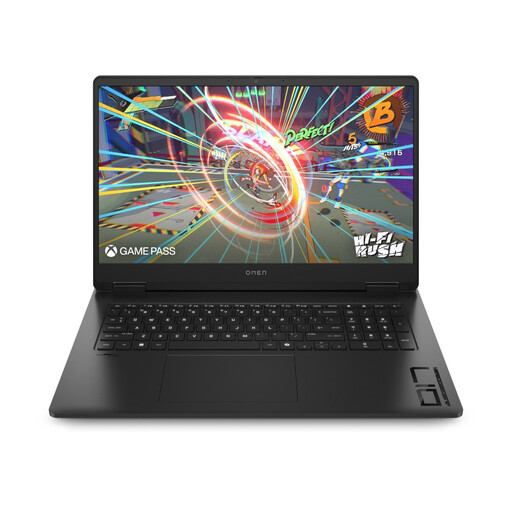 Image unavailable
HP OMEN 17, model 17-db1000na
Consider this laptop if you want a built-in display for garden modelling rather than a separate tower and screen. Its listed configuration includes a 17-inch Full HD display, AMD Ryzen AI 7 350, RTX 5060, 16 GB RAM, a 1 TB SSD and Windows 11 Home. Confirm its graphics card’s video memory and your application’s requirements before choosing it for more detailed work.
View on Joybuy
Common questions
What should I check before choosing a PC for virtual garden design?
Start with the exact application and version you intend to use, then compare its published requirements with the PC’s final configuration. Operating-system minimums are not a substitute for the graphics, memory and storage requirements of a modelling or rendering application.
Is 8 GB of graphics memory enough for garden modelling?
It meets SketchUp’s stated recommendation for a modern GPU in general Windows work, but it does not guarantee suitability for every detailed model or renderer. Check the requirements for the features and scene complexity you plan to use; Lumion notes that greater detail, textures and models increase graphics-memory demands.
Can I use a modest PC for a basic virtual garden plan?
Yes, if the particular planning application supports that configuration. DynaScape Design, for example, lists an Intel i5-class processor and 4 GB RAM in its requirements, but meeting one application’s requirements does not establish suitability for detailed 3D modelling or real-time rendering.
Do I need ray tracing to design a virtual garden?
Not for every garden-planning application. It becomes a hardware consideration if you choose a ray-traced workflow such as Lumion View; check that application’s current graphics requirements before selecting a GPU.


