Desk-based procedure practisers
You want to repeat simulated pre-take-off flows and aircraft handling at one monitor, with room in your plans for a gamepad, stick, yoke or throttle.


For seated take-off practice in Microsoft Flight Simulator 2024, start by comparing PCs with Microsoft Flight Simulator’s recommended specification: 32 GB RAM and a graphics card in its 8 GB VRAM tier. Choose the simulator, display arrangement and controls before paying for more graphics headroom; VR or multiple displays make the ideal tier worth comparing, while home practice does not automatically count towards formal flight training.
You want to repeat simulated pre-take-off flows and aircraft handling at one monitor, with room in your plans for a gamepad, stick, yoke or throttle.
You plan to use VR, several monitors or more flight controls. Graphics capability, connections and space around the desk therefore matter alongside the PC specification.
You want home simulation for familiarisation but also need to establish separately whether any practice can be credited within your particular approved training programme.
Choose the simulator and display arrangement first, then check how the PC, controls and available space work together.
| Concern | Buying checks | Who it matters to |
|---|---|---|
| Simulator performance | For Microsoft Flight Simulator 2024, compare the complete CPU, GPU, VRAM and RAM specification with Microsoft Flight Simulator’s requirements. Its recommended tier lists 32 GB RAM and an 8 GB VRAM Radeon RX 5700 XT or GeForce RTX 2080; check storage space for the installation too. | If I am practising on one screen, I want a PC suited to my simulator and chosen settings rather than relying on a graphics label. Roughly 31% of consumers put simulator performance first. |
| Controls and space | Check compatibility and connections for your intended controls, and allow desk or floor space for them. Microsoft Flight Simulator’s PC guidance lists a gamepad or joystick for aircraft control. | I need a stick, yoke or other controls I can use comfortably from my seat, without crowding the desk. Around 25% of consumers make control and space fit their primary concern. |
| VR and display expansion | Match the exact graphics-card outputs to planned monitors or a headset. For a more demanding setup, compare Microsoft Flight Simulator 2024’s ideal tier, which lists 64 GB RAM and a 12 GB VRAM Radeon RX 7900 XT or GeForce RTX 4080. | If I expect to add VR or more screens, I want to plan those connections and graphics requirements before choosing a tower. Approximately 25% of consumers prioritise that expansion. |
| Specification and support | Confirm the exact components, operating system, ports and warranty terms for the model you choose. If paying in instalments, check the full repayment terms rather than only the monthly amount. | I want to know precisely what is included and who provides support before committing to a configured PC. About 19% of consumers put purchase clarity and support first. |
A graphics-card label cannot establish how the whole PC will suit your simulator and display settings. Microsoft Flight Simulator specifies combined hardware tiers, while Scan notes that CPU, GPU and memory balance affects gaming performance.
Compare the exact GPU and VRAM alongside the CPU, RAM and storage against your simulator’s requirements.
A PC specification does not settle how you will handle aircraft controls from your seat. Microsoft Flight Simulator’s PC guidance lists a gamepad or joystick for aircraft control and describes further flight-control options.
Decide which controls you intend to use, then check their compatibility, connections and physical fit before choosing the PC.
For UK commercial air transport operations, the UK Civil Aviation Authority’s ORO.FC.145 rules require approval of training and checking programmes and set qualification requirements for flight simulation training devices used to meet them. A consumer PC is not automatically a substitute for an approved device or programme.
Use home simulation for familiarisation; ask the relevant approved organisation or operator what device, syllabus and credit apply to your circumstances.
A configured-desktop line to examine if you want to compare named CPU, GPU, memory and storage components.
A prebuilt-desktop option when you want to assess a listed configuration and its retailer-provided support together.
A builder offering prebuilt and configurable PCs if you want to select components around a particular display and control plan.
These desktops and laptops are options to compare for seated flight-simulator use. Match each one to your simulator, displays and controls; a laptop’s built-in screen also changes how you might arrange the desk.
 No image available
Consider this desktop if you are comparing a dedicated graphics card and 32 GB memory for seated simulation. Its stated configuration includes 16 GB GPU memory, 32 GB DDR5, a 2 TB NVMe SSD and Windows 11 Home; check suitability for your exact simulator and displays.
The tower is listed without a monitor or peripherals. Plan and check compatible flight controls separately.
 No image available
Consider this desktop when comparing a 32 GB memory configuration for a seated simulator setup. It lists 12 GB GPU memory, 32 GB DDR5, a 1 TB NVMe SSD and Windows 11 Home; matching a VRAM figure alone does not establish equivalent simulator performance.
The tower is listed without a monitor or peripherals. Check your intended controls and display arrangement separately.
 No image available
This desktop is an option for a fixed seated setup where you can accommodate a tower and separate controls. Its stated configuration includes Windows 11; verify the graphics-card display outputs against any planned monitors.
A monitor, keyboard and mouse are listed as separate from the tower. Check the space and connections needed for your flight controls.
 No image available
This laptop offers a built-in 16-inch screen for a seated arrangement rather than requiring a desktop tower. Its stated configuration includes an Intel Core Ultra 9, 64 GB RAM, a 2 TB SSD and Windows 11 Home.
Before planning separate flight controls or external displays, check their connections and how the laptop will sit on your desk.
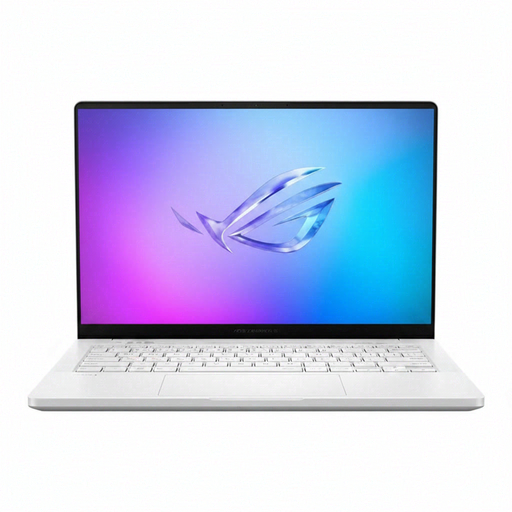 No image available
Consider this laptop if a built-in 14-inch display fits the seated setup you have in mind. It lists a Ryzen AI 9 HX 370, GeForce RTX 5070 Ti, 32 GB memory, a 2 TB SSD and Windows 11 Home.
Check the GPU memory and connections needed for your simulator, controls and any external display. Confirm the exact finish if colour affects your choice.
Do not assume that it can. For UK commercial air transport operations, the UK Civil Aviation Authority’s ORO.FC.145 rules require approved training and checking programmes and set qualification requirements for flight simulation training devices used to meet them; ask the relevant approved organisation or operator what credit, if any, applies to your circumstances.
Choose the type of controls you intend to use before finalising the PC and desk arrangement. Microsoft Flight Simulator’s PC guidance lists a gamepad or joystick for aircraft control; if you plan to use a yoke, throttle or pedals instead, check simulator compatibility, connections and available space.
Microsoft Flight Simulator places 32 GB RAM in its recommended tier and 64 GB in its ideal tier. Compare 32 GB configurations for a conventional monitor setup, or consider the ideal tier when planning a more demanding arrangement; check the full CPU and GPU specification rather than choosing by memory alone.