Daytime kitchen-diner players
If games often coincide with daylight or ceiling lights, assess reflections from the intended seat before choosing a display for its picture characteristics alone.


Choose a gaming TV that fits the kitchen diner and remains viewable in its usual lighting before prioritising a headline refresh rate. A compact OLED is worth considering where space is tight and lighting can be controlled; compare Mini LED or QLED-style options where daytime viewing is the harder issue. For arcade sports, check the exact TV, HDMI input, console and game together before relying on a 120Hz or higher claim.
If games often coincide with daylight or ceiling lights, assess reflections from the intended seat before choosing a display for its picture characteristics alone.
If smooth, responsive arcade sports are the priority, check whether the exact TV and HDMI input can use the modes supported by your console and games.
If the dining area must work around the TV, measure the stand or mounting space and plan where the console, sockets and cables will go.
Start with the screen position and available space, then check the gaming modes you can actually use. LG describes pixel-level blacks on its C5 OLED, while Samsung positions QLED for bright viewing; neither description settles how a screen will look opposite your windows or lights.
| Concern | What to check | Who this matters to |
|---|---|---|
| Daytime visibility | Check reflections from windows and ceiling lights at the proposed screen position; compare claims for the exact model. | If I play while the kitchen is brightly lit, I need to follow the action without distracting reflections. Around 33% of consumers put light and reflection management first. |
| Console motion | Check the game’s output mode and the TV input’s support for 120Hz, variable refresh rate (VRR) and automatic low-latency mode (ALLM), where relevant. | When fast play matters most, I want to know that my console, game and TV connection can use the intended mode. For around 27% of consumers, motion and compatibility come first. |
| Shared-space fit | Measure the exact TV with its stand, or check its mounting requirements, against the available space. | If the screen will sit beside the dining area, I need it to leave room for everyday use. Fit is the first concern for around 20% of consumers. |
| Kitchen placement | Plan safe socket access, ventilation and a cable route away from water, heat and walkways. | With a console and TV sharing a kitchen diner, I need a practical place for both without trailing cables or crowded sockets. Around 20% of consumers prioritise safe installation. |
PlayStation states that PS5 supports 4K 120Hz output, but a TV’s higher refresh-rate claim does not establish what a particular console game will output.
Check the game mode, console settings, cable and gaming-capable HDMI input before choosing on refresh rate.
OLED contrast claims and QLED brightness positioning cannot tell you where a window or pendant light will reflect on your proposed screen.
Check the view from your usual seat at the times you expect to play, then compare exact models.
A screen may fit across a sideboard but leave too little depth for its stand or an awkward route to the console. Gaming features may also depend on the HDMI input used.
Measure the TV with its stand, identify the input you need and plan the console position before ordering.
If the supplied cable cannot reach, a longer certified Ultra High Speed HDMI cable may be needed; Xbox Support says the supplied Xbox Series X cable is two metres long.
Water, heat, overloaded sockets and trailing cables all affect where a TV and console can be placed safely.
Keep equipment and cables away from splashes and heat, avoid overloaded extensions and follow the TV’s installation instructions. Electrical Safety First advises placing sockets and switches a safe distance from the sink, where possible at least 30 cm horizontally.
LG’s 42-inch C5 OLED offers a compact model to consider when the dining area limits screen size.
Samsung’s QLED and Neo QLED ranges are relevant comparisons when daylight is a major consideration.
Sony’s 55-inch K-55XR5 is a model to compare if documented console connections matter most.
These 42- to 55-inch OLED, Mini LED and Direct LED options give you different screen sizes and stated gaming features to check against your kitchen lighting, available space and console. A panel’s advertised mode alone does not establish what an individual game will output.
 Image unavailable
Consider this 55-inch option if you have space for a larger screen and want to compare gaming modes for arcade sports.
The product name states 4K and 165Hz Game Mode Ultra; check which modes your console and games can use, as well as fit and reflections in the room.
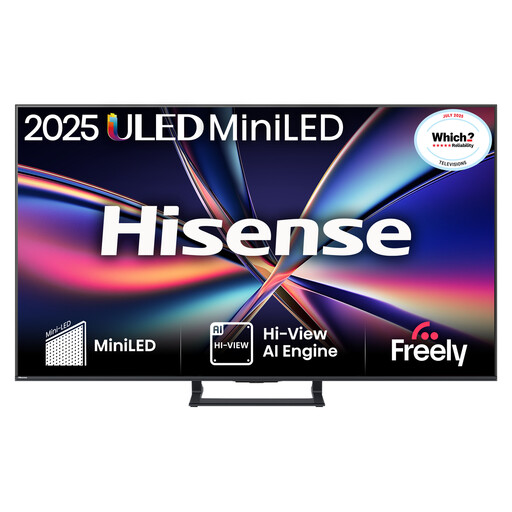 Image unavailable
This is another 55-inch screen to assess against your dining-area layout and daytime viewing position.
The product name states 4K and 144Hz Game Mode PRO. Check the exact input and supported console game modes rather than treating 144Hz as a promised game output.
 Image unavailable
Consider the 50-inch size if a 55-inch screen would take too much space around the dining area.
The product name states 4K and a native 144Hz refresh rate. Confirm the game’s output, the appropriate TV input and how reflections fall at the intended position.
 Image unavailable
The 42-inch screen is an option to measure up where a larger television could dominate the shared space.
The product name states 4K OLED. Check the exact stand dimensions, HDMI gaming modes and reflections under your usual kitchen lighting before choosing it.
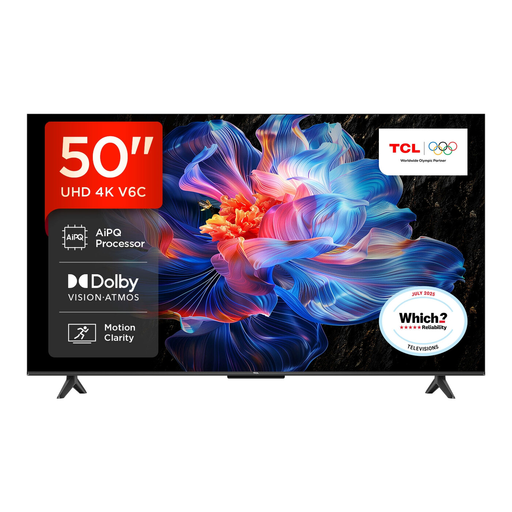 Image unavailable
This 50-inch option may suit a layout where screen size matters more than a particular display technology.
The product name states 4K and a 120Hz Game Accelerator qualified as FHD. Do not treat that FHD mode as a 4K/120Hz specification; check the resolution and refresh modes you intend to use.
Not for every game, but a 120Hz-capable TV matters if you intend to use a supported 120Hz mode. PlayStation states that PS5 supports 4K 120Hz output; check your particular game, console settings and TV input before buying for that feature.
A 144Hz label alone is not a reason to expect a different console game output. Check the 4K/120Hz mode, HDMI connection and relevant VRR and ALLM support that your console and game can use.
Choose a position that keeps the TV, console and cables away from splashes and heat, and follow the equipment’s installation instructions. Electrical Safety First advises that sockets and switches should be a safe distance from the sink—where possible, at least 30 cm horizontally.
Gaming itself does not create a TV Licence requirement. TV Licensing says you need to be covered to watch live TV or use BBC iPlayer, so consider how else you plan to use the screen.