For local basketball games with a player seated to the side, start with viewing-angle results for the exact TV, then check its gaming features. RTINGS found that the LG B5 OLED retained colour and contrast at sharp angles, making that tested model a useful reference for a moderately lit room. If daylight and reflections dominate, a bright-room LED route may suit the space better, but its side-seat picture still needs a model-specific check.
Who this setup suits
Side-seat local multiplayer players
If one player regularly sits well away from the centre, the picture from that seat matters as much as the centred view. RTINGS reported that the tested LG B5 OLED retained colour and contrast at sharp angles; check results for any other model separately.
Response-focused console players
For reaction-based basketball games, check Game Mode input lag as well as the refresh modes your console and game can use. RTINGS defines input lag as the delay between a source signal and its onscreen response.
Daytime living-room players
If daylight or reflections obscure the screen during matches, assess glare from the seats you use. RTINGS found strong direct-sunlight performance on the tested Samsung R95H, but that result does not describe every LED TV or establish the specifications of another regional variant.
What matters when choosing
Start with the view from both seats, then check the gaming mode against your console and the light in the room.
OLED gaming TV
Consider when: the off-centre view is a priority and matches take place in a dark or moderately lit room; RTINGS found strong sharp-angle picture retention on the LG B5.
Trade-off: the tested B5 was better suited to moderate lighting than a sun-drenched room, so check bright-room results for the model you choose.
Bright-room LED gaming TV
Consider when: daylight and reflections regularly interfere with play; RTINGS reported strong direct-sunlight performance for the tested Samsung R95H Micro RGB LED.
Trade-off: that model's glare result does not establish how another LED or Mini LED TV will look from a side seat.
| Concern |
What to check |
Who this matters to |
| Side-seat picture |
Find viewing-angle results for the exact model and assess the picture from your intended seats. |
When I sit to the side during a local match, I need to follow the court without losing colour or contrast; around 42% of consumers would put side-seat picture consistency first. |
| Gaming response |
Check measured Game Mode input lag and which HDMI port supports the gaming mode you intend to use. |
Quick controller response matters most to me during fast play, but the mode must also work with my console and game; roughly 33% of consumers would prioritise responsive gameplay. |
| Daylight and reflections |
Check model-specific reflection handling and brightness results in light resembling your room. |
If daylight makes the screen hard to see, controlling glare comes before other picture preferences; about 25% of consumers would make bright-room visibility their primary concern. |
Buying pitfalls
-
Assuming a 120Hz label guarantees 4K/120 play
A TV's panel refresh rate alone does not establish what each HDMI input can receive. Sony's BRAVIA 5 specifications, for example, list VRR on HDMI 3 and 4.
Check 4K/120Hz, variable refresh rate (VRR) and auto low latency mode (ALLM) against the exact model and port. Sony also advises checking the cable, console settings and game support for 4K/120 output.
-
Choosing by panel label instead of the side-seat view
A result for one OLED or LED model cannot establish how another TV will look to the player sitting off-centre.
Use independent viewing-angle results for the exact model and assess the picture from the seats you plan to use.
-
Overlooking the Game Mode picture
Low-latency settings can reduce picture processing, so the image may look different from a film-oriented setting even when controls feel more responsive.
Compare Game Mode with your normal viewing setting while you can still assess whether that trade-off works for you.
-
Assuming installation comes with a large TV
A large shared-screen setup may need separate arrangements for a stand, wall mounting or removal of an old set. Joybuy lists installation and recycling as optional services on a Sony BRAVIA 8 listing.
Before ordering, check the available services alongside the TV's footprint and any wall-mount compatibility requirements.
Brands to consider
LG
LG's OLED models are relevant when the side-seat picture is the main consideration. In RTINGS' test, the LG B5 retained colour and contrast at sharp angles and offered four HDMI 2.1-bandwidth ports supporting up to 4K/120Hz with VRR.
- The tested B5 provides a model-specific starting point for comparing off-axis picture quality and console connections.
- RTINGS judged the B5 better suited to moderate lighting than a sun-drenched room. LG's advertised G6 gaming features apply to that separate model.
Samsung
Samsung offers gaming-focused TV lines worth checking when daylight or PC compatibility affects the choice. Samsung's UK gaming information lists high-refresh features that depend on the particular model and connected equipment.
- RTINGS found strong direct-sunlight performance and four HDMI 2.1 ports on the tested R95H.
- The R95H result does not establish side-seat performance across Samsung's range or specifications for a differently listed regional variant.
Sony
Sony's model specifications and console setup guidance can help buyers check the exact HDMI connection they plan to use.
- Sony UK lists 4K/120Hz, VRR and ALLM features for the cited BRAVIA 5 and BRAVIA 8 models.
- The cited BRAVIA 5 specifications restrict VRR to HDMI 3 and 4. Sony says 4K/120 output also depends on the cable, console settings and game.
Joybuy TVs for this setup
These TVs include OLED, Mini LED and Direct LED options for a shared-screen gaming setup. For each one, check the side-seat picture and the exact gaming mode you need rather than treating its display label as the answer.
 No image available
Hisense U7Q Pro 55U7QTUK Pro 55-inch Mini LED TV
Consider this Mini LED model if room lighting is part of your decision; check its picture from the side seat before committing.
The product name specifies a 4K HDR TV and 165Hz Game Mode Ultra. Confirm which gaming modes work with your intended HDMI input and equipment.
View on Joybuy
 No image available
TCL 75Q6C 75-inch QD-Mini LED TV
This is a large-screen Mini LED option for local play; check viewing angles and reflections for the room and seats you intend to use.
The product name specifies 4K HDR and a 144Hz native refresh rate. Check the supported input modes before relying on that rate for a console game.
View on Joybuy
 No image available
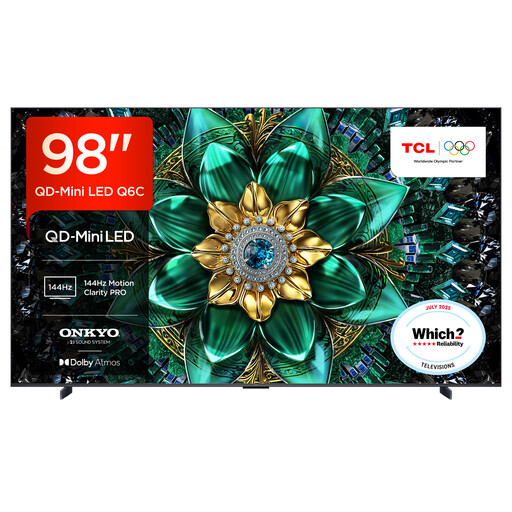
TCL 98Q6C-UK 98-inch QD-Mini LED TV
For a large shared-screen arrangement, confirm that the TV fits the room, delivery route and intended stand or wall position.
The product name specifies 4K HDR and a 144Hz native refresh rate. Check side-seat picture quality and the gaming capability of the HDMI input you plan to use.
View on Joybuy
 No image available
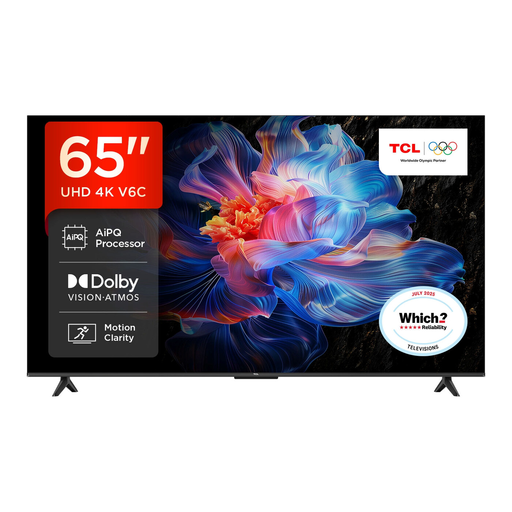
TCL 65V6C 65-inch Direct LED TV
Consider this model if an FHD high-refresh gaming mode meets your needs, while checking how its picture holds up from the side seat.
The product name specifies a 4K HDR TV but limits its 120Hz Game Accelerator label to FHD. Do not treat that label as a 4K/120Hz specification.
View on Joybuy
 No image available
Sony BRAVIA A90 XR42A90K 42-inch OLED TV
This smaller OLED option may fit a compact shared-screen arrangement, but check how this exact model looks from your side seat.
The product name specifies 4K HDR. Confirm its supported gaming modes by HDMI input and check compatibility with your console, cable and game.
View on Joybuy
Common questions
Is a 120Hz TV enough for 4K/120 console basketball gaming?
No. Sony's 4K/120 setup guidance also calls for a compatible TV input and cable, suitable console settings and a game that supports the mode. Check the exact TV port and the basketball game's available graphics options.
Why check input lag as well as refresh rate?
Input lag describes the delay before a source signal appears on screen; refresh rate describes how often the display can update. RTINGS identifies input lag as important for reaction-based games, so compare measured Game Mode results at the resolution and refresh rate you expect to use.
Will VRR and ALLM work with every console and HDMI port?
No. VRR and ALLM require compatible equipment, and support can differ by TV input. HDMI Licensing Administrator describes VRR as a way to reduce tearing and judder; check the exact model's port specifications and your console settings before relying on either feature.


