Choose a 4K 120Hz TV with suitable HDMI, variable refresh rate (VRR) and Game Mode support if your console and games can use those features. If you mainly play at 60 frames per second, a compatible 4K TV may suit you without the higher-refresh specification; for play at a desk, consider a monitor instead. In every case, check the exact display model, HDMI input and connection path before buying.
Who is this for?
High-frame-rate console players
If you play fast-action games on a PS5, Xbox Series X or Switch 2, check the modes supported by your console, games and chosen HDMI input. A display’s headline refresh rate alone does not tell you which modes you can use.
Shared living-room households
If one screen serves gaming and other viewing, its size, seating position and connections matter alongside gaming features. Check how the console connects when a soundbar or AV receiver is part of the setup.
Desk-based or mixed-generation players
If you prefer a smaller screen or use several console generations, start with each console’s TV-output modes. Nintendo UK says Switch Lite does not support TV mode, while PlayStation provides a PS5 test for supported 1440p display modes.
What matters when choosing?
Start with where you play and the output modes your existing console and games can use. Then check the exact screen size, HDMI input and equipment between the console and display.
4K 120Hz gaming TV
Consider it when: Supported high-frame-rate modes are important to your living-room setup.
Keep in mind: The console, game and selected HDMI input must support the mode; a refresh claim above 120Hz does not establish a console benefit.
General 4K TV
Consider it when: You want a living-room screen and do not need 4K output at 120Hz for the games you play.
Keep in mind: Check the exact model’s gaming mode and HDMI inputs rather than assuming that 4K and HDR imply 120Hz or VRR support.
Desk monitor
Consider it when: You intentionally play at a desk and want a smaller display.
Keep in mind: Confirm the console’s supported resolution and refresh modes; a monitor’s maximum refresh rate may not be usable from that console.
| Concern |
What to check |
Who this matters to |
| Usable high-frame-rate gaming |
Check the console and game’s output modes, then confirm 120Hz, VRR and Game Mode support on the intended display input. |
For fast-action games, I want to know whether my setup can actually use the faster mode. Around 36% of consumers might put usable high-frame-rate and VRR capability first. |
| HDMI and connected equipment |
Identify the capable HDMI socket and cable; check whether a soundbar or AV receiver sits between console and screen. |
With several devices connected, I need the console’s video mode to work through my chosen setup. Roughly 29% of consumers might make connection compatibility their primary concern. |
| Living-room screen fit |
Measure the space and consider the seating position and room light before comparing the exact screen size and model. |
My screen needs to suit the room and the people sharing it, even if I also want gaming features. About 21% of consumers might put room and screen fit first. |
| Desk and console-output fit |
Confirm TV-mode availability and the console’s supported resolution and refresh rate before choosing a compact display. |
At a desk, or with an older console, I do not want to choose a display around an output mode I cannot use. Around 14% of consumers might prioritise that fit. |
Checks that are easy to miss
-
Assuming every HDMI socket works alike
A 4K TV can offer different capabilities on different inputs. Xbox Support notes that some inputs support only lower resolutions, and Samsung’s 4K 120Hz Game Mode instructions identify a particular input on selected models.
Check the manual for the exact TV model and size, then plan which socket the console will use.
-
Buying 120Hz for a mode you cannot use
Refresh-rate support depends on the console, game and display together. Nintendo UK limits Switch 2’s 120Hz output to 1080p or 1440p when the TV and software support it.
Look up the output modes of your console and the games you play before making 120Hz a deciding requirement.
-
Blaming the TV before checking the connection
Xbox Support says a soundbar, AV receiver or other device between the console and TV can affect video features and quality.
Test a direct console-to-TV connection on the intended input first. Then reconnect other equipment and check which modes remain available.
A longer Xbox Series X cable run for supported 4K 120Hz use may require a certified Ultra High Speed HDMI cable.
-
Applying a range-wide claim to a different model
Gaming specifications can depend on the model and selected input. Samsung’s 4K 120Hz Game Mode guidance covers selected models, while TCL’s published HDMI 2.1 and VRR specifications for the Q9BK describe that model.
Match the full model number and screen size to the relevant product sheet before relying on a feature claim.
Brands to compare
LG
LG’s OLED evo G6 range is a reference point when comparing OLED gaming TVs.
- LG lists up to 4K at 165Hz, G-SYNC compatibility and FreeSync Premium for its UK G6 model family.
- Check the exact model and console mode: the stated 165Hz maximum does not mean a console game can use it.
Samsung
Samsung is relevant when comparing TV ranges with gaming-mode and HDMI-input options.
- Samsung provides model-specific instructions for using 4K 120Hz Game Mode on selected TVs.
- Confirm that the exact TV model, size and intended HDMI socket support the mode you need.
TCL
TCL’s Q9BK is a model-specific reference when considering a QD-Mini LED gaming TV.
- TCL lists HDMI 2.1, ALLM and 120Hz and 144Hz VRR support for the UK Q9BK.
- Those Q9BK specifications should not be assumed for another TCL model or size; confirm what your console can output.
Joybuy display choices
These choices include living-room 4K TVs and a desk monitor. Compare their stated size and display type with your setup, then confirm the console modes available on the exact model and HDMI input.
 No image available
TCL 55P8K-UK 55-inch QLED 4K TV
Consider this living-room TV if a 55-inch screen fits your space. Its title specifies 4K HDR and a 288Hz Game Accelerator; confirm which refresh modes your console can use on the intended HDMI input.
View on Joybuy
 No image available
Hisense 55U7QTUK Pro 55-inch Mini LED 4K TV
Consider this 55-inch living-room TV if its size suits your seating arrangement. The title states a 165Hz Game Mode Ultra feature, but that maximum does not establish a usable console refresh rate; check the exact input and supported modes.
View on Joybuy
 No image available
TCL 50Q6C-UK 50-inch QD-Mini LED 4K TV
Consider this model if you are looking for a 50-inch TV rather than a larger living-room screen. The title advertises a 144Hz native refresh rate, while the listing’s refresh descriptions differ; confirm the exact model’s modes and capable HDMI input before buying for a particular console mode.
View on Joybuy
 No image available
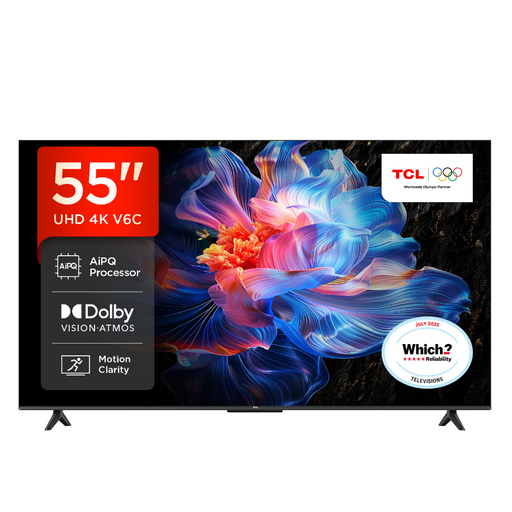
TCL 55V6C 55-inch Direct LED 4K TV
Consider this 55-inch living-room TV if its size and 4K format suit your setup. Its stated 120Hz Game Accelerator applies at FHD, not 4K; check the exact console modes and HDMI input rather than treating it as a 4K 120Hz claim.
View on Joybuy
 No image available
Samsung Odyssey OLED G8 LS32DG802SUXXU 32-inch 4K monitor
Consider this monitor for a desk-based console setup if a 32-inch screen is what you want. Check the console’s supported resolution and refresh rate over HDMI, along with any VRR requirements, rather than relying on the monitor’s gaming designation.
View on Joybuy
Common questions
Will a PS5 automatically use every gaming feature on a new TV?
No. PlayStation says the PS5 normally selects the available resolution automatically, but 120Hz and VRR still depend on the connected display and game. Check the console’s video-output settings to see the detected capabilities and test 1440p output if that mode matters to you.
Can Xbox Series S use a 120Hz TV without HDMI 2.1?
Yes, at a lower resolution where the TV supports the mode, according to Xbox Support. If you want a particular resolution at 120Hz, check the display’s supported input modes and the cable requirements for that setup.
Can a soundbar or AV receiver affect console video features?
Yes. Xbox Support says equipment between the console and TV can affect video features and quality. Establish which modes work with a direct console-to-TV connection, then reconnect the audio equipment and test again.
Can Nintendo Switch Lite connect to a TV or gaming monitor?
No. Nintendo UK says Switch Lite does not support TV mode. For Switch 2, Nintendo says 120Hz output is limited to 1080p or 1440p and requires support from both the display and software.
Does a 4K TV’s HDMI label confirm 4K gaming at 120Hz?
No. Xbox Support notes that some inputs on a 4K TV support only lower resolutions, while 4K gaming at 120Hz on Xbox Series X requires a suitable HDMI 2.1 TV and an Ultra High Speed HDMI cable. Check the exact model’s input specifications before choosing a socket or cable path.


