An OLED TV is worth considering for dark-room local co-op when deep blacks and a clear view from several seats matter most. Before choosing one, check that the exact model and HDMI inputs support the gaming modes your console or PC can use, and weigh the picture benefits against how often you leave static game graphics on screen.
Who is this choice for?
Dark-room co-op hosts
If friends or family share the screen after dark, shadow detail and the view from side seats both affect the experience. LG explains that OLED pixels can switch off individually for true blacks and retain contrast at wide viewing angles.
Console and PC players seeking smoother action
If game frame rates vary, variable refresh rate (VRR) may help reduce visible judder and tearing when both the source and TV input support it. Auto Low Latency Mode (ALLM) can let a compatible source request the TV’s low-latency mode, according to the HDMI Licensing Administrator.
Players with long sessions and persistent HUDs
If maps, health bars or pause screens remain visible for extended periods, consider panel care alongside picture quality. LG identifies prolonged static images as a condition associated with OLED image-retention risk.
What matters when choosing?
Start with the view from every seat, then check gaming connections, physical fit and your habits with static game screens.
| Concern |
What to check |
Who this matters to |
| Dark scenes and side seats |
Check the display technology and view a dark scene from your intended seating positions where possible. LG describes true blacks and wide-angle contrast as OLED characteristics. |
When several of us share a shadow-heavy adventure, I want the picture to remain readable away from the central seat. Around 36% of consumers put dark-scene and shared-viewing quality first. |
| Responsive play |
Confirm the intended 4K refresh rate, VRR and ALLM on the exact TV input, as well as support from your console or PC. |
If frame delivery varies, I want compatible gaming modes rather than relying on a refresh-rate headline alone. For around 29% of consumers, responsive play and source compatibility take priority. |
| Screen space and installation |
Compare TV and stand dimensions with the available space; check mounting requirements and where each device will connect. |
Split-screen play feels cramped in my seating arrangement, but the TV still has to fit the room and accommodate our devices. Screen space and installation come first for around 21% of consumers. |
| Static graphics and panel care |
Read the exact OLED model’s panel-care instructions and consider whether games or menus stay on screen for extended periods. |
I often leave a fixed HUD or pause screen visible, so I need to consider that use before settling on OLED. Around 14% of consumers prioritise managing static game graphics. |
Buying pitfalls
-
Assuming every HDMI input has the same gaming features
Port allocation can differ even within one TV. Sony’s specification for the K-55XR8M2 lists VRR on HDMI 3 and 4, but ALLM on all four inputs.
Map your console, PC and audio equipment to the ports in the exact model’s specification before installation.
-
Choosing OLED without considering static game screens
OLED’s dark-room appeal does not remove the image-retention consideration: LG identifies extended display of a static image as a risk condition.
If you often leave a game paused or play with persistent graphics, read the model’s panel-care guidance and use its protection features as directed.
-
Choosing a diagonal before measuring the room
A larger screen takes more space, while stand and mounting requirements vary by model. You also need a connection plan for the devices used during co-op play.
Measure the intended position, check the stand or mount specifications, and plan cable routes before choosing a size.
Mounting and cable routing may add work to the setup.
-
Assuming removal and installation are included
Replacing a large TV can involve arranging collection of the old set as well as delivery and installation of the new one.
Check the retailer’s terms for old-TV takeback, installation and packaging collection, including whether any service needs booking in advance.
Brands to consider for OLED gaming TVs
LG
LG’s OLED range is relevant to dark-room viewing from several seats. Its published specifications for the OLED48C46LA C4 also list 4K at 120 fps, VRR and ALLM.
- LG explains that individually switchable OLED pixels support true blacks and wide-angle contrast.
- LG also identifies image-retention risk with prolonged static images. Check gaming specifications and panel-care guidance for the exact model and size.
Samsung
Samsung’s S90F OLED range offers several screen-size choices; its UK product page lists sizes from 42 to 83 inches.
- The size range gives consumers options to assess against their seating and installation space.
- Confirm gaming modes, HDMI input capabilities and panel-care terms for the exact S90F variant under consideration.
Sony
Sony’s model-specific specifications can help households plan connections for several gaming devices.
- Sony lists VRR on HDMI 3 and 4 and ALLM on HDMI 1–4 for the K-55XR8M2.
- That port allocation applies to the K-55XR8M2; check other Sony models individually rather than assuming they match.
Joybuy TVs for this setup
These TVs offer screen-size choices for a dark-room shared setup. Compare the exact model’s gaming inputs and panel-care guidance against your devices and playing habits before choosing.
 No image available
Samsung S85F QE83S85FAE 83-inch 4K TV
Consider this 83-inch model if a large shared screen fits your room. Check the exact model’s gaming-input capabilities and measure the installation space before choosing it.
View on Joybuy
 No image available
Samsung S90F 55-inch 4K OLED TV
The 55-inch OLED format is worth assessing for co-op seating and dark-room viewing. Check which HDMI inputs support the gaming modes you intend to use, and read the model’s panel-care guidance.
View on Joybuy
 No image available
Sony BRAVIA A90 XR42A90K 42-inch 4K OLED TV
Consider the 42-inch size where installation space is limited, while checking that each player can comfortably see their part of a split screen. Confirm gaming features by HDMI input for this model.
View on Joybuy
 No image available
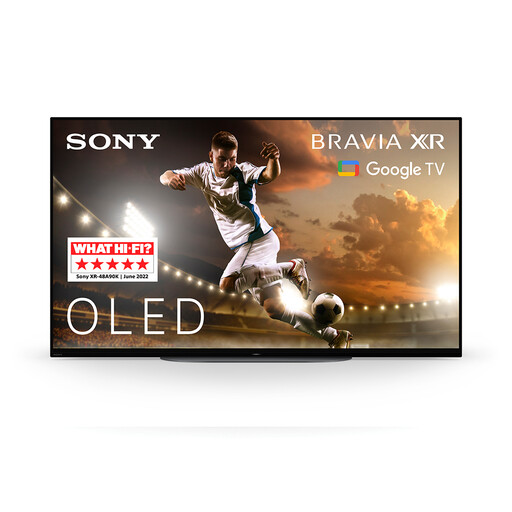
Sony BRAVIA A90 XR48A90K 48-inch 4K OLED TV
The 48-inch screen is another size to assess for a smaller shared gaming area. If VRR matters to your setup, confirm support and the relevant HDMI input for the exact model before buying.
View on Joybuy
 No image available
Sony BRAVIA 8 K65XR80BP 65-inch 4K OLED TV
Consider this 65-inch screen if your seating and installation space call for a larger shared picture. Check high-frame-rate support, VRR, ALLM and their HDMI input allocation against your gaming devices.
View on Joybuy
Common questions
Do I need VRR for local co-op adventures?
Not necessarily. VRR is most relevant when game frame delivery varies and both your source device and the selected TV input support it; the HDMI Licensing Administrator says it can reduce or eliminate judder and frame tearing. It does not replace adequate screen space or the dark-room picture characteristics you need.
Is ALLM useful if the TV has a selectable game mode?
ALLM is useful when a compatible console or PC can request the TV’s low-latency mode automatically. The HDMI Licensing Administrator notes that this mode can stop some picture processing, so you may prefer another picture mode for non-gaming viewing.
Do all HDMI ports support the same gaming features?
No; check the specification for the exact TV. Sony lists ALLM on HDMI 1–4 but VRR only on HDMI 3 and 4 for the K-55XR8M2, so plan which ports your consoles and other devices will use.
Does an OLED TV need different care with a persistent game HUD?
Persistent graphics are worth considering, but they do not automatically rule out OLED. LG says image retention may occur when a static image is displayed for an extended period; read the exact model’s panel-care instructions and use its protection features as directed.


