Dark-room co-op players
You play alongside someone else in a dim room and want to distinguish pathways, switches and other clues in dark scenes without losing sight of nearby detail.


If dark-scene contrast matters most for your co-op puzzle games, start by considering an OLED TV, then choose a size both players can view comfortably from their usual seats. Check 4K/120Hz, variable refresh rate (VRR) and automatic low-latency mode (ALLM) on the HDMI input you will use; a higher refresh specification is useful only if your connected PC and games can use it.
You play alongside someone else in a dim room and want to distinguish pathways, switches and other clues in dark scenes without losing sight of nearby detail.
Your main source is a console, and you want the TV to use the gaming modes supported by the console, cable and chosen HDMI input without unnecessary picture-mode changes.
You share a screen between a console and a gaming PC. Refresh modes above 120Hz are worth checking if the PC and the games you play can use them.
For two people playing in a dark room, check picture presentation and seating positions before comparing refresh-rate claims. Then match the TV’s gaming modes to the device and HDMI input you will actually use.
| Concern | What to check | Who this matters to |
|---|---|---|
| Dark-scene detail | Check the exact panel type and picture modes; assess whether clues remain visible in dark scenes. | If a pathway or switch is hard to distinguish, I need a picture that keeps nearby dark details visible. Around 33% of consumers put dark-scene presentation first. |
| Shared viewing | Measure seating-to-screen distance, installation space and both players’ viewing positions. | I need both players to read clues comfortably from where we sit, rather than choosing a diagonal size in isolation. For around 27% of consumers, screen fit is the primary concern. |
| Console connection | Confirm 4K/120Hz, VRR and ALLM on the intended HDMI input, including any required cable or signal-format setting. | When the console is our main source, I want its supported gaming modes to work through the socket we use. Console connection is the first priority for around 27% of consumers. |
| PC refresh modes | Check the resolution and refresh combination against the PC, graphics hardware, game and HDMI input. | I also use a gaming PC and want a higher refresh mode only if my setup can deliver it. Around 13% of consumers chiefly prioritise that PC capability. |
Sony UK notes that HDMI 2.1 features can be limited to particular inputs and may require the right signal format, source and cable. A 120Hz label alone does not establish what your chosen socket can accept.
Check the exact model’s HDMI-input table before buying. During setup, use the specified input and enable its required signal format and Game Mode where applicable.
Samsung United Kingdom limits its advertised 4K 144Hz, 165Hz and 240Hz modes to compatible PC-connected games and graphics hardware. A console or game cannot gain a mode it does not support.
For a console-first setup, establish picture and room fit, then verify the console features you need. Consider refresh modes above 120Hz once you have checked the PC and game you intend to connect.
A diagonal measurement does not tell you whether both players can read clues from their seats or whether the TV will fit its furniture or wall position.
Measure from your usual seats to the proposed screen position, then check the TV’s physical width, stand depth, cable clearance and off-centre viewing positions. Which? recommends starting with the seating distance.
A change of screen size may also mean reconsidering the furniture or mounting position.
Mount suitability depends on the TV, fixings and wall. An Office for Product Safety and Standards report documented a detachment risk for one specific motorised display mount; it is not a finding about all mounts.
Check the TV’s weight and mounting pattern against the mount rating, assess the wall structure and follow both sets of installation instructions. Use a qualified installer if the installation cannot be assessed safely.
LG is relevant if you are considering an OLED TV for dark-room play.
Samsung is relevant when a gaming PC may share the TV with a console.
Sony’s model-specific guidance is useful when checking console gaming connections.
These TVs give you OLED, Mini-LED and QLED models to assess for dark-room co-op play. Compare each screen’s size with your seating positions, and confirm the gaming modes and HDMI input needed by your console or PC.
 No image available
Consider this large-screen option if both players can sit at a comfortable distance. The title specifies an 83-inch diagonal and 4K resolution; measure the room and confirm the gaming modes on the HDMI input you will use.
 No image available
The 42-inch OLED model is worth considering where installation space is limited, provided both players can still read clues from their seats. Its title also identifies 4K and HDR; check the model-specific HDMI inputs and settings for your gaming device.
 No image available
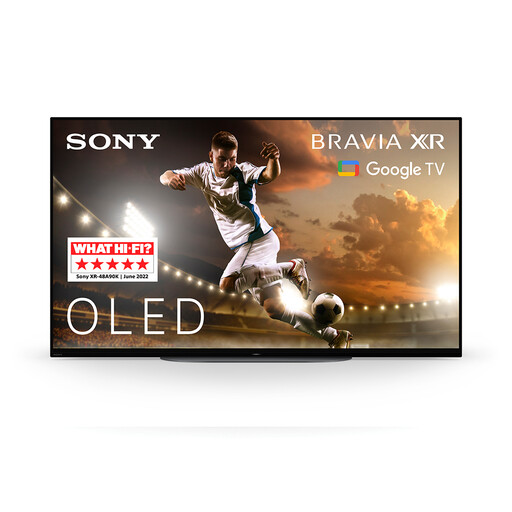
Consider the 48-inch OLED variant if that size suits both seating positions. The title specifies 4K and HDR; if VRR or 4K/120 gaming matters to you, confirm support and required settings for the exact HDMI input before buying.
 No image available
This 55-inch Mini-LED model offers a different display route to consider for the room. Its title specifies 4K and HDR; check how its dark scenes look to you and confirm the resolution and refresh mode available on your intended HDMI input.
 No image available
Consider this 55-inch QLED model if its size fits both players’ seats. The title advertises a 288Hz Game Accelerator; establish the resolution, input and operating conditions of that mode before treating the figure as a match for your PC or console.
Not necessarily: a mode above 120Hz is chiefly relevant if a compatible gaming PC and game can use it. Samsung United Kingdom specifies PC-connected game and graphics-hardware conditions for its advertised 4K high-refresh modes; for a console setup, check the supported modes on the exact TV input instead.
No; support can vary between sockets on the same TV. Sony UK advises checking the model-specific input, required signal format, connected device and cable for the gaming features you want.
Measure the distance from both usual seats to the planned screen position, then check whether each player can comfortably read game text and clues. Which? recommends measuring seating distance before choosing a size; installation space and off-centre seats matter too.
Check whether delivery, stand installation, wall mounting, removal or recycling are included in the services offered for that TV. For wall mounting, confirm the mount rating, TV mounting pattern and wall suitability before installation.