Hosts with players in side seats
If several people share one screen, check whether game details remain easy to follow from the outermost seats. Measure the space before choosing a size, and assess the exact TV’s off-angle picture.


For large-group cooperative cooking games, start with screen size, seating positions and a picture everyone can follow rather than the highest advertised refresh rate. Nintendo UK specifies up to 1080p at 60 fps for the original Switch in TV mode; 4K120, variable refresh rate (VRR) and auto low-latency mode (ALLM) become more relevant if compatible consoles, games or a PC are also part of the setup. Check the exact TV’s HDMI inputs before making those features a reason to buy.
If several people share one screen, check whether game details remain easy to follow from the outermost seats. Measure the space before choosing a size, and assess the exact TV’s off-angle picture.
If an original Switch shares the TV with a Switch 2, PS5, Xbox or PC, match gaming features to each device. Confirm 4K120, VRR and ALLM on the exact model and HDMI input you plan to use.
Daylight and lamps can affect how easily everyone sees the game. Compare reflection handling and the exact model’s picture in the room lighting you normally use, as well as its gaming features.
Work out where everyone will sit and which devices will be connected before comparing gaming modes or screen technologies.
| Concern | Buying checks | Who this matters to |
|---|---|---|
| Shared visibility | Measure the seating area and screen placement; assess the exact TV from the widest side seat. LG UK describes wide viewing angles as a characteristic of its OLED technology. | With players spread across a sofa and extra chairs, I need to read ingredients and timers without moving to the centre. Around 36% of consumers put shared visibility first. |
| Console compatibility | Check which HDMI inputs support the modes you need, then check the console, game, cable and settings. Nintendo UK specifies up to 1080p at 60 fps in TV mode for the original Switch. | If I might connect another console or a PC, I want gaming modes that those devices can actually use. Console-ready responsiveness is the main concern for around 29% of consumers. |
| Bright-room picture | Check reflections at your usual playing time and compare evidence for the exact models, not just their panel labels. Samsung UK positions selected Neo QLED TVs for bright gaming pictures. | When we play with daylight or lamps on, I need the game to remain visible without rearranging the room. Around 21% of consumers prioritise bright-room visibility. |
| Placement and setup | Confirm stand width or wall compatibility, delivery access and any optional installation or old-TV collection before ordering. | If a larger set is difficult to bring in or place safely, its screen size alone will not settle my choice. Practical setup is the primary concern for around 14% of consumers. |
Nintendo UK specifies a maximum TV-mode output of 1080p at 60 fps for the original Switch. A TV’s 144Hz or 165Hz label does not raise that console’s maximum output, while side-seat visibility may matter throughout a group session.
List the devices and games you will use. Consider higher refresh rates for compatible equipment or a planned upgrade, rather than assuming every console benefits from them.
Sony UK warns that a TV supporting 4K120 or VRR may not offer it on every HDMI input. The correct signal format, compatible device and cable can also be necessary.
Check the exact model’s input table and setup instructions, then connect the console to a port that supports the required mode.
A TV still has to fit its stand or wall position, the route into the home and the group’s seating arrangement. Old-TV removal may need arranging separately.
Measure the furniture, wall space and delivery route before ordering. Check available installation and collection services at checkout; GOV.UK says waste electrical products can also be taken to a local household waste recycling centre.
OLED, QLED and Mini LED identify display routes, not identical brightness, viewing angles or HDMI functions across every TV bearing those labels.
Use the technology to narrow your options, then assess the chosen model and size against your lighting, side seats and connected devices.
An OLED route worth examining when players sit off-centre. LG UK attributes wide viewing angles to OLED’s self-emitting pixels.
A Neo QLED route to compare for a room with substantial ambient light, using evidence for the particular model rather than a brand-wide assumption.
A BRAVIA route for households checking console features input by input.
These larger-screen TVs cover OLED, QD-Mini LED, Direct LED and QLED options for shared play. Compare their dimensions with your seating and delivery space, then confirm gaming modes on the exact HDMI input you intend to use.
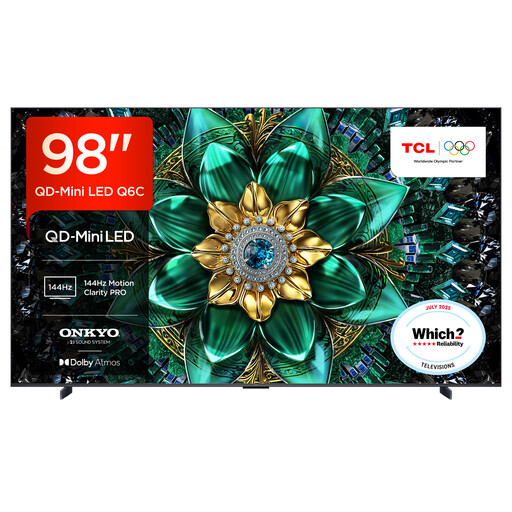 Image unavailable
Consider this 98-inch screen if the whole group has room to see it and the set can reach its intended position. Its title specifies 4K and a native 144Hz refresh rate; confirm the HDMI input and connected device needed for the gaming mode you want.
Measure furniture, wall space and delivery access before choosing this size.
 Image unavailable
This 83-inch OLED is an option to assess when players sit across a wide seating area. The product description lists VRR and ALLM; check which HDMI input supports the modes your devices need.
Its stated resolution is 4K. Compare its dimensions with your viewing positions and delivery route.
 Image unavailable
Consider the 75-inch size if it fits your seating layout without making placement difficult. The title specifies 4K and a native 144Hz refresh rate; check which gaming modes the intended HDMI input and source device can use.
Confirm the set’s dimensions before ordering.
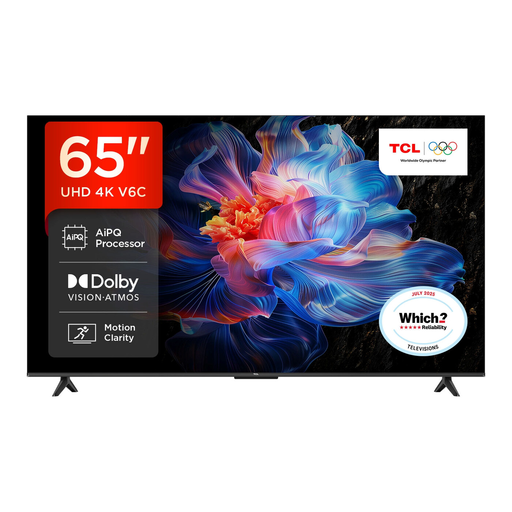 Image unavailable
The 65-inch screen is worth measuring against a more compact group seating arrangement. Its title specifies 4K resolution but limits the 120Hz Game Accelerator claim to Full HD; do not assume 4K gaming at 120Hz.
Check the dimensions and the HDMI input required for any gaming features you plan to use.
Image unavailable
This 85-inch 4K screen is an option if its dimensions suit the room and the route into it. Check the exact supported refresh modes before relying on the title’s 144Hz claim, and confirm which HDMI input supports the gaming features you intend to use.
No, not for the original Switch’s maximum TV-mode output alone. Nintendo UK specifies up to 1080p at 60 fps via HDMI; 120Hz may still matter if you also connect compatible gaming equipment.
No: Nintendo UK says Switch 2’s 4K output is capped at 60 fps, although it supports frame rates up to 120 fps in other supported output modes. Check the game’s modes and the TV’s relevant HDMI input before choosing a screen for either feature.
Use an HDMI input that supports the modes you want, then check the TV’s gaming settings and the device and cable requirements. Sony UK notes that 4K120 and VRR can require a particular input and HDMI signal format; ALLM works with compatible equipment.
Measure the intended stand or wall position and the delivery route, then check whether installation and old-TV collection are available for that product. GOV.UK says unwanted electrical products can be taken to a local household waste recycling centre, where they should be separated from other waste.