Choose a gaming-focused 4K TV if console play is a priority and you want to use features such as 4K at 120Hz, variable refresh rate (VRR) and automatic low-latency mode. A general-purpose TV may suit a shared room when those modes matter less, while a monitor makes more sense for close, desk-based play. Whichever route you take, check the exact display model, HDMI input, cable and games before relying on an advertised gaming mode; Xbox Support notes that even inputs on the same TV can support different resolutions.
Who is choosing a display?
Feature-conscious PS5 and Xbox players
If 120Hz, VRR or HDR is important to you, check what your console recognises through the chosen HDMI input and cable. PlayStation provides connected-display information on PS5, while Xbox Support sets out the equipment needed for Series X 4K gaming at 120Hz.
Shared-TV console households
One screen needs to fit the room and serve everyday viewing as well as games. Which? treats room size and console-oriented features as distinct considerations when choosing a gaming TV.
Desk-based console players
If you usually play close to your own screen, a monitor may fit the setup better than a household TV. Check its console modes over HDMI: Xbox Support says 1440p output requires a compatible console and a display that supports that resolution.
What matters when choosing?
Gaming-focused 4K TV
Consider it when: Console gaming is a primary use and you want to check for 4K at 120Hz, VRR and low-latency handling.
Bear in mind: A panel’s headline refresh rate does not establish which modes your console can use through a particular HDMI input.
General-purpose TV
Consider it when: Room fit and shared everyday viewing matter at least as much as high-frame-rate console play.
Bear in mind: Which? notes that a console can connect to a TV with an HDMI input, but that alone does not establish support for VRR or high refresh rates.
Computer monitor
Consider it when: You mainly play at a desk rather than using the display as a shared household TV.
Bear in mind: Check console support over HDMI rather than relying on a refresh-rate figure intended for PC use.
| Concern |
What to check |
Who this matters to |
| Console and HDMI compatibility |
Check the required mode on the exact input and through the intended cable or receiver. Xbox Support specifies an HDMI 2.1-capable TV and Ultra High Speed HDMI cable for Series X 4K gaming at 120Hz. |
I want the feature I choose a display for to work with my actual console and connections. Around 31% of consumers would put that compatibility first. |
| Room fit and shared viewing |
Measure the display space and usual seating position, then consider how the screen will serve ordinary TV viewing as well as games. |
If the whole household uses the screen, an awkward size affects more than gaming. Room fit and shared viewing would come first for around 31% of consumers. |
| Fast-action gaming |
Check 120Hz and VRR support on the console’s HDMI input, plus the games’ available modes and Game Mode or automatic low-latency behaviour. |
I care most about whether the console and the games I play can use the faster or variable-refresh modes. That would be the primary concern for around 23% of consumers. |
| TV or monitor setup |
Decide whether play is mainly at a desk or in a shared room; for a monitor, confirm the desired 1440p or 4K mode over HDMI. |
Playing close to a personal screen matters more to me than having a household television. Around 15% of consumers would make the desk setup their first consideration. |
Checks that prevent a poor fit
-
Assuming every HDMI port works alike
A TV can support a mode while a particular input supports only a lower resolution; Xbox Support advises checking the TV manual for the appropriate input.
Identify the required port in the exact model’s manual before buying, then check the mode reported by your console after connecting it.
-
Checking the TV but not the cable path
Xbox Support includes an Ultra High Speed HDMI cable among the requirements for Series X 4K gaming at 120Hz. A receiver or switch in the connection path also needs checking.
Confirm that the cable and any intervening equipment support the mode you intend to use.
A cable of a suitable length may be needed if the existing one cannot serve the planned setup.
-
Applying a brand-wide claim to one model
LG, Samsung and Sony describe gaming features for particular ranges or compatible combinations, not every TV they make.
Check the exact model and screen-size variant for its inputs and gaming modes.
-
Choosing a monitor from PC figures alone
A monitor’s advertised refresh rate may describe a PC connection rather than the HDMI mode available to a console.
Confirm the resolution, 120Hz and VRR modes accepted over HDMI by your specific console, then check its display information after setup.
Relevant brands to consider
LG
LG’s OLED gaming-TV range is relevant if you are comparing a TV for console play with everyday viewing.
- LG lists up to 165Hz at 4K, G-SYNC compatibility and FreeSync Premium for its OLED77C64LA.
- Those manufacturer specifications do not mean a console will use 165Hz. Check the exact size and model’s HDMI modes against your console.
Samsung
Samsung’s gaming-TV range offers models worth examining when gaming controls and HDMI connectivity are priorities.
- Samsung lists adaptive-sync technologies, Gaming Hub and multiple HDMI 2.1 ports among features on applicable gaming TVs.
- Feature availability varies by model; confirm the exact TV’s ports and supported console modes rather than applying a range-wide description to it.
Sony
BRAVIA TVs are relevant to PS5 households considering a shared screen with automatic gaming picture-mode handling.
- Sony says Auto Low Latency Mode can activate Game Mode when a PS5 or another compatible console is connected to an applicable BRAVIA TV.
- Check the exact BRAVIA model, HDMI port and console settings; automatic activation depends on the compatible combination.
Joybuy display choices
These choices include a desk monitor, gaming-focused TVs and general-purpose TVs with gaming-related features. Compare each screen with your room and intended console mode rather than treating its headline refresh rate as a console-compatibility guarantee.
 No image available
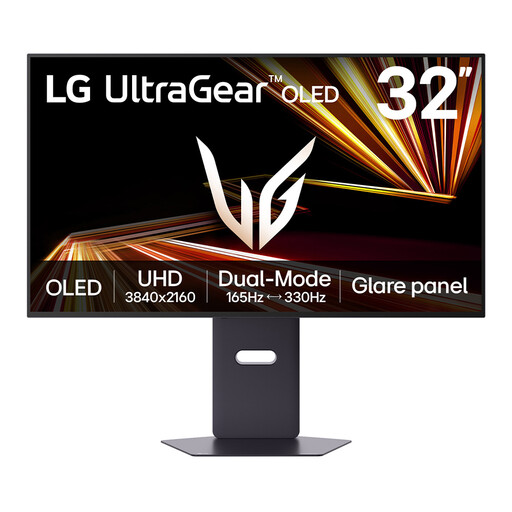
LG UltraGear 32GX850A-B 32-inch OLED 4K monitor
Consider this monitor for a personal desk setup rather than a shared-TV arrangement.
The product name specifies 4K UHD and a dual mode with a maximum of 330Hz; confirm which resolution and refresh modes your console accepts over HDMI. Follow the display’s guidance on prolonged static images.
Joybuy
 No image available
TCL 55P8K-UK 55-inch QLED 4K TV
Consider this TV if a 55-inch screen fits a shared room and gaming features matter alongside everyday viewing.
The product name advertises a 288Hz Game Accelerator, but that figure does not establish a 288Hz console mode. Check the resolution and refresh rate available to your console on the intended HDMI input.
Joybuy
 No image available
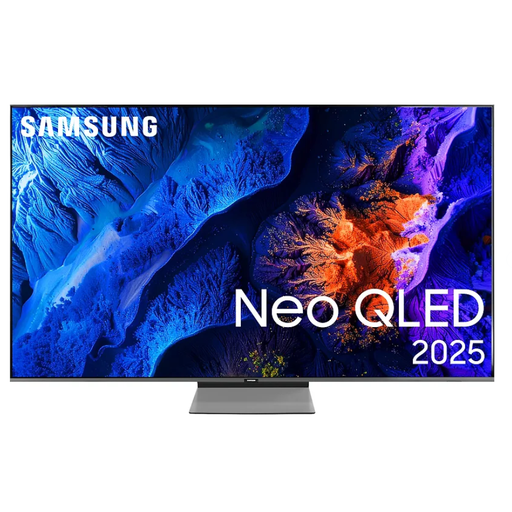
Samsung Neo QE55QN85FAUXXH 55-inch 4K TV
Consider this smart TV for console play and shared viewing if its 55-inch size suits the room.
Check the exact model’s HDMI input specifications and the console’s display information before choosing it for a particular 120Hz or VRR mode.
Joybuy
 No image available
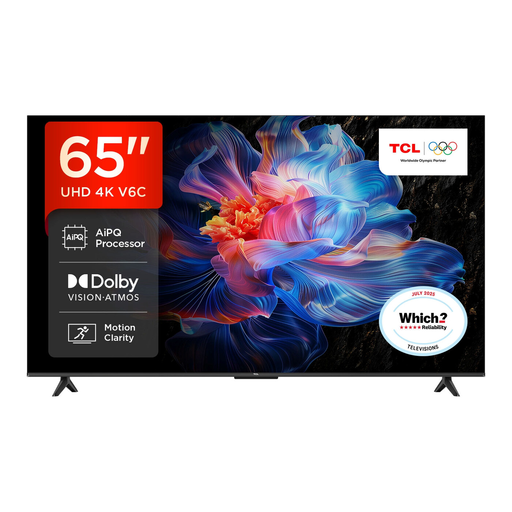
TCL 65V6C 65-inch 4K HDR Google TV
Consider this general-purpose TV if you want a 65-inch screen for shared viewing and occasional console play, provided it fits the room.
Its product name limits the 120Hz Game Accelerator claim to Full HD (FHD); do not read that as a 4K/120Hz specification. Check the console mode available on the intended HDMI input.
Joybuy
 No image available
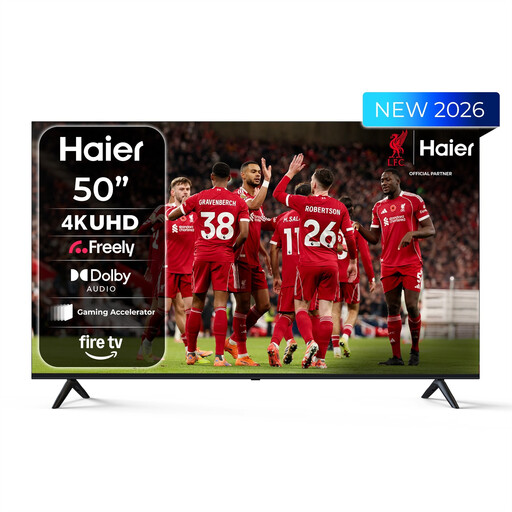
Haier H50K85GUF 50-inch 4K TV with Freely and Fire TV
Consider this TV for shared everyday viewing with console play if a 50-inch screen fits your space.
The product name lists HDR10, Freely and Fire TV. If 120Hz or VRR is important to you, confirm the exact supported mode and HDMI input before choosing it.
Joybuy
Frequently asked questions
How can I check whether my PS5 recognises a TV’s gaming features?
On PS5, open Settings, then Screen and Video, then Video Output to view information about the connected HDMI device, including resolution, VRR and HDR, as described by PlayStation. If you plan to use 1440p, run the console’s 1440p output test for the modes your display accepts.
What do I need for Xbox Series X gaming at 4K and 120Hz?
Xbox Support specifies an Xbox Series X, a TV supporting HDMI 2.1 and an Ultra High Speed HDMI cable supporting HDMI 2.1. Check the TV’s particular input and any equipment between console and TV; Xbox Support also notes that Series S, or a TV without HDMI 2.1, may allow 120Hz at a lower resolution.
What should I do with an old TV when replacing it?
Arrange an appropriate electrical-equipment recycling or take-back option rather than putting the TV in a household bin. GOV.UK describes the UK Waste Electrical and Electronic Equipment framework; check your local council’s arrangements and whether the retailer offers collection.


