Competitive couch players
If quick reactions matter most in local matches, check the TV’s game mode, automatic low-latency mode (ALLM), VRR and the output your console or PC supports. A larger screen alone does not answer those questions.


For local arena battles, choose a TV whose gaming-capable HDMI input, game mode and refresh features match the console or PC you will actually connect. If your source and games support 4K at 120Hz and variable refresh rate (VRR), check that complete connection path before paying attention to a higher advertised refresh rate; in a shared flat, the stand footprint and allocation of HDMI ports matter too.
If quick reactions matter most in local matches, check the TV’s game mode, automatic low-latency mode (ALLM), VRR and the output your console or PC supports. A larger screen alone does not answer those questions.
If several flatmates bring consoles or streaming devices, count the connections they need and check which HDMI inputs carry the gaming features. Plan where the screen and its stand will sit before settling on a size.
If furniture space limits your choice, start with the exact model’s screen and stand dimensions, then compare the gaming features available at a size that fits.
Start with the room and the devices you will connect, then check the gaming features on the HDMI inputs those devices will use. A TV’s headline refresh rate cannot tell you whether the whole setup will run at that rate.
| Concern | What to check | Who this matters to |
|---|---|---|
| Responsive play | Check for a documented game mode or ALLM, plus 4K at 120Hz and VRR on the input your source will use. | If I play fast local matches, I want controls and motion to feel consistent rather than choosing by screen size alone. Around 40% of consumers put responsive play first. |
| Room fit | Compare the exact model’s width, stand depth and feet position with the furniture and seating layout. | When several people share the lounge, I need everyone to see the screen without a stand that overhangs the furniture. For roughly 30% of consumers, room fit is the primary concern. |
| Device connections | Count the required HDMI inputs and identify which support the intended gaming features; allow for a soundbar if one will be connected. | If flatmates regularly switch between devices, I want the gaming connection available without rearranging the whole setup. Connection flexibility comes first for around 20% of consumers. |
| Household use | Read the exact model’s energy information and consider whether the household watches live TV or uses BBC iPlayer. | Before adding a shared TV, I want to understand its energy information and the rules for how we will use it. Roughly 10% of consumers make these checks their first priority. |
Port-level features can differ even on the same TV. Sony UK lists four HDMI inputs for its BRAVIA 5 K-55XR5 but specifies VRR on HDMI 3 and 4; TCL UK also says HDMI-standard support varies by model.
Map each planned console, streaming device and soundbar to an input on the exact TV model. Check 4K at 120Hz, VRR and eARC separately where you need them.
A figure above 120Hz is not automatically useful for console games. Samsung United Kingdom says its advertised 4K 144Hz, 165Hz and 240Hz capabilities depend on PC games that support them and suitable graphics hardware.
Check what your console or PC and the games you play can output. For a compatible console setup, establish the 4K/120Hz, VRR and ALLM connection before treating a higher figure as a deciding feature.
The stand’s depth and feet position can decide whether a TV fits existing furniture, even when the screen width looks suitable.
Measure the furniture and access route, then compare them with the exact model’s dimensions with its stand. If wall mounting is permitted, check its VESA pattern and the planned mounting arrangement.
A reference point for compact OLED gaming TVs: LG UK identifies a 48-inch OLED C5 model in its UK range.
Relevant when comparing TVs advertised with multiple HDMI 2.1 inputs and higher PC gaming refresh rates.
Useful to consider when planning a console connection using model-specific setup guidance.
A reference point for checking gaming features on an individual 55-inch QLED model.
These TVs include larger Mini LED screens for a shared room and smaller QNED or OLED options where space matters. Compare their stated gaming features with your source device, then check the stand and connections needed by the flat.
 No image available
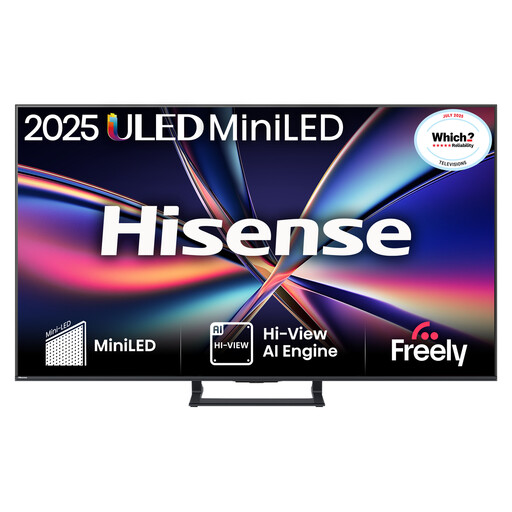
Consider this 4K model if the shared room can accommodate a 55-inch screen and you want to check a gaming-focused connection for a compatible source.
The product name lists 165Hz Game Mode Ultra; confirm which refresh rate your console or PC and games can use. Check the stand footprint against your furniture and the exact model’s energy information.
 No image available
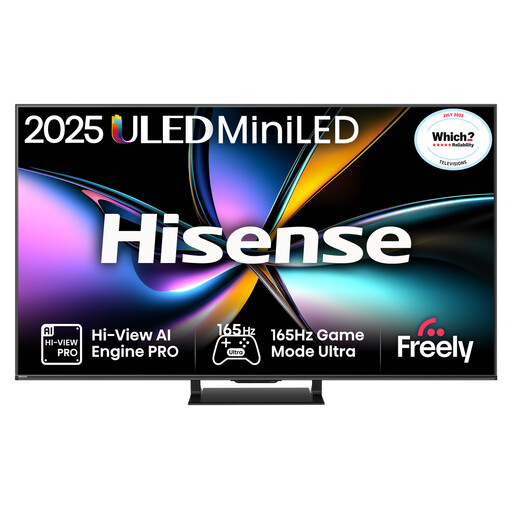
This 4K model is worth considering where a 55-inch screen fits and several shared devices need a planned connection layout.
The product name lists 144Hz Game Mode PRO. Plan the gaming connection around HDMI 3 or 4, as directed for this model, and check the stand dimensions before ordering.
 No image available
Consider this 4K option only if the shared room, furniture and seating layout can accommodate its 65-inch screen.
The product name lists 165Hz Game Mode Ultra. Check what your source can output, and measure the space needed for the TV with its stand rather than relying on diagonal size.
 No image available
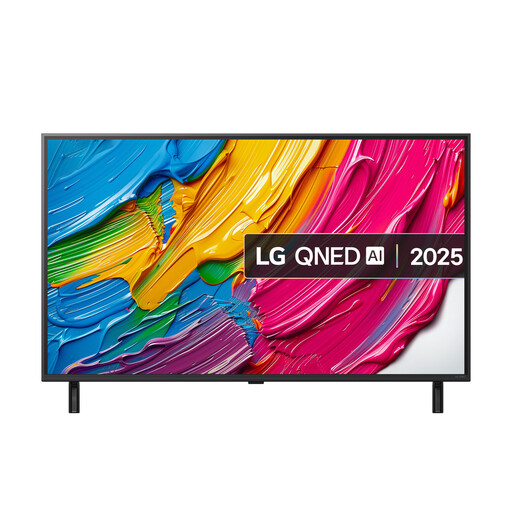
Its 43-inch size makes this 4K model relevant when furniture space comes before a larger screen.
The product name lists VRR, ALLM and eARC. Its stated 60Hz refresh limit does not establish a 4K/120Hz gaming path, so check whether that limit suits the games and source you intend to use.
 No image available
This 42-inch 4K OLED model is an option to investigate when a smaller screen is needed for the shared room.
Before choosing it for a console, confirm which HDMI input supports the gaming connection you need. Check its stand dimensions and the number of available inputs against your furniture and devices.
Not necessarily: first check whether your console and games can use the TV’s 4K/120Hz, VRR and ALLM features. Samsung United Kingdom says its higher advertised 4K refresh rates depend on supported PC games and suitable graphics hardware, so they are not an automatic benefit for console play.
Use an HDMI input documented for those features, a suitable cable and a source that supports the intended output, then check the TV and source settings. Sony UK instructs users to enable the appropriate Enhanced Format setting for 4K/120Hz and to check the correct port and firmware for VRR; other TVs may use different setting names.
Owning the TV or a console alone does not settle the question; how the household uses its devices matters. TV Licensing says a licence is needed to watch or record live TV on any service or to use BBC iPlayer, so check the flat’s actual viewing habits.
Check the energy label and product information sheet for the exact model you intend to buy. GOV.UK says televisions within the UK energy-information rules must have an energy label at the point of sale, including online, and a product information sheet; screen size alone is not a substitute for comparing those documents.