Who this is for

PS5 or Xbox Series X players

For players who want supported games to use 4K at 120Hz, VRR or ALLM, rather than simply connecting a console to a screen. PlayStation and Xbox Support note that the console, display, cable and game all affect which modes are available.

Shared living-room households

For households balancing console gaming with everyday television and shared viewing. Which? advises considering room-appropriate screen size and overall TV quality alongside gaming features.

Desk-based console players

For players considering a personal monitor at close range instead of a television. Xbox Support states that compatible Xbox systems can use 1440p and 120Hz on a supporting display.

Buying priorities

Gaming-focused TV

Choose it when: You use a PS5 or Xbox Series X and play games with supported 120Hz or VRR modes.

Trade-off: Confirm the intended HDMI port, cable and game support before paying for high-refresh-rate features.

General TV

Choose it when: Older-console play, 60Hz gaming and shared television use matter more than advanced gaming modes.

Trade-off: Basic HDMI connection is possible, but VRR, high refresh rates and low-latency modes may be unavailable.

Console monitor

Choose it when: You play at a desk or close to the display and want a smaller personal screen.

Trade-off: Check HDMI capability rather than PC-focused DisplayPort specifications, and consider whether shared viewing is still needed.

Priority What to check Your needs
Console compatibility Check the exact HDMI port, cable and game support for 4K at 120Hz. Confirm VRR and ALLM separately where they matter. I want the features advertised by the display to work with my console and the games I actually play.
Room and shared use Choose a screen size for the seating arrangement. Consider ordinary picture quality, sound and ease of use when the TV is shared. The display needs to fit the room and work for films and television as well as gaming.
HDMI chain Identify the correct TV port, enable any required enhanced HDMI setting and check the receiver or soundbar pass-through if one is used. I want the console connection to deliver the video modes I expect after installation.

Common setup pitfalls

  • Treating a high refresh-rate label as proof of console 4K at 120Hz

    Xbox Series X 4K gaming at 120Hz requires a compatible HDMI 2.1 TV and an Ultra High Speed HDMI cable. PS5 120Hz and VRR modes also depend on compatible displays and games, according to PlayStation and Xbox Support.

    Check the exact model and size for 4K at 120Hz on the HDMI input you plan to use, then confirm VRR and ALLM separately.

  • Assuming every HDMI port has identical gaming capability

    Some TVs provide their full 4K feature set only on particular ports. Sony also advises enabling Enhanced Format on the relevant BRAVIA HDMI port for applicable 4K/120Hz use.

    Find the intended console port before installation, enable the required gaming or enhanced HDMI setting, then use the console capability screen to check the connection.

  • Using a receiver or soundbar without checking video pass-through

    Xbox Support advises testing a console directly with the TV because an intermediary device can affect video features and quality.

    Confirm the direct TV connection first, then add a receiver or soundbar only if its pass-through supports the display mode you want.

    A replacement certified Ultra High Speed HDMI cable may be needed if the supplied cable is too short or cannot support the intended mode.

  • Choosing a desk monitor for a room that needs a shared TV

    A monitor can suit close-range desk play and compatible 1440p/120Hz Xbox use, but it does not replace the viewing scale needed in a shared living room.

    Start with seating and household use: choose a TV for room-scale viewing, or a monitor for an individual desk setup.

Relevant brand references

LG

LG UK positions selected OLED models for console and PC gaming, but the individual model and size still need checking for ports, refresh-rate limits and gaming modes.

  • LG states that its gaming TV range can include high refresh rates, low input lag, VRR and 4K capability.
  • Do not assume every LG TV or HDMI input has the same feature set; verify the exact UK model and port.

Samsung

Samsung UK promotes gaming functions including HDMI 2.1 ports, adaptive-sync technologies and Game Mode on selected TV ranges.

  • Samsung states that selected gaming TVs can offer up to four HDMI 2.1 ports and low-input-lag gaming features.
  • Samsung UK says 4K 120Hz Game Mode is limited to a select range of models, so a Game Mode label alone is not enough.

Sony BRAVIA

Sony markets compatible BRAVIA models with PlayStation integration and gaming features that can include 4K/120fps, VRR and ALLM.

  • Sony says compatible BRAVIA models can switch into Game Mode with a PS5 or PS5 Pro.
  • Confirm the individual model and enable the required HDMI signal format where applicable before expecting 4K/120 output.

Joybuy product options

Joybuy gaming-focused TV options for PS5 and Xbox Series X setups, with features to check against your console, room and HDMI connection.

Hisense 55U7QTUK Pro MiniLED QLED 165Hz Smart AI TV

Hisense 55U7QTUK Pro MiniLED QLED 165Hz TV

A 55-inch option for shared-room console gaming and films, subject to room fit.

4K MiniLED QLED display, HDMI 2.1, ALLM, stated 165Hz VRR and Game Mode Pro. Check the console, cable, game and selected HDMI mode before expecting 4K/120Hz or VRR.

Joybuy
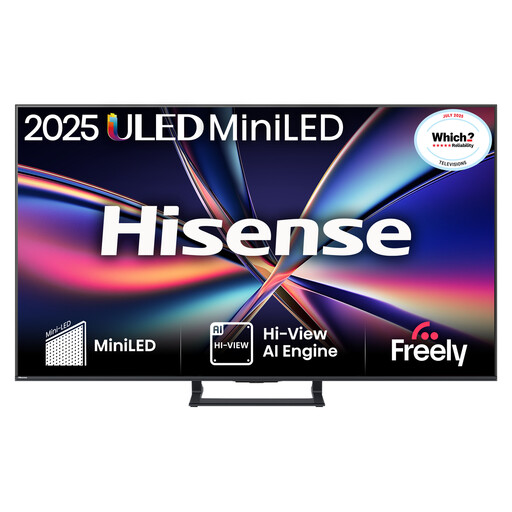
Hisense 55E8QTUK Mini LED 4K HDR Smart VIDAA TV

Hisense 55E8QTUK Mini LED 4K HDR TV

A 55-inch smart TV for mixed console gaming and household viewing.

4K Mini LED display, 144Hz Game Mode Pro, HDMI 2.1, VRR and ALLM. The listing identifies HDMI 3 and HDMI 4 for 144Hz VRR and ALLM; confirm your console settings and game support.

Joybuy

TCL 55P8K QLED 4K HDR PRO Smart TV

TCL 55P8K QLED 4K HDR PRO Smart TV

A 55-inch TV intended for living-room gaming alongside ordinary viewing.

4K QLED display, four HDMI 2.1 ports, ALLM and stated VRR up to 144Hz. Higher refresh-rate claims do not mean every console game will run at that rate.

Joybuy

TCL 75Q6C QD-Mini LED 4K HDR Smart Google TV

TCL 75Q6C QD-Mini LED 4K HDR Google TV

A larger 75-inch option for a shared room or dedicated media space with sufficient viewing distance.

4K QD-Mini LED display, 144Hz native refresh rate, HDMI 2.1, VRR, FreeSync Premium Pro and ALLM. Check furniture space, wall or stand capacity, plus the intended HDMI port and game support.

Joybuy
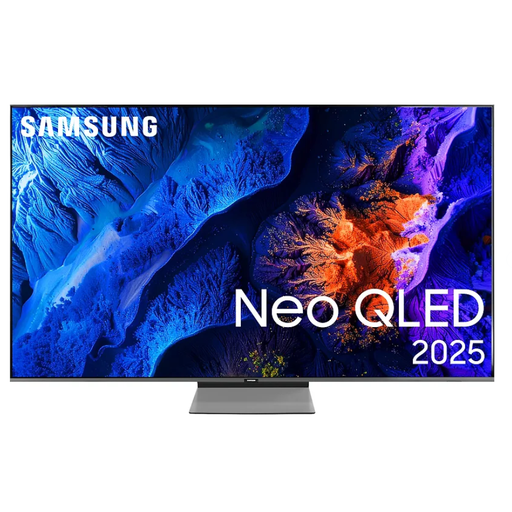
Samsung Neo QE55QN85FAUXXH 55-inch 4K Smart TV

Samsung Neo QE55QN85FAUXXH 55-inch 4K TV

A 55-inch smart TV for combined household viewing and console play.

4K Neo QLED display, stated refresh-rate support up to 144Hz, VRR, ALLM, FreeSync Premium Pro and four HDMI ports. Confirm which port and signal setting support the console mode you want.

Joybuy

Frequently asked questions

Do I need HDMI 2.1 for a console gaming TV?

Not for every setup. An HDMI TV can connect a console for normal play, but Xbox Support says Xbox Series X needs a TV supporting HDMI 2.1 and an Ultra High Speed HDMI cable for 4K gaming at 120Hz; PS5 120Hz and VRR also need compatible TV and game support.

Will every PS5 or Xbox game run at 4K and 120Hz?

No. PlayStation states that 120Hz output requires a TV and games that support a 120Hz frame rate, while Xbox Series X also needs the required console, display and cable conditions for 4K at 120Hz.

Why are 4K, HDR or 120Hz options missing after connection?

Check the TV's correct HDMI port and its gaming or enhanced HDMI setting first. Xbox Support notes that some TVs provide their full 4K feature set only on certain ports, and a receiver or soundbar between the console and TV can affect video features.

Can I use a monitor instead of a TV with Xbox?

Yes, when the monitor supports the required HDMI modes. Xbox Support says compatible Xbox systems can use 1440p and 120Hz over HDMI on a supporting monitor or TV, so check console-compatible HDMI specifications before buying.

What should I do with an old TV in the UK?

Treat it as electrical waste rather than general household waste. GOV.UK says waste electrical products can be taken to a local household waste recycling centre.