Choose for the shared room before choosing a refresh-rate figure: seating positions and reflections matter when several people use one screen, while contrast may take priority in a darker room. A 120Hz-capable TV is worth considering when your console and games can use that mode; for co-op games running at 60Hz or below, check Game Mode, room visibility and fit rather than assuming you need 120Hz. Confirm the exact TV input and signal settings before ordering.
Who this is for
Flatmates sharing one screen
If players sit across a lounge or face windows and room lights, check viewing angles and reflection-handling features on the exact TV. Samsung describes these features for its QN93D; they should not be assumed for every TV of the same display type.
Console players seeking higher-frame-rate play
If your console and co-op games offer a 120Hz mode, check the TV model, intended HDMI input, variable refresh rate (VRR) and Auto Low Latency Mode (ALLM). Sony UK notes that a 4K/120Hz result also depends on the connection, console settings and game.
Flat sharers with limited space
Measure the shelf, stand or wall position before settling on a screen size. Compare energy information for the exact models and arrange removal of an old TV with the chosen retailer if needed.
What to check when buying
Start with the seats and lighting in your shared room, then match the TV’s supported inputs to the console and games you use. Check placement and energy information for the exact model before ordering.
| Concern |
Buying check |
Who this matters to |
| Console compatibility and response |
Check supported signals on the intended HDMI input and whether Game Mode, VRR or ALLM needs enabling. Match a 120Hz mode to the console and games. |
If our co-op games offer higher-frame-rate play, I want the connected TV input to accept the mode we intend to use. Roughly 42% of consumers put console compatibility and responsiveness first. |
| Visibility from shared seats |
Assess the likely side seats and light sources; look for viewing-angle and anti-reflection features specified for the exact model. |
When several of us sit around a bright lounge, I need the picture to remain usable away from the centre seat. Around 33% of consumers make shared-room visibility their primary concern. |
| Fit and household practicalities |
Measure the stand or wall space, compare the exact models’ energy information and ask the retailer about old-TV collection. |
If the TV has to fit existing furniture and replace an old set, I need to plan its placement and removal before delivery. About 25% of consumers prioritise those practical checks. |
Buying pitfalls
-
Assuming a refresh-rate figure applies to every console game
A 4K/120Hz result depends on support from the TV, connection, console settings and game, according to Sony UK. Samsung specifies that its QN93D’s 4K/144Hz mode is for PC-connected content.
Check the intended console input’s supported signals and the modes offered by the games you play.
-
Checking gaming badges but not the HDMI setup
Compatible features may require a particular input or settings such as Enhanced HDMI format and Game Mode.
Use the exact model’s instructions to identify the right port and settings, then check the console’s output menu after setup.
-
Judging the picture only from the centre seat
Players sitting to either side may encounter different viewing angles or reflections. Anti-reflection and wide-viewing-angle features vary by model.
Map the seats and light sources in the flat, and assess the screen from those positions where possible.
-
Assuming delivery includes old-TV removal
Home collection is a separate arrangement to confirm with the retailer, particularly if the old set needs disconnecting or access to the flat is restricted.
Check delivery, collection and recycling terms before ordering.
GOV.UK notes that a retailer may charge to cover transport when collecting electrical waste from a customer’s home.
Brands to consider for these features
LG
LG UK presents gaming features such as high refresh rates and VRR alongside an OLED range focused on blacks and contrast. Its ranges are relevant when comparing gaming inputs with darker-room picture priorities.
- LG UK describes deeper blacks and fast response in its OLED range.
- Check the ports and supported signals for the exact model and size; a range-wide description does not establish that every input has the same capabilities.
Samsung
Samsung’s QN93D is an example to examine when off-centre seating and reflections matter in a bright shared room.
- Samsung specifies wide-viewing-angle and anti-reflection features, VRR and 4K/120Hz support for the QN93D.
- Samsung limits that model’s 4K/144Hz mode to PC-connected content. Check the exact model before treating a refresh-rate figure as a console mode.
Sony
Sony BRAVIA is relevant to households checking how to enable supported gaming modes with a PlayStation.
- Sony UK provides setup guidance for compatible TVs using ALLM and 4K/120Hz.
- The required connection, input and settings vary by model; the BRAVIA name alone does not confirm a particular gaming mode.
Joybuy product choices
These TVs offer different screen sizes for a shared space. Compare each model’s placement requirements and confirm the video modes available on the input you would use; a feature named in a product title does not establish what every console game will display.
 No image available
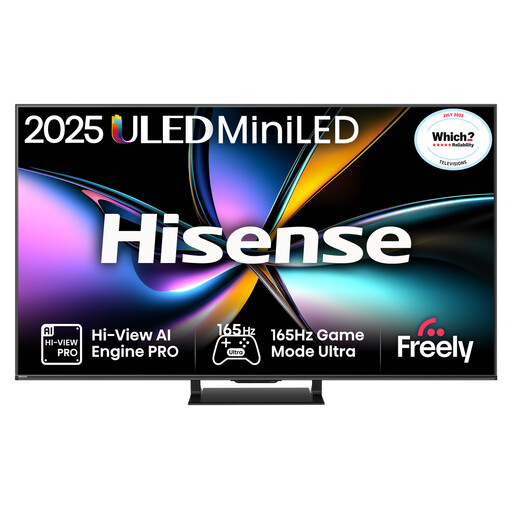
Hisense 65U7QTUK Pro 65-inch Mini LED TV
Consider this 65-inch option if the shared room has space for a larger screen. Its title specifies 4K HDR and a 165Hz Game Mode Ultra feature; check which resolution and refresh-rate signals the intended HDMI input accepts from your console, and measure the furniture before ordering.
View on Joybuy
 No image available
Hisense 55U7QTUK Pro 55-inch Mini LED TV
This 55-inch option is worth measuring against the available stand and seating distance. The title identifies a 4K HDR Mini LED TV with a 165Hz Game Mode Ultra feature; confirm its console input modes and settings against the games you plan to play.
View on Joybuy
 No image available
TCL 75Q6C 75-inch QD-Mini LED TV
Consider this 75-inch screen only after checking that it fits the intended position and leaves comfortable room for shared seating. Its title specifies 4K HDR and a 144Hz native refresh rate; confirm the exact console signal modes and assess reflections in your room rather than assuming the display type handles them.
View on Joybuy
 No image available
TCL 55P8K-UK 55-inch QLED TV
This 55-inch 4K HDR option may suit a lounge where the screen and connected devices must share limited space. The title advertises a 288Hz Game Accelerator, while the accompanying product details distinguish a 120Hz native refresh rate and up to 144Hz VRR; check the resolution and input conditions for the mode your console needs.
View on Joybuy
 No image available
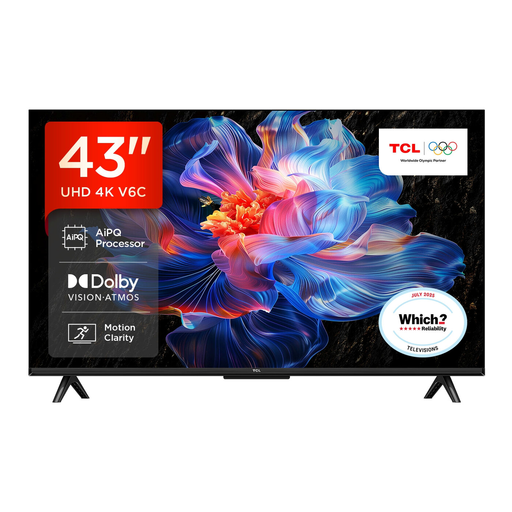
TCL 43V6C 43-inch Direct LED TV
Consider this 43-inch 4K HDR TV where the available screen position is limited, after checking its dimensions against your furniture. The named 120Hz Game Accelerator mode is specified for Full HD (FHD), not as a 4K/120Hz mode; confirm the video signals supported for your console.
View on Joybuy
Frequently asked questions
Do we need a 120Hz TV for local co-op adventures?
Not if the games you intend to play run at 60Hz or below and you do not need a compatible 120Hz mode for other games. For 4K/120Hz play, Sony UK says the TV, connection, console settings and game must all support the output.
What do VRR and ALLM do for console gaming?
VRR can reduce judder and tearing when frame delivery varies; ALLM lets compatible equipment switch the TV into a lower-latency gaming mode automatically. HDMI Licensing Administrator describes these functions, but you should check support on the TV input and connected console you intend to use.
Can the retailer collect our old TV?
Ask the chosen retailer whether it offers home collection alongside delivery and whether disconnection must be arranged separately. GOV.UK notes that transport for collecting electrical waste from a home may carry a charge; check the retailer’s terms before ordering.
How should we compare energy information for two TVs?
Use the energy label and product information sheet for each exact model rather than judging energy use from screen size alone. GOV.UK’s energy-information guidance identifies these materials for electronic displays at the point of sale.


