Competitive fighting-game hosts
If you run brackets or regular sessions, controller-to-screen delay is a priority: picture processing can affect the response you feel during timing-sensitive play.


For fighting-game tournaments in a shared flat, start with independently measured input lag in the exact TV’s Game Mode, HDMI modes that suit the connected consoles or PC, and a screen spectators can see from their seats. OLED is worth considering for a darker room; where daylight and reflections are concerns, compare Mini LED models with documented anti-reflection and viewing-angle features. A 144Hz label alone does not establish an advantage for console play.
If you run brackets or regular sessions, controller-to-screen delay is a priority: picture processing can affect the response you feel during timing-sensitive play.
With players and spectators around a communal screen, seating angles, reflections and TV placement matter alongside gaming features.
If different people bring consoles and a gaming PC, check which refresh modes work with each device rather than assuming every source can use a TV’s highest advertised rate.
Consider it: For a darker shared room where contrast and off-centre viewing matter.
Check: Panel response-time claims are not end-to-end input-lag measurements; assess reflections and measured Game Mode lag for the exact TV.
Consider it: For a brighter communal room, particularly when a specific model offers relevant reflection and viewing-angle features. Samsung lists both for its QN90D.
Check: Do not treat those QN90D features as properties of every Mini LED TV; compare the exact screen from the planned seats.
| Concern | What to check | Who this matters to |
|---|---|---|
| Controller response | Look for independent input-lag measurements for the exact model and gaming mode; use Game Mode for play. | If my bracket depends on precise inputs, I want the action to appear promptly rather than have picture processing add delay. Around 33% of consumers put tournament response first. |
| Glare and sightlines | Check reflections at the planned position and whether off-centre seats have a clear view. | When friends watch from across the lounge, I need them to follow the match even when daylight or lamps reach the screen; roughly 27% of consumers prioritise shared-room visibility. |
| PC and console connections | Confirm the required resolution, refresh rate and VRR mode for each source and HDMI input. | If we switch between a PC and consoles, I need each setup to use the mode it supports. About 20% of consumers place device flexibility first. |
| Everyday flat use | Measure the intended space, agree on shared use and sound, and plan an appropriate route for an old TV if replacing one. | A screen that works on tournament night still has to fit our communal room and daily arrangements; around 20% of consumers put those practical needs first. |
The highest refresh mode may depend on the source. Samsung specifies that 4K/144Hz on its QN90D is available only with PC-connected content; its HDMI 2.1 specification also lists VRR at 4K/120Hz.
List the consoles and PCs your group will use, then check the exact TV’s modes and HDMI inputs for each one.
Picture processing can add delay between an input and the action appearing on screen. A panel response-time figure does not measure that whole delay.
Use Game Mode during matches and consult independent input-lag measurements for the exact model in that mode.
A darker room and a bright lounge with off-centre spectators pose different viewing problems. Individual TVs also differ in reflection handling and viewing angles.
Check the planned seating, windows and lighting before comparing specific models.
Replacing a communal TV also means deciding what happens to the old electrical equipment. GOV.UK describes the UK’s waste electrical and electronic equipment framework as supporting recovery, reuse and recycling.
Ask the retailer about take-back or check what collection or recycling route your local authority offers.
LG’s UK OLED C4-series specification is a reference point for feature-rich gaming in a darker shared room.
Samsung’s QN90D is a Neo QLED example for comparing reflection handling and spectator sightlines in a shared room.
TCL’s C805K is a QD-Mini LED example for examining gaming modes alongside the room’s lighting needs.
Sony’s gaming setup guidance is useful when checking how a compatible BRAVIA TV connects to a console.
These Joybuy choices span Mini LED, QLED, Direct LED and OLED screens relevant to a shared-flat tournament. Compare their size and stated gaming features, then check measured Game Mode lag, room fit and the HDMI modes your own devices need.
 No image available
A 55-inch option for a group comparing gaming features with the space available in its lounge.
The title specifies 165Hz Game Mode Ultra; confirm the supported mode for each intended device and seek independent Game Mode input-lag measurements.
 No image available
Consider this 75-inch screen only after measuring the wall or stand space and the group’s viewing positions.
Its title states a 144Hz native refresh rate. Check which resolution and refresh modes the intended consoles or PC can actually use, as well as Game Mode lag.
 No image available
A 55-inch screen to assess for a lounge used by both players and spectators.
The title names a 288Hz Game Accelerator; check its operating resolution and source requirements rather than reading that figure as a guaranteed PC or console output mode. Compare measured input lag and off-centre viewing too.
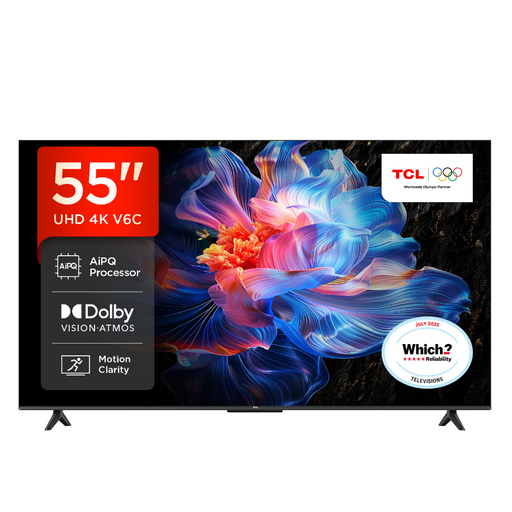 No image available
This 55-inch option needs a closer mode check if the group wants high-refresh console play.
Its title specifies a 120Hz Game Accelerator at FHD, not 4K/120Hz. Confirm each device’s supported HDMI mode and independently measured Game Mode lag before choosing it for tournaments.
 No image available
A smaller OLED option to consider where a 42-inch screen fits the planned player and spectator seating.
Check independent input-lag measurements, reflections and the HDMI port requirements for the consoles or PC your group will connect.
Not necessarily: confirm the console’s supported modes and prioritise suitable low-latency operation. Samsung says its QN90D’s 4K/144Hz mode is for PC-connected content, while its HDMI 2.1 specification includes VRR at 4K/120Hz.
Connect each console or PC to an HDMI input that supports its intended mode and enable Game Mode or ALLM where compatible. Sony advises enabling Enhanced Format on supported models for 4K/120Hz; use VRR only when both the TV and source support it.
No. Panel response time describes pixel transitions, while input lag concerns the delay before an input appears on screen. For timing-sensitive matches, seek an independent input-lag measurement for the exact TV and gaming mode.