Close-seated split-screen racers
Players sharing one screen who have limited wall or TV-unit space. A 42–48-inch TV may be easier to place, but each player still needs to read the racing display from their usual seat.


A 42–48-inch OLED is a compact option when the TV unit is narrow and players sit close; a 50-inch Mini LED gives each player more screen area if it fits. Check visibility in your usual lighting before choosing either route. If you want 4K at 120Hz, confirm that the game, console, TV input and HDMI cable all support the setup.
Players sharing one screen who have limited wall or TV-unit space. A 42–48-inch TV may be easier to place, but each player still needs to read the racing display from their usual seat.
Households that often play in daylight or under room lighting. Reflections and screen visibility matter alongside size and gaming features.
Players aiming to use modes such as 4K at 120Hz or variable refresh rate (VRR), provided their console, game and connection support them.
Choose the screen size that fits the furniture and keeps each player’s view readable, then check how the TV handles your room lighting and console connections.
Consider when: The available wall or unit space is tight and players sit relatively close.
Trade-off: Each player gets less image area than on a larger TV; assess reflections in the intended position rather than assuming OLED will suit every room.
Consider when: A 50-inch set fits and extra split-screen area matters, particularly where daylight makes visibility a priority.
Trade-off: It needs more space than a 48-inch set. A stated brightness specification cannot tell you exactly how the picture will look beside your windows.
Consider when: The room accommodates a larger screen and per-player image area takes priority over a compact footprint.
Trade-off: Check the seating layout carefully. Gaming features may also depend on which HDMI input you use.
| Concern | What to check | Who this matters to |
|---|---|---|
| Screen space and room fit | Measure the available width, stand depth and seating distance; judge how much of the divided screen each player can read. | I need both racers to follow the track without a TV that crowds the unit or wall. Roughly 33% of consumers would put room fit and usable per-player space first. |
| Responsive racing | Check the exact model’s 4K/120Hz, VRR and automatic low-latency mode (ALLM) support against the console and game. | When a game offers a higher-frame-rate mode, I want the TV and console set up to use it. Around 27% of consumers would make gaming motion and responsiveness their primary concern. |
| Bright-room visibility | Consider window and lamp reflections at your normal playing time, alongside the exact model’s brightness and glare claims. | Daylight falls near our usual viewing position, so I need both halves of the race to remain easy to see. Approximately 20% of consumers would put bright-room visibility first. |
| HDMI setup | Check which inputs support the required gaming modes and whether the cable or AV receiver supports the intended signal. | I share HDMI connections with a soundbar or receiver and need to know where the console should connect. For roughly 20% of consumers, connection certainty would be the deciding concern. |
A larger screen gives each racer more image area but may not fit the furniture or usual seating layout.
Measure the available wall width, furniture depth and sofa position, then check the exact TV and stand dimensions.
Gaming features can be assigned to particular ports. Sony lists VRR on HDMI 3 and 4 for its BRAVIA 8 II 55-inch model.
Read the port specifications for the TV you intend to buy before assigning connections to a console, soundbar or receiver.
Xbox Support lists an Xbox Series X, an HDMI 2.1-capable TV and an Ultra High Speed HDMI cable among the requirements for 4K gaming at 120Hz.
Check the game’s available mode, the TV input, the cable and any receiver in the connection path.
If your existing cable is unsuitable, you may need an Ultra High Speed HDMI cable for that setup.
Windows, lamps and viewing angles change where reflections appear on a divided screen.
Assess the planned TV position at the time you normally play, rather than choosing solely from a manufacturer’s brightness or glare wording.
LG’s 48-inch OLED48C65LA is a compact OLED model relevant to this choice.
Samsung’s 48-inch QE48S90HAEXXU is another compact 4K OLED to consider where reflections matter.
TCL’s 50C7K-UK represents the larger QD-Mini LED route for a room that can accommodate 50 inches.
Sony’s 55-inch BRAVIA 8 II is relevant if a larger OLED fits and HDMI port planning is important.
These TVs span compact 42–48-inch OLED choices and larger 50–55-inch options. Start with the space each model needs, then check its stated gaming mode against your console and intended HDMI connection.
 No image available
Consider this 50-inch option if you want more space for each racer and the TV fits your furniture.
The product name states a 144Hz native refresh rate. Check the exact HDMI input and your console setup for the gaming mode you intend to use.
 No image available
Consider the 42-inch screen where space is tight, while checking whether each racer can read their portion from the sofa.
Measure the TV and stand against your unit, and confirm the required gaming mode on the HDMI input you plan to use.
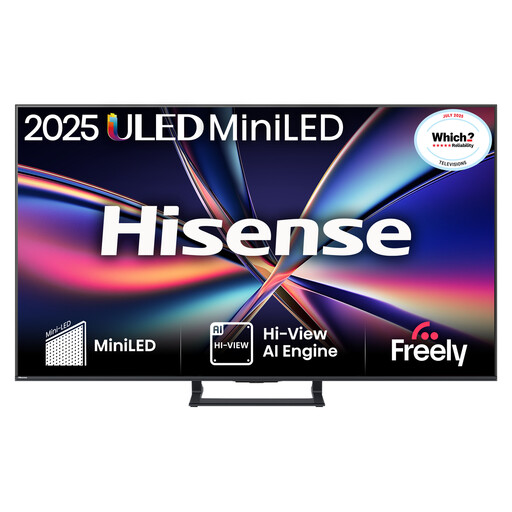 No image available
Consider this larger split-screen option only if a 55-inch TV fits comfortably in the room.
The product name lists a 144Hz Game Mode PRO. Check which HDMI input supports your intended console mode, particularly if a soundbar or receiver also needs a connection.
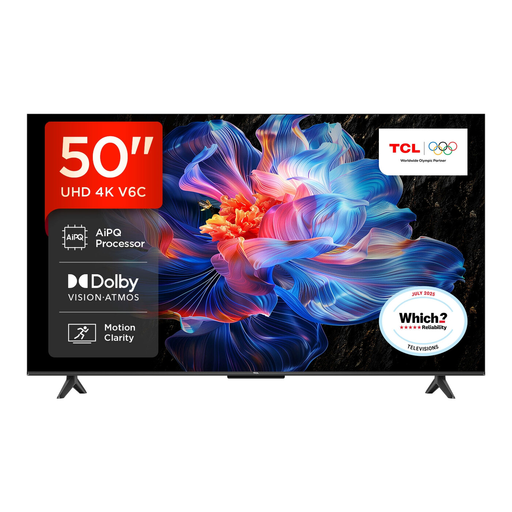 No image available
This 50-inch TV is worth considering if the room fits a larger split-screen image and Full HD is acceptable for its higher listed gaming mode.
The product name specifies a 120Hz Game Accelerator at FHD. Do not treat that as confirmation of 4K at 120Hz; check the required input mode and TV dimensions before choosing.
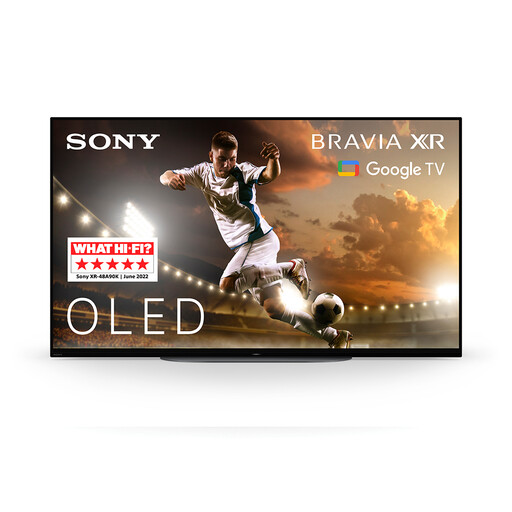 No image available
The 48-inch screen offers a compact alternative to a 50-inch TV while giving each racer more image area than a 42-inch model.
Check the TV and stand dimensions for your space. If VRR, ALLM or a particular high-frame-rate mode matters, confirm support on the exact HDMI input before buying.
No: first make sure both players can read their part of the screen from the usual seats. A 120Hz mode matters if your chosen game and console can use it; Xbox Support says Xbox Series X gaming at 4K and 120Hz also needs an HDMI 2.1-capable TV and an Ultra High Speed HDMI cable.
VRR can help when a game’s frame rate varies by matching the TV’s refresh rate to it, as Sony explains. The source device, TV input and settings must support VRR for you to use it.
Not if the gaming feature you want is limited to particular inputs. For example, Sony UK specifies VRR on HDMI 3 and 4 of its BRAVIA 8 II 55-inch model; check the port table for your exact TV before connecting a console, soundbar or receiver.
Check the HDMI cable and whether the receiver supports the intended signal before changing TV settings repeatedly. Xbox Support advises trying the supplied Ultra High Speed HDMI cable and consulting the receiver manufacturer if the problem persists; a direct console-to-TV connection can help isolate the connection path.
Use an appropriate electrical-equipment recycling route rather than putting the TV in ordinary household waste. GOV.UK describes the UK waste electrical and electronic equipment framework as supporting recovery, reuse and recycling; check your local authority’s arrangements or an available retailer take-back service for the collection options that apply to you.