Players practising repeated inputs
If your drills involve quick presses, releases and direction changes, adjustable actuation and Rapid Trigger are more relevant checks than the size of the display.


For practice built around repeated presses and direction changes, consider a wired keyboard with adjustable actuation and Rapid Trigger so you can tune when keys register and reset. A TKL or 80% layout can leave more room for broad mouse movement, but check the physical key layout and choose a setting you can use consistently. A large display does not itself call for a particular keyboard; input behaviour, desk space and compatibility matter more to this choice.
If your drills involve quick presses, releases and direction changes, adjustable actuation and Rapid Trigger are more relevant checks than the size of the display.
If you make broad mouse movements, a keyboard without a number pad may fit your desk more comfortably. A TKL layout retains dedicated arrow and navigation keys, as Corsair explains in its layout guidance.
If you use the keyboard for everyday typing as well as training, check its physical UK layout and key legends. You may also prefer an actuation setting that avoids unintended presses.
Start with the inputs your exercises require, then consider how consistently you can use the settings and whether the keyboard fits your desk and typing habits.
| Concern | What to check | Who this matters to |
|---|---|---|
| Repeatable presses and releases | Check the exact model for adjustable actuation and Rapid Trigger. Treat polling-rate claims separately from whole-system latency. | When I practise rapid direction changes, I need keys that register and reset predictably. Around 50% of consumers put repeatable input first. |
| Consistent sensitivity | Check how you change actuation settings, then test the keys used in your exercise before making them more sensitive. | If light touches trigger unintended inputs, I would rather use a setting I can repeat reliably. Consistency comes first for around 30% of consumers. |
| Desk space and physical layout | Decide whether you need a number pad, and check the exact physical layout and legends rather than relying on an operating-system setting. | I need room for broad mouse movement without giving up the keys I use outside practice. Desk fit and familiar keys are the primary concern for around 20% of consumers. |
A more sensitive setting can make unintended presses harder to avoid during repeated exercises.
Begin with a setting you can use consistently and adjust the keys involved in your practice. Corsair recommends 0.3–3.6 mm for accuracy on its K70 PRO TKL; that guidance is specific to that model.
A high polling-rate setting is of little use if the keyboard has trouble starting with your USB setup. Wooting documents startup compatibility issues with some motherboard USB controllers.
Test the keyboard with your intended PC. If a Wooting keyboard has the documented startup issue, its support guidance suggests trying 1,000 Hz or another USB port.
Changing the operating-system layout changes character mapping, not the shapes or printed legends of ANSI and ISO keys. Wooting’s layout guidance distinguishes the two physical formats.
Check the exact variant and product photos if UK keys matter to you. The Redragon M68 listed below is explicitly a US-layout keyboard.
Removing the number pad creates mouse room, but a compact layout may change access to controls you use for other tasks.
Consider TKL if you want dedicated arrow and navigation keys without a number pad. Check the key arrangement of smaller formats individually.
These brands offer named keyboard lines relevant to adjustable inputs or compact layouts; the features and cautions below apply to the specified models, not every keyboard from each brand.
The 80HE is an 80% option for consumers considering adjustable actuation, Rapid Trigger and a stated 8,000 Hz polling mode.
The Huntsman V3 Pro 8KHz family includes analogue optical models for consumers who want adjustable actuation and Rapid Trigger.
The wired Apex Pro TKL Gen 3 UK combines a TKL layout with adjustable magnetic switches and an onboard display for settings.
The K70 PRO TKL is a wired Hall-effect option for consumers seeking Rapid Trigger and explicit sensitivity guidance.
These wired or compact magnetic-switch keyboard choices relate to repeated-input practice. Compare their stated layouts and controls against your desk setup; a product’s polling-rate figure alone does not establish how it will perform with your PC.
 Image unavailable
Consider this compact option if UK physical keys and mouse room both matter to your setup.
The product name identifies a 65% analogue keyboard with a UK layout. Test any high-polling configuration with your intended PC before relying on it for practice.
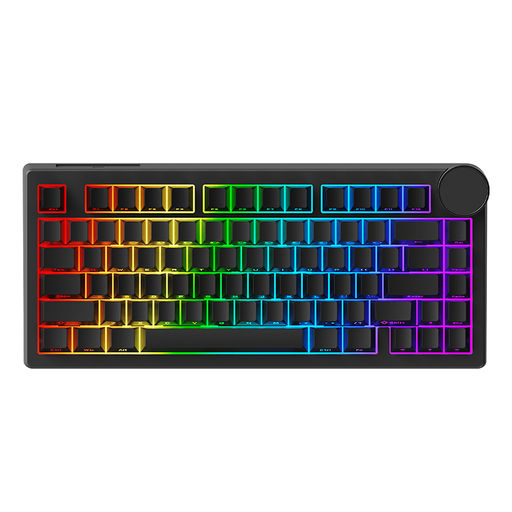 Image unavailable
A 75% board may suit practice that needs mouse room while keeping more keys close at hand than a smaller format.
The product name states wired magnetic-switch use, 8K polling, side-engraved black keycaps and a metal knob. Confirm the physical layout and legends if you need UK keys, and test high-polling operation with your PC.
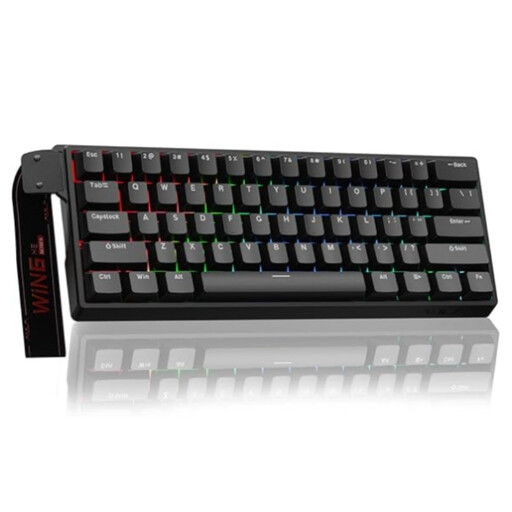 Image unavailable
Consider the 60% format if freeing horizontal mouse space matters more than having a larger key arrangement.
The product name states magnetic switches, adjustable actuation, Rapid Trigger and 8,000 Hz polling. Check its physical layout, actuation settings and access to the keys your exercises require; test the polling mode with your PC.
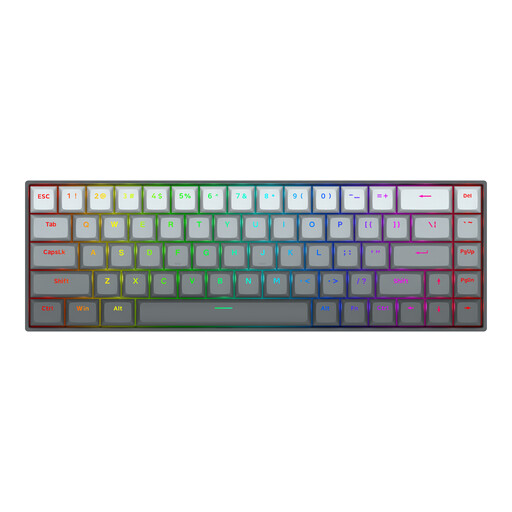 Image unavailable
This compact board is worth considering only if its US physical layout suits both your practice and everyday typing.
The product name states Rapid Trigger, 8,000 Hz polling and a metal top plate. A UK operating-system setting will not change its physical keys; test high-polling operation with your PC.
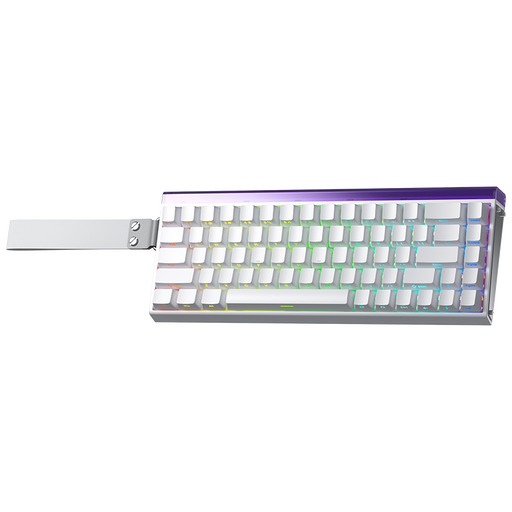 Image unavailable
Its compact format may appeal if mouse space is a priority and US physical keys suit your routine.
The product name identifies a cabled 60% magnetic-switch keyboard with adjustable actuation, Rapid Trigger and 8K polling. Confirm the settings and key access you need, and test high-polling operation with your PC.
It can be useful when an exercise involves fast repeated presses and releases, because the feature changes how a compatible key resets as it moves upwards. It does not measure your visual reaction time or guarantee lower end-to-end latency in a game.
Not automatically: a shorter setting can make unintended presses more likely. If you are considering the Corsair K70 PRO TKL, Corsair recommends 0.3–3.6 mm for accuracy on that model; adjust the keys you use in a repeatable exercise rather than treating the minimum as a universal target.
It needs testing with the particular keyboard and PC. Wooting documents a startup issue involving some motherboard USB controllers and suggests trying 1,000 Hz or another USB port if that issue occurs.
No. A software setting changes the characters typed, while ANSI and ISO keyboards have different physical layouts, as Wooting’s layout guidance explains. Check the exact key shapes and legends before choosing a US-layout variant.