Mobile gamer and creator
You need games and game-related artwork on the same computer away from your usual desk. Look at the graphics configuration, screen and what you will need to carry, including the charger.


Choose a gaming laptop if demanding games or GPU-accelerated creative work need to run away from your desk regularly. If that work stays at one desk, a lighter everyday laptop paired with a desktop may suit your routine better; an external graphics setup is an option only when the exact laptop and its connections support it. For any laptop, check the full configuration rather than judging graphics performance by the GPU name alone.
You need games and game-related artwork on the same computer away from your usual desk. Look at the graphics configuration, screen and what you will need to carry, including the charger.
You want a portable computer for everyday work or lighter creative tasks, while demanding games are played mainly at one desk. Separate portable and desktop computers may fit that routine.
You want a lighter laptop away from your desk and are considering external graphics at home. This route calls for confirmation that the exact laptop, connection and graphics hardware work together.
Start with where you actually run demanding games and creative applications. That determines whether the graphics hardware needs to travel with you or can remain at a desk.
Choose when: Demanding games or graphics-heavy creative work regularly need to run away from your desk.
Trade-off: The performance hardware, cooling system and charger travel with you.
Choose when: You need a laptop for everyday tasks, but demanding games and heavier creative work stay at one desk.
Trade-off: You have two computing environments and may need to plan how files and software move between them.
Consider when: You want one lighter laptop and its exact model supports an external GPU setup at your desk.
Trade-off: An appropriate port alone does not establish compatibility; the enclosure, GPU and other components must also work together.
Choose when: Games and creative work will remain at one desk and you do not need to take that computer elsewhere.
Trade-off: Travel, school or work away from that desk would require another device.
| Concern | What to check | Who this matters to |
|---|---|---|
| Demanding work on the move | Check your games’ and creative applications’ requirements against the exact GPU, its published power configuration and the charger you would carry. | If I need demanding games and artwork tools away from my desk, desktop-only graphics will not cover that use. Around 33% of consumers put access to demanding work on the move first. |
| Long sessions and future capacity | Check the exact model’s memory and storage configuration, access for upgrades, and relevant cooling or sustained-use information. | Long gaming or creation sessions make the machine’s configuration and cooling more important to me than a product-family headline; roughly 27% of consumers prioritise sustained use and capacity. |
| Screen and artwork workflow | Compare the exact panel’s resolution, aspect ratio and stated colour characteristics with the requirements of your art applications. | When I draw or edit artwork as well as play games, I need a screen that fits my workflow rather than choosing on refresh rate alone. Around 20% of consumers make the creative display and workflow their primary concern. |
| Desk versus mobile use | Note where you use demanding applications; for external graphics, confirm model-specific support and the complete hardware setup. | If demanding work happens mainly at one desk, I would weigh a split setup against carrying a gaming laptop. Roughly 20% of consumers put that desk-versus-mobile decision first. |
The same named laptop GPU can have different power configurations. NVIDIA lists a GPU subsystem power range of 35–100 W for the RTX 5050 Laptop GPU and 45–100 W for the RTX 5060 Laptop GPU; the name alone does not describe an exact laptop’s performance.
Compare the published power configuration for the precise model alongside its memory, cooling and display, using comparable reviews where available.
A range may include different screens, graphics hardware and memory arrangements. HP notes that components can vary by country or custom configuration.
Check the retailer’s full configuration against the manufacturer’s specification for the exact UK model number before ordering.
Microsoft says some laptops can connect to an external GPU through Thunderbolt or faster ports; Intel notes that realised performance depends on the hardware and software configuration. A USB-C-shaped port does not, by itself, establish support.
Confirm support for the host laptop first, then check the enclosure interface, graphics card fit, power arrangements, cable, drivers and display connection together.
This setup also involves an enclosure and a separate graphics card, with compatible power equipment, cabling or a monitor potentially needed for the intended arrangement.
These product lines offer different configurations relevant to portable gaming and creation; compare individual models rather than assuming a feature applies across a whole range.
ASUS positions its Zephyrus G14 and G16 lines as thin-and-light gaming laptops for work and play.
Lenovo describes Legion laptops with gaming-focused graphics, displays and cooling, alongside memory and storage expansion options.
HP lists OMEN and OMEN MAX gaming-laptop configurations with dedicated graphics and high-refresh display options.
These laptops bring dedicated graphics into a portable computer for shoppers considering games alongside creative work. The ASUS ProArt model is presented as a creator laptop rather than a gaming model; check your particular games and applications against any model before choosing.
 No image available
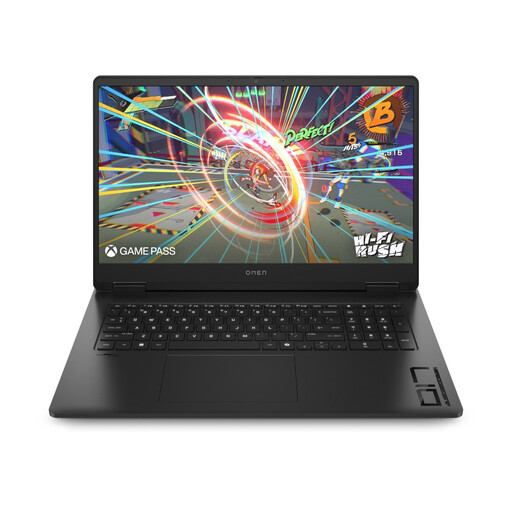
Consider this configuration if you want games and creative applications on one laptop with a larger screen. Its name specifies a 17-inch Full HD display, AMD Ryzen AI 7 350, 16GB RAM, a 1TB SSD and RTX 5060 graphics. Check its exact GPU power, screen colour characteristics and carrying fit for your intended use.
 No image available
This 16-inch configuration is worth examining if you want games and larger creative projects on one laptop. Its name specifies an Intel Core Ultra 9 processor, RTX 5090 graphics, 64GB RAM and a 2TB SSD. Check the exact GPU power, panel characteristics and carrying weight before comparing it with other laptops.
 No image available
Consider this laptop if a 15.6-inch screen and dedicated graphics fit your away-from-desk gaming and artwork plans. Its name specifies an AMD Ryzen 7 170, 16GB RAM, a 1TB SSD, RTX 5050 graphics and a 144Hz Full HD display. Check the exact graphics power and whether its memory arrangement meets your applications’ needs.
 No image available
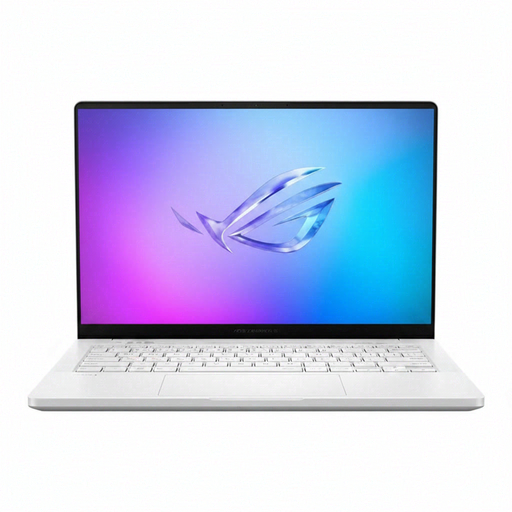
The 14-inch format may appeal if you need gaming and creative applications away from your desk. Its name specifies an AMD Ryzen AI 9 HX 370, RTX 5070 Ti graphics, 32GB RAM, a 2TB SSD and a WQXGA+ display. Check the exact graphics power, screen characteristics and total carrying weight, including the charger.
 No image available
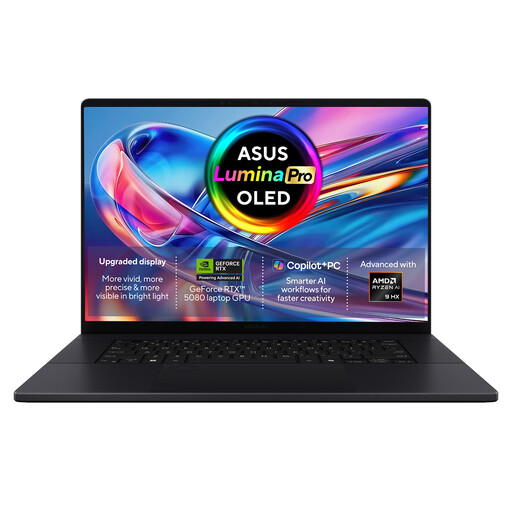
This creator laptop is an option to assess if artwork is central and you also want to check its fit for particular games. Its name specifies a 16-inch 4K OLED touchscreen, AMD Ryzen AI 9 HX 370, RTX 5080 graphics with 16GB graphics memory, 64GB RAM and a 2TB SSD. Confirm the exact GPU power and your games’ requirements rather than assuming gaming performance from the graphics name.
Check the exact model’s published GPU power configuration, graphics memory, cooling, system memory and display. NVIDIA’s laptop-GPU specifications show that power configurations can differ within a named GPU tier, so the name alone is not a complete performance comparison.
It can, provided the exact laptop meets the requirements of your applications and display workflow. Adobe identifies Photoshop features that use GPU acceleration, including Camera Raw and Select and Mask; check its current requirements alongside the laptop’s screen and memory configuration.
No: a USB-C-shaped port is not enough to establish external-GPU support. Microsoft says some laptops can use external graphics through Thunderbolt or faster ports, while Intel notes that realised performance depends on the hardware and software setup. Confirm support for the exact laptop before selecting an enclosure and graphics card.
Use the exact model number to check its supplied memory, accessible slots and storage expansion in manufacturer specifications or service documentation. A feature advertised for a laptop range may not apply to your configuration; HP, for example, notes that components can vary by country and custom build.