Long-session players short of sockets
If charging access is limited, battery type, rated runtime and the option to keep spare cells nearby matter more than decorative lighting.


A replaceable-battery wireless mouse is the more straightforward choice if you cannot rely on a socket for mouse charging during long squad matches, provided you can keep compatible spare cells. A rechargeable mouse can also work if you have a dependable USB charging routine. For active play, check the model’s dedicated 2.4 GHz connection, then compare grip, weight and controls; do not assume its Bluetooth mode behaves the same way.
If charging access is limited, battery type, rated runtime and the option to keep spare cells nearby matter more than decorative lighting.
You want to keep the desk clear of a mouse cable while checking that the connection used for matches is the model’s gaming-oriented wireless mode.
If you switch between a gaming PC and another compatible device, a mouse with both 2.4 GHz and Bluetooth connections may be useful. Check which mode you would use for each device.
Decide how the mouse will get power before comparing wireless modes: spare cells avoid routine mouse charging, while a rechargeable model needs a charging plan. Then check the connection you will use for matches and whether the shape and controls suit extended play.
| Concern | What to check | Who this matters to |
|---|---|---|
| Power during long matches | Check whether the mouse uses replaceable AA or AAA cells or needs USB charging. Treat rated runtime as a maximum, and plan for spare cells or charging. | If a match runs long, I do not want mouse charging to compete for a scarce socket or interrupt play. Around 33% of consumers put power independence first. |
| Wireless response | Check for a dedicated 2.4 GHz gaming connection and its required receiver; compare the model’s documented settings for each wireless mode. | During fast squad fights, I want to know which connection the mouse is designed to use for active play. For roughly 27% of consumers, that connection is the primary concern. |
| Using more than one device | Check whether the exact model offers both 2.4 GHz and Bluetooth, and whether your second device supports the intended mode. | I switch between my gaming setup and another compatible device, so changing connections matters more to me than an extra headline specification. Around 20% of consumers prioritise that flexibility. |
| Comfort and controls | Consider grip and hand fit, button placement and the stated weight with the battery configuration you would use. | Across a long session, I need a shape and control layout I can use comfortably for repeated actions. That is the leading need for approximately 20% of consumers. |
A quoted battery-life maximum does not tell you how long a mouse will run with your chosen connection and settings. SteelSeries says lighting and polling settings affect power use on the Rival 3 Wireless.
Check the conditions behind the rating and plan around the mode, lighting and battery configuration you intend to use.
Wireless modes can have different settings on the same mouse. SteelSeries says the Rival 3 Wireless automatically uses a 125 Hz polling rate in Bluetooth mode.
For active matches, check which mode the exact model identifies for gaming; use Bluetooth when its dongle-free convenience better suits the task.
Logitech states that the G305 runs on one AA battery. SteelSeries says the Rival 3 Wireless can use one or two AAA batteries; using one reduces weight but means changing it more often.
Keep the correct spare cells available and compare stated weights for the configuration you would actually use.
GOV.UK says batteries and electrical products should not be put in household rubbish when they are no longer wanted.
Find an appropriate battery collection route for removable cells and an electrical-waste route for the mouse.
The G305 and G309 illustrate different ways to avoid a mouse cable: a single-AA setup on the G305, and a choice of LIGHTSPEED or Bluetooth connectivity on the G309.
The Basilisk V3 X HyperSpeed is relevant if you prefer a right-handed ergonomic shape, extra mapped controls and a choice of wireless modes.
The Rival 3 Wireless is relevant if you want a choice of 2.4 GHz or Bluetooth and the option to use one or two AAA batteries.
These choices include a replaceable-battery mouse and rechargeable models relevant to wireless squad play. If socket access is your main constraint, compare the power arrangements before considering the listed polling rates or controls.
 Image unavailable
Consider this rechargeable model if you can plan USB charging and want programmable controls for squad play.
The product name lists a 53 g weight, an 8K wireless polling rate and 10 programmable buttons. Its stated runtime of up to 750 hours depends on low-power mode being unlocked with an updated driver; check how long it is rated to run with the settings you intend to use.
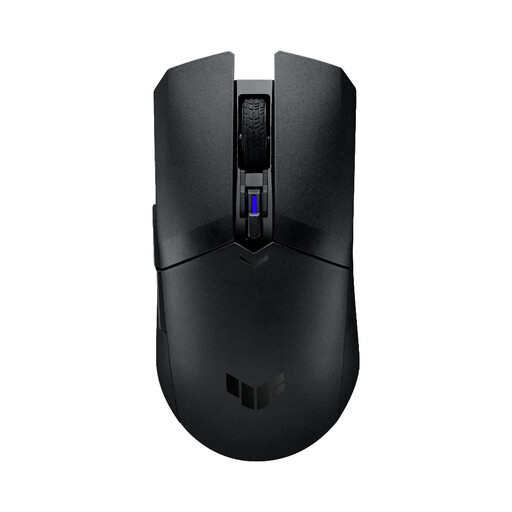 Image unavailable
This is the option to examine if replaceable cells appeal more than routine mouse charging. Check which AA or AAA battery arrangement suits you and keep compatible spares available.
Before relying on its 2.4 GHz connection for matches, confirm the receiver is included with this package and that your gaming device has a suitable free USB port. Check the expected battery runtime for your planned setup.
 Image unavailable
Consider this rechargeable mouse if a charging base fits your setup and you can confirm how it will be powered without occupying a socket you need elsewhere.
The product name lists 56 g, a PAW3950 sensor, 30K DPI and an 8KHz polling rate. Check the exact connection modes for this variant before relying on Bluetooth or wired use, and confirm its battery runtime for your sessions.
 Image unavailable
This rechargeable option is relevant if you want custom controls and can accommodate a charging dock in a socket-constrained setup.
The product name lists Bluetooth, 2.4G and USB-C modes with a PAW3311 sensor. Confirm the dock’s power requirements and battery runtime before planning long sessions; check the weight of this exact variant if it will affect your grip choice.
A replaceable-battery mouse avoids routine mouse charging, but a rechargeable wireless mouse still needs periodic USB power. Logitech G says the G305 uses one AA battery, while SteelSeries says the Rival 3 Wireless accepts one or two AAA batteries. Keep the appropriate spares available if you choose that approach.
Use the dedicated receiver when the exact mouse identifies 2.4 GHz as its gaming-oriented mode; Bluetooth can be useful for a second compatible device. SteelSeries describes the Rival 3 Wireless 2.4 GHz connection as gaming-grade and says its Bluetooth mode automatically uses a 125 Hz polling rate, so the two modes should not be treated as interchangeable.
It can on a mouse whose lighting consumes battery power. SteelSeries says the Rival 3 Wireless scroll-wheel RGB light draws power and recommends switching it off to maximise playtime. Check the controls and runtime conditions for the model you intend to use.
Keep spent batteries and a retired electrical mouse out of household rubbish. GOV.UK advises using appropriate recycling routes for batteries and electrical products; check which local collection option accepts each item.