Who is this for?

Players short of USB ports

If your laptop or compact setup has few free USB ports, a Bluetooth-capable mouse lets you avoid leaving a receiver connected when you need that port elsewhere. Check which connection mode carries the gaming specifications you want to use.

Players focused on timing and control

If your rhythm game uses mouse movement or clicks and you can spare a USB port, compare the stated wired and 2.4 GHz modes. Shape, weight and how the mouse charges also matter when you make repeated movements.

Players sharing mains outlets

If charging interruptions or access to wall outlets are your main concerns, check battery claims for the mode you intend to use and what charging accessories come with the mouse. A wired USB mouse is another option if its cable suits your desk.

What matters when choosing?

Bluetooth and 2.4 GHz

Choose when: You need a USB port free at times but also want a dedicated receiver mode for play.

Trade-off: Bluetooth requires a compatible computer, and a rechargeable mouse still needs charging; performance and battery claims can differ by mode.

Dedicated 2.4 GHz wireless

Choose when: You want to play without a movement cable and can leave a gaming receiver in a USB port.

Trade-off: The receiver takes a port, and the mouse needs charging.

Wired USB

Choose when: A computer USB port is available and you would rather avoid managing a battery.

Trade-off: The cable remains on the desk and may get in the way of broad, repeated movements.

ConcernWhat to checkWho this matters to
Connections and ports Count free computer USB ports separately from mains outlets. If a port must stay free, check computer Bluetooth support and the mouse’s available modes. If I need my remaining USB port for another device, I want a mouse I can use without leaving a receiver plugged in. About 42% of consumers would put USB-port preservation first.
Timing and movement Confirm the game uses mouse input, then check the stated polling conditions for the mode you will use and whether the shape and weight suit repeated movement. When movement and clicks are part of my rhythm-game controls, I want a consistent input route I can use comfortably. Around 33% of consumers would prioritise timing and control.
Charging and outlets Compare battery claims for the intended connection mode and check the supplied cable, adapter and charging arrangement. With shared outlets, I want to avoid interrupting a session just to find somewhere to charge the mouse. Roughly 25% of consumers would make charging interruptions their main concern.

What should you avoid?

  • Assuming every mouse needs a wall outlet

    A wired mouse normally plugs into a computer USB port. A wireless mouse may instead occupy a USB port with its receiver and need a USB connection later for charging.

    Check which resource is scarce: mains outlets, computer USB ports, or both. That distinction changes whether wired, receiver-based wireless or Bluetooth is useful.

  • Treating Bluetooth and 2.4 GHz as interchangeable

    A mouse can have different specifications in different modes. SteelSeries, for example, states up to 200 hours on Bluetooth and up to 120 hours on 2.4 GHz for the Aerox 3 Wireless Gen 2; neither figure describes every wireless mouse.

    Read the exact model’s mode-specific specifications and select the connection for which the features you need are stated.

  • Choosing specifications before checking game controls

    Polling rate and mouse weight have little bearing on a play mode that does not use the mouse for its relevant inputs.

    Check your rhythm game’s control settings and preferred play mode before making mouse specifications a priority.

  • Overlooking charging accessories and support

    A supplied receiver and USB cable do not necessarily mean a wall adapter is included. The Joybuy listing for the Razer Viper V3 Pro specifies a dongle and cable but no USB wall adapter.

    Check the box contents, the seller’s return terms and the warranty route before checkout, and keep your proof of purchase. A warranty does not replace statutory rights for faulty goods.

Brands to consider

SteelSeries

The Aerox 3 Wireless Gen 2 is relevant if you want Bluetooth for keeping a USB port free alongside a dedicated 2.4 GHz route.

  • SteelSeries states up to 200 hours of battery life on Bluetooth and up to 120 hours on 2.4 GHz for this model.
  • Its advertised 4K wireless polling and under-2 ms click latency should not be assumed to apply identically to every connection mode; check the intended mode’s specifications.

Logitech G

The G305 X SUPERLIGHT offers Bluetooth, a LIGHTSPEED receiver connection and a USB-C cable option.

  • Logitech G lists a 61 g weight and claims 130+ hours of battery life for this model.
  • Its optional 8 kHz capability requires a separately sold PRO Wireless Receiver. Check which receiver comes with the configuration you are buying.

Razer

The Viper V3 Pro is relevant if you can dedicate a USB port to a 2.4 GHz receiver and want its stated gaming connection rather than Bluetooth.

  • Razer lists a 54 g weight, up to 8,000 Hz polling and up to 95 hours of battery life for this model.
  • The receiver occupies a USB port. The Joybuy listing includes a dongle and USB cable but no USB wall adapter.

Joybuy mouse choices

These mice cover Bluetooth-capable and receiver-based wireless choices for setups with limited ports or shared outlets. Check your game’s controls and the connection mode you intend to use before choosing between them.
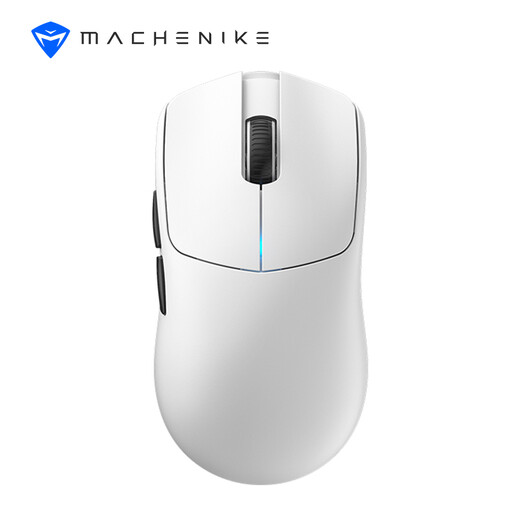
MACHENIKE L9X1 Advanced wireless mouse

MACHENIKE L9X1 Advanced wireless mouse

Consider this model if Bluetooth would free a USB port, while you also want a 2.4 GHz or wired option for mouse-led play.

The product name specifies Bluetooth, 2.4 GHz and wired modes, a PAW3395 sensor, 49 g weight and an advertised 8K polling feature. Confirm which mode supports the polling rate and whether the receiver is included before relying on the 2.4 GHz option.

View on Joybuy
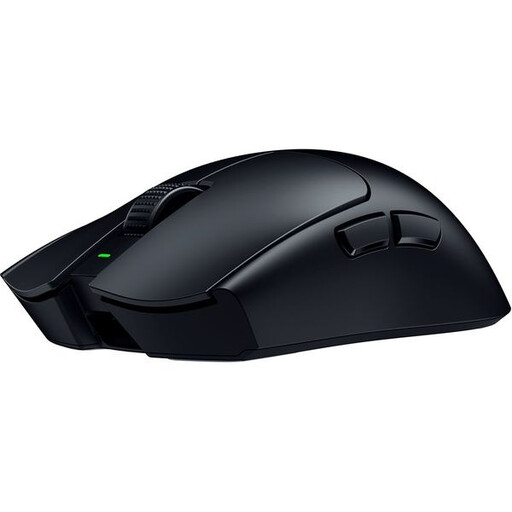
Razer Viper V3 Pro wireless mouse, black

Razer Viper V3 Pro wireless mouse, black

Consider this receiver-based choice if you can spare a USB port and want to play without a movement cable.

Razer states a 54 g weight, up to 8,000 Hz polling and up to 95 hours of battery life for the Viper V3 Pro. The Joybuy listing specifies a 2.4 GHz dongle and USB cable, but no USB wall adapter; check battery life under your intended settings.

View on Joybuy
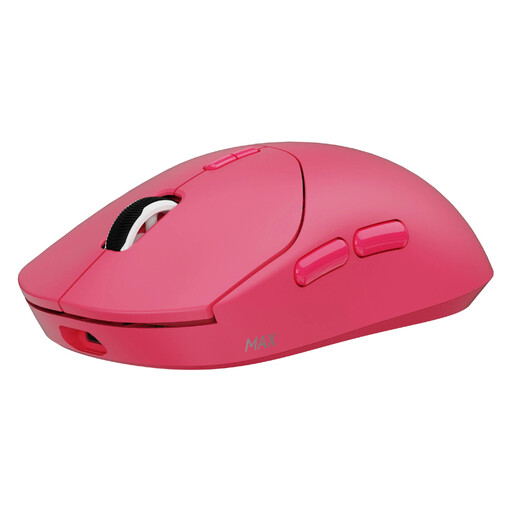
RAPOO VT2 MAX wireless mouse, pink

RAPOO VT2 MAX wireless mouse, pink

Consider this model if a USB receiver fits your setup and charging frequency matters more to you than keeping that port free.

The product name specifies 53 g, an advertised 8K wireless polling rate and battery life of up to 750 hours. That battery claim applies at 1,000 Hz with low-power mode enabled after a driver update; check expected runtime at your chosen polling rate.

View on Joybuy
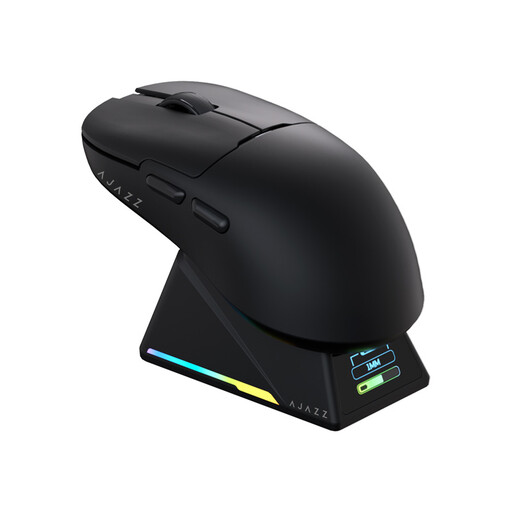
AJAZZ AJ159 APEX wireless mouse with magnetic charging base

AJAZZ AJ159 APEX mouse with magnetic charging base

Consider this model if you have a USB port for 2.4 GHz play and want a magnetic charging base.

The product name specifies 56 g, 2.4 GHz and wired modes, and an advertised 8 kHz polling rate. Its connectivity descriptions conflict on Bluetooth, so confirm that feature for this exact variant if keeping a USB port free depends on it.

View on Joybuy

AJAZZ AJ200 AI MC wireless mouse with charging dock

AJAZZ AJ200 AI MC mouse with charging dock

Consider this tri-mode model if you want Bluetooth for times when a USB port must stay free and a separate 2.4 GHz option for play.

The product name specifies Bluetooth, 2.4 GHz and USB-C modes, a PAW3311 sensor and a charging dock. Confirm that the dock’s power connection suits your setup; the product descriptions give conflicting weights for this model.

View on Joybuy

Frequently asked questions

Will a wireless mouse solve a shortage of plug sockets?

Not necessarily: a rechargeable mouse still needs charging, and a 2.4 GHz receiver uses a computer USB port. If mains outlets are scarce but a USB port is free, a wired mouse may be simpler; if the USB port is scarce, check whether your computer and chosen mouse support Bluetooth.

Should I use Bluetooth or 2.4 GHz for rhythm games?

Use Bluetooth when keeping a USB port free is your priority, provided your computer supports it. For mouse-led play where you want a model’s advertised gaming-performance mode, check whether those specifications apply to its dedicated 2.4 GHz connection rather than assuming they apply to Bluetooth too.

Does a higher DPI number make a mouse better for rhythm games?

A higher DPI number alone does not establish that a mouse suits your rhythm game. Check whether the game uses mouse input in your preferred mode, then choose a sensitivity and mouse shape you can use comfortably.

What if a mouse bought in the UK is faulty?

Keep your proof of purchase and contact the seller about the fault. Citizens Advice explains that goods which are broken, not fit for purpose, not as described or not of satisfactory quality may qualify for a refund, repair or replacement; consult its guidance for the applicable UK nation and your circumstances. A manufacturer’s warranty adds to, rather than replaces, legal rights.

How should I dispose of an old rechargeable mouse?

Use an appropriate electrical recycling collection point rather than putting the device in household rubbish. GOV.UK advises taking removable rechargeable batteries to a suitable battery collection point and treating devices with non-removable batteries as electrical products for recycling.