Relaxed aquarium builders
If you spend long sessions arranging fish, plants and scenery, screen detail and a comfortable viewing position may matter more to you than the highest advertised refresh rate.


For a virtual aquarium on a PC that you also use for other games, start by considering a 27-inch QHD IPS monitor rather than choosing by maximum refresh rate alone. Consider 4K if your source and cable support the display mode you want, or OLED if dark-scene contrast is a priority. Before choosing a model, decide whether your headphones will connect to the PC or console directly or need a monitor output.
If you spend long sessions arranging fish, plants and scenery, screen detail and a comfortable viewing position may matter more to you than the highest advertised refresh rate.
If the same display also serves faster games, check the resolution and refresh rate your graphics output can deliver together. A high refresh-rate specification alone does not establish what your PC will display.
If you normally listen through headphones, settle the audio connection before choosing a screen: you may connect to the PC or console directly, or need an output on the monitor itself.
Start with the scenery and interface detail you want, then check whether other games, your source device and your headphone connection change the choice.
| Concern | What to check | Who this matters to |
|---|---|---|
| Scenery detail and viewing | Compare native resolution and panel type; check colour and HDR claims for the exact model rather than assuming they apply across a range. | If I mainly arrange and watch the aquarium, I want its scenery and menus to remain clear during relaxed sessions. Around 42% of consumers would put visual detail first. |
| Other games and source compatibility | Check the resolution and refresh rate supported by your graphics output, monitor port and cable; distinguish native from overclocked modes. | When my PC also runs faster games, I want a display mode that my setup can actually deliver. Roughly 33% of consumers would make mixed-game compatibility their primary concern. |
| Headphones and desk setup | Decide where the headset plugs in, then check the exact monitor's audio output, stand adjustments and mounting options if needed. | If I listen through headphones throughout a session, the connection route and screen position shape my choice. About 25% of consumers would prioritise their headset-and-desk setup. |
LG describes the 27GS75QN-B's 200Hz setting as an overclocked mode requiring a DisplayPort 1.4-capable graphics card and cable; its stated native rate is 180Hz.
Check the mode you intend to use against your graphics output, monitor port and cable, and note whether that mode is native or overclocked.
Audio outputs vary by model. ASUS lists an earphone jack on the VG27AQ3A, while Dell lists a mini-jack headphone output on the G2722HS; neither specification establishes the ports on another display.
Decide whether the headset connects to the source device or monitor, then check the chosen model's port list.
If the planned connection does not work at your desk, an adapter or longer headset cable may be needed.
LG specifies compatible source hardware and cabling for the 27UQ750-W's 4K high-refresh mode. A monitor's stated maximum does not establish what a particular PC or console will output.
Check the intended resolution and refresh-rate combination against your source device, selected port and cable before choosing.
UK government guidance on waste electrical and electronic equipment describes recovery, reuse and recycling as aims of the WEEE system.
Look for an electrical-waste collection or retailer take-back route available in your area rather than putting an old monitor in general waste.
These model ranges illustrate different display and connection choices; compare the specifications of the particular monitor you intend to use.
LG's 27GS75QN-B, 27GS95QE-B and 27UQ750-W provide QHD IPS, QHD OLED and 4K IPS specifications to compare for this setup.
The VG27AQ3A is a QHD Fast IPS option to examine if you want a monitor with an explicitly listed earphone jack.
The Q27G4X offers another 27-inch QHD Fast IPS specification to compare with your source device and desk requirements.
The G2722HS is a Full HD IPS reference point for someone considering a listed headphone output and height-adjustable stand.
These monitors cover QHD IPS, 4K IPS and QHD OLED choices for a virtual aquarium and other games. Check the display mode your source can provide and where your headphones will connect before choosing a model.
 No image available
Consider this model if 4K aquarium scenery is your priority and you also want to compare high-refresh modes for other games.
 No image available
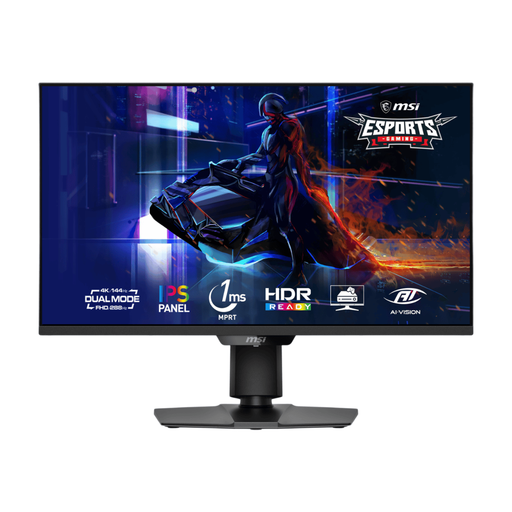
This is a 4K option if you value detailed aquarium scenery but also want a separate Full HD mode for other games.
 No image available
Consider QHD OLED if dark-scene presentation matters to you alongside mixed gaming use; the aquarium itself does not establish a need for 240Hz.
 No image available
This QHD OLED option is relevant if you favour its panel type for aquarium viewing and also use the screen for other games.
 No image available
This follows the QHD IPS route if you want one screen for the aquarium and other PC games.
No: the aquarium scenario does not by itself call for 240Hz. If you also play faster games, compare the refresh mode your PC can deliver after choosing the resolution and panel type you want; LG, ASUS and AOC each specify QHD models at around 180Hz.
You can if the exact monitor has a suitable headphone output and your setup sends audio to it. ASUS lists an earphone jack on the VG27AQ3A and Dell lists a mini-jack output on the G2722HS; otherwise, check the chosen model's ports or connect the headset directly to the PC or console.
The monitor, source output, selected port and cable must all support the same 4K refresh mode. For its 27UQ750-W, LG specifies compatible HDMI 2.1 or DisplayPort hardware for the relevant high-refresh operation, so check the requirements for your particular monitor and source.
Use an electrical-waste collection or retailer take-back route available in your area rather than general waste. UK government WEEE guidance addresses the recovery, reuse and recycling of electrical and electronic equipment, which includes monitors.