Start with the screen finish and where light falls in your room, then choose the resolution that suits how closely you inspect virtual furnishings. A 27-inch anti-glare QHD IPS monitor is a practical starting point for decorating and mixed gaming; consider 4K IPS for finer details, or OLED if you can assess the exact coating and panel’s behaviour in your lighting. A high refresh rate matters more if you also play fast-moving games.
Who this choice matters to
Bright-room décor planners
If daylight or room lighting falls across your screen while you design virtual interiors, reflections deserve attention before contrast claims or very high refresh rates. RTINGS notes that glossy coatings can produce mirror-like reflections in bright rooms.
Detail-focused virtual decorators
If you compare small patterns, material finishes and object placement, consider resolution and stated colour coverage alongside the screen’s gaming features. Check those specifications for the exact model rather than assuming every display in a range is alike.
Mixed decorating and action gamers
If you switch between creative play and faster games, consider the refresh mode and whether your device and connection can use it. An advertised maximum may depend on a particular cable, graphics connection or display mode.
What to prioritise
Anti-glare QHD IPS
Consider it when: Reflections are a concern and you want a 27-inch screen for decorating as well as general gaming.
Trade-off: QHD shows less fine detail than 4K at the same screen size, and an anti-glare label alone cannot tell you how the screen will look beside your window.
Anti-glare 4K IPS
Consider it when: Inspecting small furnishings and textures matters enough to make 4K your preferred operating mode.
Trade-off: A dual-resolution model such as the Dell Alienware AW2725QF offers 4K at 180Hz or FHD at 360Hz; its maximum refresh rate is not available at 4K, according to Dell.
OLED
Consider it when: You value OLED’s contrast and can assess the particular panel and coating in lighting like your own.
Trade-off: RTINGS reports that glossy coatings can reflect bright sources directly and that OLED panel types differ in how well they retain dark blacks in well-lit rooms.
| Concern | What to check | Who this matters to |
|---|
| Reflections and contrast |
Check the exact screen finish and where windows or lamps will reflect. If a return policy permits it, assess the monitor in your usual room lighting. |
When I decorate beside a bright window, I want to see the room I am designing rather than the window reflected in it. Around 46% of consumers put bright-room visibility first. |
| Décor detail and colour |
Compare native resolution at the screen size you want and check stated colour coverage for the exact model. |
If I spend time comparing fabric patterns and placing small objects, I want those details to remain easy to distinguish. Around 36% of consumers prioritise detail and colour inspection. |
| Motion and connectivity |
Check the refresh rate at your chosen resolution, whether it is native or overclocked, and the device, port and cable requirements. |
When I move from decorating to fast games, I want a refresh mode my setup can actually use. Roughly 18% of consumers make compatible, smooth mixed gaming their primary concern. |
Buying pitfalls
-
Treating an HDR or contrast label as a bright-room visibility test
RTINGS explains that ambient light can raise perceived black levels, making dark details harder to distinguish. The direction of the light and the screen coating also affect what you see.
Look for reflection information about the exact monitor and consider how its screen will face your windows and lamps.
-
Choosing glossy OLED for its dark-room contrast alone
RTINGS notes that glossy surfaces can produce mirror-like reflections and that WOLED and QD-OLED differ in well-lit-room black-level behaviour. An OLED label does not settle the bright-room choice.
Check the panel subtype and coating, then judge whether you can control direct daylight and lamp reflections.
-
Assuming the highest refresh figure works with every connection
LG specifies 180Hz native operation for the 27GS85Q-B. Its 200Hz overclocked mode requires both a DisplayPort 1.4-capable graphics card and a DisplayPort 1.4 cable.
Check your graphics port, cable and the model’s mode requirements before choosing it for that higher refresh figure.
You may need a compatible cable if your existing one cannot support the intended mode.
Relevant brands to consider
LG UltraGear
The LG 27GS85Q-B is a 27-inch QHD Nano IPS option for those considering colour coverage alongside high-refresh gaming.
- LG specifies 180Hz native operation and DCI-P3 98% typical coverage for this model.
- Its 200Hz overclocked mode requires a DisplayPort 1.4-capable graphics card and cable.
Alienware
Dell’s 27-inch AW2725QF combines an anti-glare IPS screen with separate modes for detailed viewing and higher-refresh play.
- Dell specifies 4K at 180Hz, FHD at 360Hz and height and pivot adjustment.
- You must choose between the 4K mode and the model’s maximum-refresh FHD mode; the anti-glare specification does not establish how reflections will look in your room.
ASUS TUF Gaming
The VG27AQ5A is a 27-inch anti-glare QHD Fast IPS option for a flat-screen setup.
- ASUS specifies 2560 × 1440 resolution and a maximum refresh rate of 210Hz.
- Its stand offers tilt but not height adjustment, so check your desk position or mounting plans.
Samsung Odyssey
Samsung’s G50D is a QHD Fast IPS option for those also considering 180Hz gaming and an adjustable stand.
- Samsung specifies DisplayHDR 400 and G-SYNC Compatible and AMD FreeSync Premium Pro support for the G50D.
- Samsung says response-time results can vary with content and monitor settings; the stated figure is not a result to expect in every game.
BenQ MOBIUZ
The 32-inch EX3210U is a larger 4K IPS option for viewing virtual spaces on a bigger screen.
- BenQ specifies 4K resolution and a 144Hz refresh rate for this model.
- BenQ describes HDRi as adjusting the image to ambient light; that manufacturer claim does not establish its performance in a particular bright room.
Joybuy products for this setup
These choices cover different ways to approach virtual decorating: QHD and Full HD monitors, plus a 32-inch OLED option. Match the screen size, resolution and gaming features to your needs, and assess reflections on the exact model before relying on it in a bright room.
 No image available
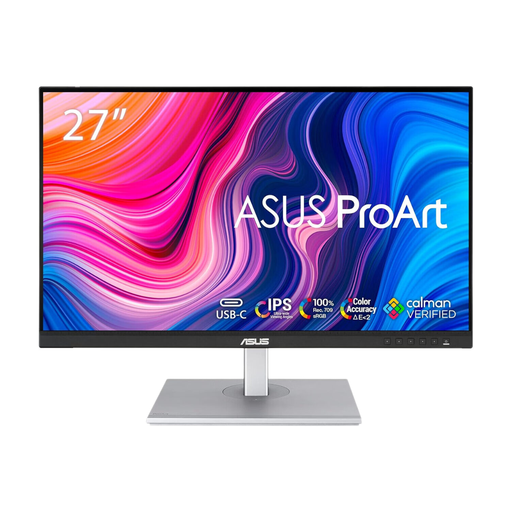
ASUS ProArt PA278CFRV IPS QHD 100Hz
Consider this QHD option if inspecting virtual décor matters more to you than pursuing a very high refresh rate. The product name specifies IPS and 100Hz; check gaming-device compatibility and the screen finish for your setup.
View on Joybuy
 No image available
Samsung Odyssey OLED G8 LS32DG802SUXXU 32-inch Ultra HD
Consider this larger OLED screen if fine detail and OLED are priorities. Before choosing it for a bright room, check the exact coating, reflections and perceived black levels under lighting like your own.
View on Joybuy
 No image available
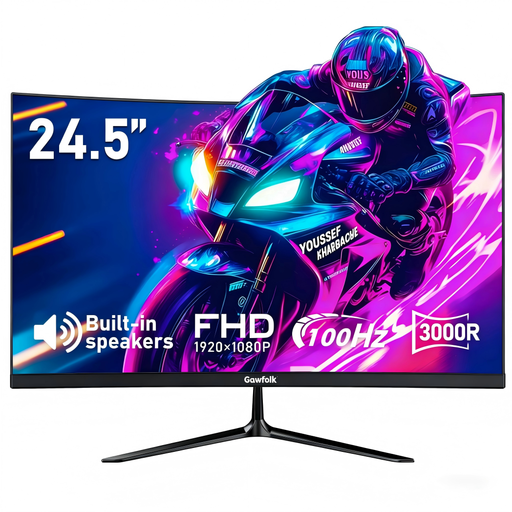
Gawfolk 24.5-inch FHD curved monitor, 100Hz
Consider this smaller curved screen if Full HD gives you enough detail for the objects you inspect. Its name also specifies AMD FreeSync and anti-glare treatment; check the response-time measurement and reflections on the exact display.
View on Joybuy
 No image available
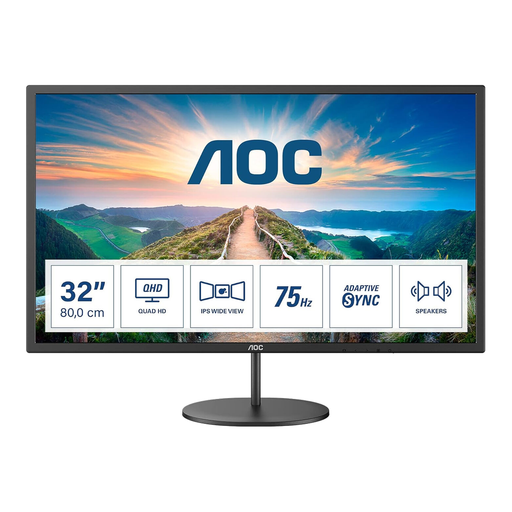
AOC Q32V4 31.5-inch IPS monitor
Consider this larger screen if you want more space for viewing a virtual room. The product name specifies Adaptive Sync, but uses both ‘2K’ and ‘Ultra HD’; confirm its native resolution and refresh rate before deciding whether it suits your games.
View on Joybuy
 No image available
BenQ GW2791 27-inch IPS Full HD 100Hz
Consider this for decorating and everyday gaming if Full HD gives you enough detail on a 27-inch screen. The product name specifies IPS and 100Hz; check the exact colour-coverage specification and whether the stand fits your desk height.
View on Joybuy
Questions about choosing a monitor
What should I check first for a gaming monitor in a bright room?
Check the screen coating and where windows or lamps will sit relative to it. RTINGS notes that glossy coatings can create mirror-like reflections in bright rooms; a matte or anti-glare label is useful to investigate, but does not replace assessing the particular screen.
Will a high contrast ratio keep dark décor details clear in daylight?
Not necessarily: ambient light can raise perceived black levels on a monitor, according to RTINGS. Look at reflection and bright-room information for the exact model rather than relying on a dark-room contrast figure alone.
Can I use 200Hz on the LG 27GS85Q-B?
You can use its 200Hz overclocked mode only with the required connection. LG specifies 180Hz native operation and says 200Hz requires a DisplayPort 1.4-capable graphics card and a DisplayPort 1.4 cable.
What should I do with an old monitor when replacing it in the UK?
Ask the retailer about taking back the old monitor and how its collection or drop-off process works. GOV.UK describes retailer take-back arrangements for waste electrical equipment of the same type as an item purchased; confirm the arrangements and any collection charge before delivery.


