4K-and-120Hz console players
PS5 or Xbox Series X players at a desk who want to use supported 4K/120Hz and variable refresh rate (VRR) modes, rather than choosing by a monitor’s maximum PC refresh rate.


For PS5 or Xbox Series X, choose a 4K HDMI 2.1 monitor if you want access to supported 4K/120Hz modes, but check what its HDMI inputs can actually accept from your console. A 1440p monitor can make more sense for a compact desk or lower-resolution 120Hz play; Nintendo Switch 2 outputs 4K at up to 60fps, or 120fps at 1080p or 1440p, where software supports it. If you play from a sofa, compare a gaming television too, and check desk fit and audio connections before choosing any monitor.
PS5 or Xbox Series X players at a desk who want to use supported 4K/120Hz and variable refresh rate (VRR) modes, rather than choosing by a monitor’s maximum PC refresh rate.
PS5, Xbox Series S or Switch 2 players considering a compact 1440p screen and supported 120Hz output. The available modes depend on the console, connected display and game.
Console users who need to make room for the stand, connect more than one device or decide how they will hear game audio. Mounting, speakers, headphone output and HDMI-port arrangements vary by monitor model.
Start with the output modes your console and games support, then check the monitor’s HDMI inputs; screen size and sound connections determine whether it works in your space.
Consider it: For PS5 or Xbox Series X play at a desk when supported 4K/120Hz modes are a priority.
Bear in mind: An HDMI 2.1 label or higher PC refresh rate alone does not establish which console modes work on each input.
Consider it: When a 1440p desk display and supported 120Hz play matter more to you than 4K output.
Bear in mind: Nintendo UK says Switch 2 frame-rate, HDR and VRR support vary by software, so a 120Hz screen will not make every game run at 120fps.
Consider it: When a compact screen and supported lower-resolution 120Hz play take priority over 1440p or 4K detail.
Bear in mind: Refresh rates above the named consoles’ documented 120Hz modes are not, by themselves, a console advantage.
Consider it: When you sit farther away, share the screen or prefer sofa play to a close-up desk display.
Bear in mind: Check the television’s documented HDMI modes, VRR and low-latency features against the console you use, just as you would with a monitor.
| Concern | What to check | Who this matters to |
|---|---|---|
| Console video modes | Check the exact HDMI input’s supported resolution and 120Hz modes, plus the console’s reported HDR and VRR options. Xbox Support specifies a Series X, Ultra High Speed HDMI cable and HDMI 2.1 display for 4K gaming at 120Hz. | I want the resolution and refresh mode I select to work from my console, not just from a PC. Roughly 36% of consumers would put console-mode compatibility first. |
| Motion and responsiveness | Confirm 120Hz and VRR over HDMI for the intended console and mode. For input lag and response time, look for comparable independent tests of the exact monitor rather than comparing quoted response-time labels. | Fast-paced games make smooth motion and responsive controls my main concern, provided the game supports the mode. Around 29% of consumers would prioritise motion and responsiveness. |
| Desk fit and audio | Measure the space for the screen and stand; check adjustment or mounting options and the sound connection you plan to use. | A shared or shallow desk leaves me little room for a stand, and I need a workable way to hear game audio. About 21% of consumers would make desk fit and audio their primary concern. |
| Unused PC features | Check HDMI console modes before treating a higher DisplayPort refresh rate or PC-focused feature as useful for this setup. | I mainly play on a console, so I would rather choose features it can use than focus on a headline PC specification. Roughly 14% of consumers would put avoiding unused features first. |
A PC refresh-rate figure does not establish 4K/120Hz, VRR or HDR operation through the monitor’s HDMI inputs. Xbox Support specifies an HDMI 2.1 display and Ultra High Speed HDMI cable for Series X 4K gaming at 120Hz.
Check the exact model’s HDMI modes before ordering. Once connected, inspect the console’s display information and test the resolution and refresh mode you intend to use.
Nintendo UK specifies up to 4K at 60fps, or 120fps at 1080p or 1440p. Frame-rate, HDR and VRR support also vary by software.
Choose between 4K output and lower-resolution 120fps capability according to the games you play; do not assume a 4K/120Hz monitor makes both available together.
A suitable video signal will not resolve a stand that takes up too much desk space or a missing sound connection. LG UK lists headphone output but no built-in speakers for its 27GP95RP-B, while the cited ASUS VG28UQL1A lists speakers and an earphone jack.
Measure the usable desk area and check the exact model’s stand, mounting pattern, audio connections and HDMI inputs.
Depending on the chosen monitor and setup, you may also need space for separate speakers or a monitor arm.
For Series X 4K gaming at 120Hz, Xbox Support specifies an Ultra High Speed HDMI cable. HDMI Licensing Administrator describes an official certification label for cables in this category.
If you need a replacement, check its certification label and the listed length and model against your setup.
A cable that is too short for your layout may need replacing before you can complete the connection.
The LG UK specifications for the 27GP95RP-B give console players a 27-inch 4K model to examine, rather than a specification that applies to every UltraGear monitor.
The ASUS UK VG28UQL1A is a 28-inch 4K example for players comparing HDMI inputs and desk adjustments.
BenQ UK describes the EX3210U as a 32-inch 4K HDMI 2.1 monitor with built-in speakers.
These monitors cover 1440p and 4K desk setups. Compare each listing’s HDMI console modes with your own console before treating its resolution or maximum refresh rate as a usable gaming mode.
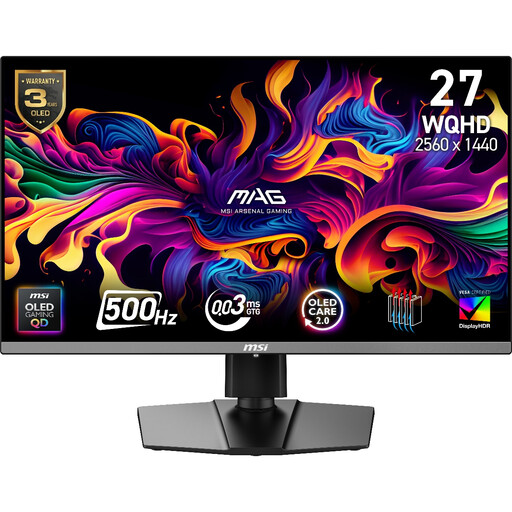 No image available
Consider this for a 1440p desk setup if the HDMI modes available to your console meet your needs.
The title specifies a 2560 × 1440 QD-OLED display and a 500Hz maximum refresh rate. That headline rate does not establish a 500Hz console mode; confirm the intended 120Hz and VRR settings with your console and game.
 No image available
Consider this 4K desk display for PS5 or Xbox Series X if its HDMI console modes suit the games you play.
The title specifies a Nano IPS panel, HDMI 2.1 and dual-mode 240Hz/480Hz refresh options. Those PC-focused figures do not establish console output at either rate; check the desired 4K/120Hz and VRR behaviour with your console.
 No image available
Consider this larger curved display if you want a 4K screen and have measured the space available on your desk.
The title specifies 3840 × 2160 resolution and a 165Hz maximum refresh rate. Check 4K/120Hz and VRR support through HDMI for your particular console before choosing it for those modes.
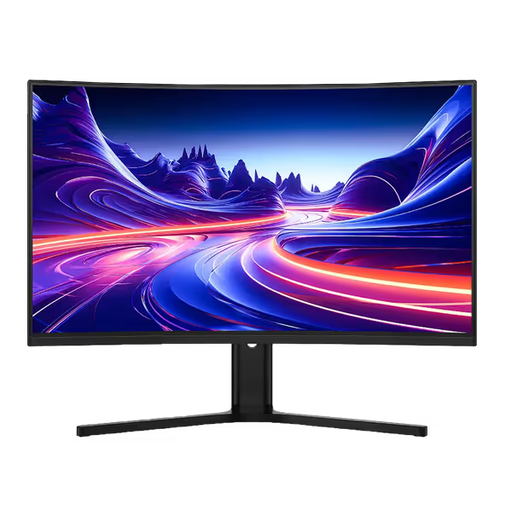 No image available
Consider this 1440p display if a larger curved screen fits your desk and you can confirm the console mode you want.
The title specifies 2560 × 1440 resolution, a VA panel, two HDMI inputs and two DisplayPort 1.4 inputs. Its 180Hz headline does not confirm 120Hz or VRR from a console over HDMI; check those modes on the exact model.
 No image available
Consider this larger Ultra HD screen if it fits your viewing position and its HDMI modes match your console.
The title identifies a 32-inch OLED model. Confirm the supported resolution, refresh rate and VRR over HDMI, as well as the audio connections you need, for your intended setup.
For Xbox Series X gaming at 4K and 120Hz, Xbox Support specifies a Series X console, Ultra High Speed HDMI cable and HDMI 2.1 display. HDMI 2.1 is not automatically necessary if you are content with a lower-resolution 120Hz mode or 60Hz output. For PS5, use its Screen and Video settings to check the connected display and test the resolution, 120Hz and VRR modes you intend to use.
No, not at both settings simultaneously under Nintendo UK’s published output specifications. Switch 2 outputs up to 4K at 60fps, while 120fps is supported when 1080p or 1440p is selected; frame-rate, HDR and VRR support vary by software.
Only if built-in speakers are how you intend to hear game audio. Check the exact model’s speakers and headphone output against your planned connection: LG UK lists headphone output but no speakers for the 27GP95RP-B, while ASUS UK lists speakers and an earphone jack for the VG28UQL1A.
GOV.UK says a seller must offer a full refund if an item is faulty, not as described or does not do what it is supposed to. That is different from deciding to return a working monitor because you have changed your mind; check the applicable terms for that situation without treating a retailer’s voluntary policy as a limit on remedies for a faulty item.