Choose a monitor for the resolution and refresh rate your platform-game setup can actually use, rather than its highest advertised PC refresh rate. For PS5 or Xbox Series X play at 4K and 120 Hz where supported, check the monitor’s HDMI mode and the complete connection path; if picture quality matters more, compare the exact HDR certification and accept the trade-offs in screen size, desk space and cost.
Who needs which gaming-monitor features?
Console players targeting 4K at 120 Hz
If you use a PS5 or Xbox Series X, check that the monitor’s HDMI input accepts the resolution and refresh rate you want. The game, console settings and cable also affect the mode you receive; PlayStation and Xbox Support describe the relevant console video settings.
Players prioritising smooth motion
If movement in platform games is your priority, check the refresh mode your console and games support, along with compatible variable refresh rate (VRR). PlayStation says VRR synchronises a compatible display’s refresh rate with PS5 output; a monitor’s maximum PC refresh rate alone does not establish that compatibility.
Players prioritising HDR presentation
If contrast and colour matter more to you than a headline refresh figure, compare the exact display and HDR certification rather than relying on an HDR label alone. VESA distinguishes between its tested DisplayHDR and DisplayHDR True Black tiers.
What matters when choosing a gaming monitor?
Start with the video mode you want from your console or PC, then decide whether HDR presentation or motion features deserve more of your attention.
| Concern |
What to check |
Who this matters to |
| Console signal compatibility |
Check the exact HDMI input’s resolution and refresh modes, then inspect the connected console’s video-output report. |
I want to play supported PS5 or Xbox Series X games at 4K and 120 Hz, so I need the whole HDMI path to accept that mode. Around 44% of consumers put console signal compatibility first. |
| HDR picture quality |
Look for the exact VESA DisplayHDR or DisplayHDR True Black certification tier and consider the screen’s size and panel type. |
If the look of colourful platform games matters most to me, I want an HDR claim I can assess rather than a label alone. HDR picture quality comes first for around 33% of consumers. |
| Smooth motion and VRR |
Confirm HDMI VRR compatibility with your console and test the supported setting with the games you play. |
I would prioritise consistent-looking movement over a higher resolution, but only if my console, display and game can use the feature. Around 23% of consumers make smooth motion and VRR their primary concern. |
Buying mistakes to avoid
-
Buying by maximum refresh rate alone
A high PC refresh specification does not establish a PS5 or Xbox Series X mode. The console, game, display input and settings must support the resolution and refresh rate together.
Check the specific monitor’s HDMI modes and inspect the console’s reported output after connecting it.
-
Treating every HDR claim as equivalent
VESA’s DisplayHDR and DisplayHDR True Black certifications have defined tiers; a generic HDR label does not identify one of those tiers.
If HDR is decisive, check the exact model’s certification before comparing its panel and screen size.
-
Assuming every input supports the headline specification
Refresh rate and response time can vary with the input source and settings, as Samsung notes for its Odyssey G70D. A DisplayPort figure should not be read as an HDMI promise.
Read the exact model’s port specifications and manual for the connection you intend to use.
-
Overlooking the cable and connection path
Xbox Support says equipment placed between an Xbox Series X and its display can affect video features. It advises a certified Ultra High Speed HDMI cable for longer cable runs.
Where practical, test the console directly with the monitor and a suitable cable before adding a soundbar or AV receiver.
Gaming-monitor brands to consider
BenQ
BenQ’s MOBIUZ EX321UX is a 32-inch 4K Mini LED model. BenQ lists HDMI 2.1 support for 4K at 120 Hz and DisplayHDR 1000 for this specific monitor.
- Worth considering if you want a larger HDR-oriented screen with a stated 4K/120 Hz HDMI mode.
- Check the screen’s fit on your desk and the exact connections you need.
Alienware
Dell lists the Alienware AW2725Q as a 27-inch 4K QD-OLED gaming monitor with a 240 Hz refresh rate.
- A model to compare if an OLED display and high stated PC refresh rate are priorities.
- Check this model’s HDMI modes separately before assuming a particular PS5 or Xbox output mode.
Samsung
Samsung lists its 27-inch Odyssey G70D with 4K UHD resolution and a 144 Hz refresh rate.
- A 4K IPS model to compare when you want a stated high refresh rate.
- Samsung notes that refresh rate and response time can vary with the input source and settings; confirm the console mode you need.
Gigabyte
The Gigabyte M28U is a 28-inch 4K IPS monitor with a 144 Hz refresh rate and HDMI 2.1.
- A size and connection combination to consider if you want a 4K screen with HDMI inputs.
- Confirm the precise console modes, desk fit and current availability for the model you choose.
Joybuy monitors for platform games
These Joybuy monitors cover 4K, QHD and FHD setups with different screen sizes and stated refresh rates. Choose by the resolution you want, then confirm the HDMI and VRR modes for your own console or PC before buying.
 No image available
LG UltraGear G8 27G850A, 27-inch 4K Nano IPS
Consider this if you want a 27-inch 4K monitor with a stated HDR tier for platform games.
The product title lists dual-mode 240 Hz/480 Hz refresh rates, DisplayHDR 600, HDMI 2.1 and DisplayPort 2.1. Check the actual HDMI resolution and refresh combination and console VRR support; also confirm whether the supplied variant is 27G850A or 27G850A-B.
View on Joybuy
 No image available
CRUA 32-inch 1500R curved QHD gaming monitor
Consider this if you want a larger, curved QHD screen and have room for a 32-inch monitor.
The title specifies 2560 × 1440 resolution, 165 Hz, HDMI and DisplayPort. Check the refresh rate available through HDMI and whether your console supports the intended mode and VRR.
View on Joybuy
 No image available
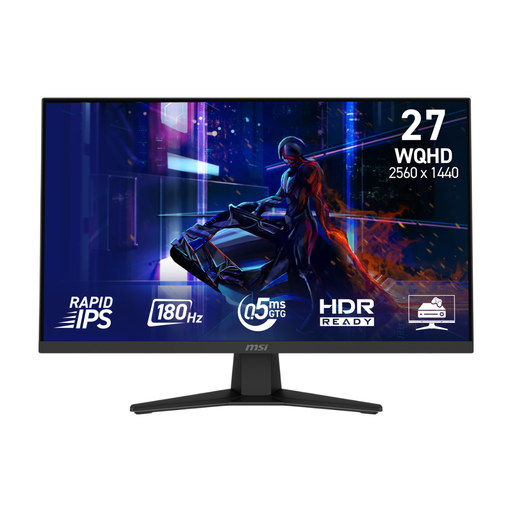
MSI MAG 274QF, 27-inch WQHD gaming monitor
Consider this for a 27-inch QHD setup, particularly if you plan to check a console’s 1440p output mode.
The monitor is listed at 2560 × 1440, with up to 180 Hz over DisplayPort but up to 144 Hz over HDMI 2.0b. Confirm VRR compatibility with your specific console rather than relying on the general adaptive-sync claim.
View on Joybuy
 No image available
Samsung Odyssey G6 S27DG612, 27-inch QHD OLED
Consider this if a 27-inch OLED screen and QHD resolution suit your platform-game setup.
The title states a 240 Hz refresh rate; check the resolution, refresh rate and VRR available to your particular console. If certified HDR performance matters to you, check this exact model’s VESA tier.
View on Joybuy
 No image available
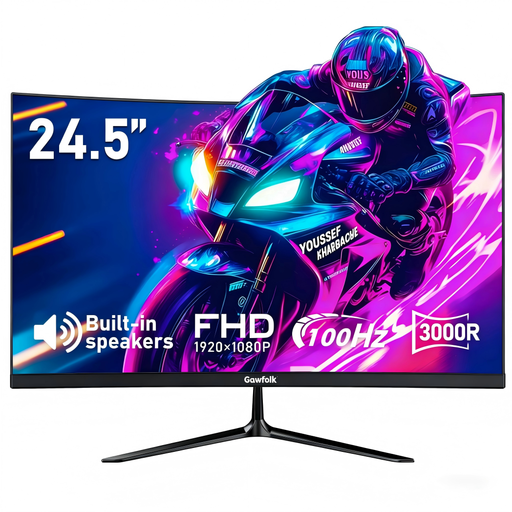
Gawfolk 24.5-inch 3000R curved FHD monitor
Consider this if you want a smaller curved screen and FHD resolution meets your needs.
The title lists a 100 Hz refresh rate, HDMI, AMD FreeSync and built-in speakers. Its stated HDMI limit is 100 Hz, so check the output mode and FreeSync compatibility of the console you intend to connect.
View on Joybuy
Questions about platform-game monitors
How can I check the video mode my PS5 is sending to a monitor?
Open Settings, then Screen and Video, then Video Output on your PS5 to inspect the connected display information. PlayStation also provides a 1440p output test for supported displays, covering SDR and HDR at 60 Hz or 120 Hz and VRR.
What do I need for Xbox Series X gaming at 4K and 120 Hz?
You need a game and monitor connection that support the intended mode, along with suitable console settings and an HDMI path that can carry it. Xbox Support says Series X includes a 2-metre Ultra High Speed HDMI cable supporting HDMI 2.1 features, including 4K gaming at 120 Hz; check the monitor’s exact HDMI specification and use a certified cable if you need a longer run.
Does a monitor’s HDR label tell me how its picture will look?
No: a generic HDR label does not identify a tested performance tier. VESA distinguishes its DisplayHDR and DisplayHDR True Black certifications, so check whether the exact monitor carries a specified certification if HDR is central to your choice.


