Cinematic single-player PC gamers
If story-led games make dark scenes, fine detail and HDR presentation important to you, compare the display with what your graphics card can deliver at its native resolution.


For cinematic adventure games, choose a 32-inch 4K OLED if detailed 16:9 presentation and dark-scene contrast matter most; consider an ultrawide OLED if you play compatible PC games and have room for the wider screen. A 4K Mini LED is another route when a high peak-brightness HDR specification matters, but assess its dark-scene behaviour separately. For long sessions, check positioning, reflections and breaks as well as the resolution and refresh rate your device can deliver.
If story-led games make dark scenes, fine detail and HDR presentation important to you, compare the display with what your graphics card can deliver at its native resolution.
Screen size, stand adjustment, reflections and viewing position deserve attention alongside panel specifications. Plan to change posture and take breaks even if a monitor offers comfort-related features.
Check the monitor’s HDMI capabilities and the output each connected device can use. PlayStation says PS5 supports 4K 120Hz output, but a monitor’s maximum PC refresh rate does not establish its console performance.
For extended cinematic-adventure play, decide which image format and HDR approach you want, then check whether the screen fits your desk and your PC or console can use its intended mode.
| Concern | What to check | Who this matters to |
|---|---|---|
| HDR and dark scenes | Compare the exact HDR specification and screen coating. For Mini LED, assess local dimming in dark scenes rather than judging it by zone count alone. | If dark scenes set the mood in my games, I want contrast and highlights that suit my viewing conditions; around 36% of consumers put HDR contrast first. |
| Resolution and format | Check native resolution, aspect ratio and screen dimensions, plus support for ultrawide output in your games. | A wider game world appeals to me, but I need it to fit my desk and PC setup; roughly 29% of consumers make resolution and format their primary concern. |
| Long-session comfort | Check stand adjustment or VESA mounting, desk depth and reflections where you play. | If I play for hours, I need a position I can adjust rather than relying on a comfort label; around 21% of consumers prioritise long-session setup. |
| Device compatibility | Confirm the resolution, refresh rate and VRR supported by the monitor input, device, cable and game. | I switch between a PC or console and do not want to buy a display mode my setup cannot use; about 14% of consumers put device fit first. |
A monitor’s maximum rate does not mean your device and games can reach it at the resolution you intend to use. Dual-mode displays can pair their highest rates with a lower resolution.
Check the resolution and frame rate you want, then confirm the relevant monitor input, device port and cable. For PS5, check the exact HDMI input’s 4K 120Hz and VRR capabilities.
OLED pixel-level light control and Mini LED local dimming work differently. An HDR label or local-dimming-zone figure alone cannot tell you how a particular monitor will look in a dark game scene.
Compare the exact model’s HDR specification and panel implementation; assess Mini LED dimming behaviour and OLED brightness and coating under relevant viewing conditions.
Low-blue-light or flicker-related features do not fix an awkward screen height, reflections or uninterrupted play.
Check desk depth and stand or mount adjustment, manage room light and change posture. The Health and Safety Executive advises short, frequent breaks for display-screen work.
Dell lists both a 32-inch 4K QD-OLED option and a 34-inch ultrawide QD-OLED option.
LG lists large ultrawide OLED and 32-inch dual-mode OLED monitors for different screen-format priorities.
BenQ’s EX321UX is a 32-inch 4K Mini LED option for shoppers considering a high peak-brightness HDR specification and multiple connections.
The ROG Swift OLED PG32UCDM is a 32-inch 4K QD-OLED option with a stated 240Hz refresh rate.
These choices cover conventional 4K screens, dual-mode displays and several widths of ultrawide OLED. Choose by the format, desk fit and device output you need; the 27-inch IPS model is a different panel route from the OLED options.
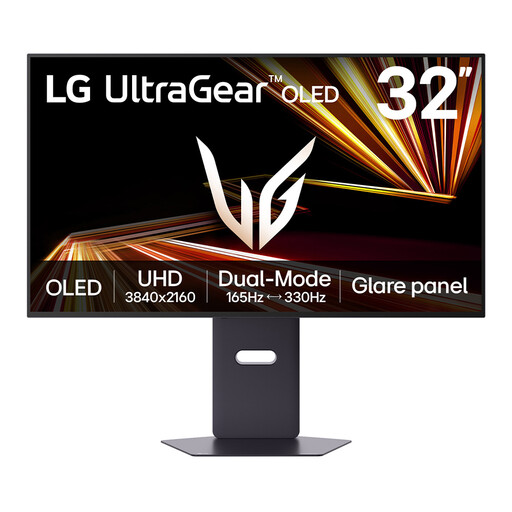 No image available
Consider this for a conventional 4K OLED screen if you also want a separate lower-resolution, higher-refresh mode.
LG specifies 4K at 165Hz or Full HD at 330Hz for this model. Check which mode your device and games can use; the two refresh rates do not apply at the same resolution.
 No image available
Consider this for ultrawide play on a PC when your games support the format and the screen fits your desk.
The product name specifies a 34-inch OLED WQHD display and 240Hz. Confirm the output your PC can deliver and whether each game uses the wider view.
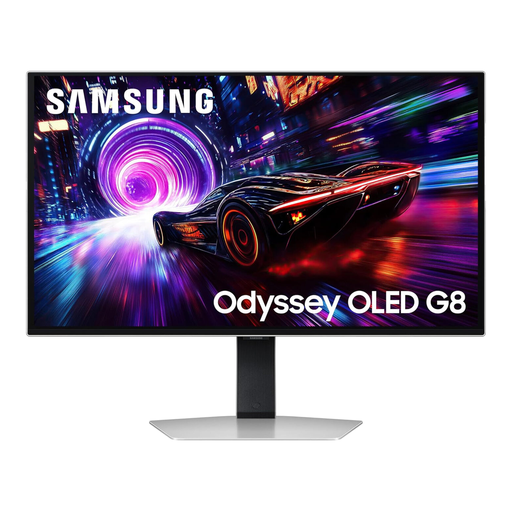 No image available
Consider this if you want a 32-inch OLED candidate for cinematic games without moving to an ultrawide screen.
Before choosing it for a long-session desk setup, check the stand’s adjustment range and the inputs needed by your PC or console.
 No image available
Consider this smaller 4K IPS screen if 27 inches fits your desk better than the larger OLED formats.
The product name lists 4K at 240Hz or 1080p at 480Hz, DisplayHDR 600, DisplayPort 2.1 and HDMI 2.1. Check the mode and HDR presentation you want rather than treating IPS and OLED dark-scene behaviour as interchangeable.
 No image available
Consider this wider format only if your desk and PC games suit a 49-inch, 32:9 screen.
The product name specifies a 1800R curve, 240Hz and DisplayHDR 400 True Black. Check game support for the full width and allow for the screen’s physical size when planning your viewing position.
Choose 4K 16:9 OLED if you want fine detail in a conventional screen format; choose ultrawide OLED if compatible PC games, desk space and your graphics setup make the wider view worthwhile. For scale, Dell specifies 3840 × 2160 for the 32-inch Alienware AW3225QF, while LG specifies 5120 × 2160 for the 45-inch UltraGear 45GX950A.
A PS5 can use compatible display features when the monitor input and game support the relevant output. PlayStation states that PS5 supports HDMI 2.1 and 4K 120Hz; check the exact monitor’s HDMI capabilities and the console’s video-output information rather than relying on a PC refresh-rate figure.
Choose a screen you can position comfortably on your desk, account for reflections and take regular breaks. The Health and Safety Executive’s display-screen guidance favours short, frequent breaks and changing posture over remaining in one position for a long stretch.
For an eligible online purchase, GOV.UK says you can tell the seller you want to cancel within 14 days of receiving the item, then have another 14 days to return it. Check applicable exceptions and the retailer’s return instructions before ordering; remedies for faulty or misdescribed goods are a separate matter.