For card games in a bright room, check the screen coating, typical brightness for everyday use and positioning options before prioritising a very high refresh rate. A 27-inch QHD IPS monitor offers more pixels for card text and menus than a 27-inch Full HD model, but resolution alone will not control reflections. If you also play fast games, weigh refresh rate against those bright-room requirements; assess an OLED model’s glare treatment and guidance on static content separately.
Who should consider these monitors?
Bright-room card-game players
If daylight or overhead lights reflect in the screen while you read cards and menus, start with the exact model’s coating, typical brightness and positioning options. Dell and BenQ publish these specifications for the models discussed below; the Health and Safety Executive also advises adjusting display brightness and contrast to suit room lighting.
Card players who also play other games
A 27-inch QHD IPS monitor may suit you if finer interface detail matters alongside a higher refresh rate for other games. LG and BenQ list QHD IPS gaming models, but their resolution does not, by itself, tell you how reflections will look in your room.
Players focused on screen positioning
If you spend long sessions reading small interface elements, check whether the stand lets you move the screen away from reflections. Dell and BenQ list height adjustment for their respective models; the Health and Safety Executive advises matching display settings to the room’s lighting.
What matters when choosing?
Bright-room-first IPS LCD
Consider it: If reflections are your main concern, look for a model that states its coating and typical brightness and lets you adjust its position. Dell lists a 3H anti-glare coating, 350 cd/m² brightness and height adjustment for the G2722HS.
Trade-off: Dell’s 27-inch G2722HS is Full HD, so it has fewer pixels than a 27-inch QHD alternative for small card-game text.
27-inch QHD IPS
Consider it: If card-game detail and other games both matter, QHD IPS models such as the BenQ EX2710Q and LG 27GS75QN-B combine 2560 × 1440 resolution with high refresh rates.
Trade-off: QHD does not prevent reflections. BenQ lists a matte coating but 250 nits typical brightness for the EX2710Q; check the exact model against your room lighting.
OLED for mixed gaming
Consider it: If fast games and contrast matter substantially alongside card games, assess the exact OLED model’s screen treatment as well as its gaming features.
Trade-off: Samsung’s Glare Free description is a manufacturer claim, not a guarantee for every lighting layout. Check the model’s guidance on prolonged static content before choosing it mainly for card-game interfaces.
| Concern | What to check | Who this matters to |
|---|
| Glare and visibility |
Check the exact model’s coating, typical SDR brightness and stand adjustment; consider where room lights will reflect. |
If windows or lamps compete with the card image, I want to read suits and numbers without shifting position constantly. Around 36% of consumers put glare control first. |
| Card detail and workspace |
Compare Full HD and QHD at the same screen size, and check that your device supports the resolution you want. |
A deck list beside the game makes finer text and more desktop space useful to me. Roughly 29% of consumers prioritise detail and workspace. |
| Gaming beyond cards |
Check the refresh rate available through your device’s connection at your chosen resolution. |
I mainly play cards but also want the monitor to suit faster games. For about 21% of consumers, that mixed-gaming need comes first. |
| Positioning and support |
Check stand movement, mount compatibility if needed, included accessories and the seller’s terms. |
During long sessions, I need to position the screen comfortably and know what support comes with it. Around 14% of consumers make positioning and support their primary concern. |
Buying mistakes to avoid
-
Using HDR peak brightness as an everyday brightness figure
BenQ lists 250 nits typical brightness and a separate 400-nit HDR peak figure for the EX2710Q. The HDR peak is not the figure to compare for ordinary desktop card-game use.
Compare typical SDR brightness between exact models, then assess HDR separately if you also want it.
-
Choosing refresh rate without planning around reflections
A refresh-rate figure says nothing about where a window or ceiling light will appear on the screen. The Health and Safety Executive advises adjusting display brightness and contrast to suit room lighting.
Check coating, brightness and screen positioning before deciding how much refresh rate your other games call for.
-
Assuming all 27-inch screens show the same card detail
Dell lists the G2722HS at 1920 × 1080, while BenQ lists the EX2710Q and LG lists the 27GS75QN-B at 2560 × 1440. At the same stated screen size, those resolutions have different pixel counts.
Choose the resolution with your interface and device output in mind, rather than relying on screen size alone.
-
Treating a listing as confirmation of the exact variant
Closely named monitors can differ in the characteristics that matter for a bright room. A category listing also need not reflect what is available when you order.
On the product-detail page, check the full model code, panel and coating details, included cables, availability and seller terms before purchasing.
Brands to consider
Dell
The G2722HS is a 27-inch Full HD IPS gaming monitor with explicitly stated bright-room-related specifications.
- Dell lists 350 cd/m² brightness, a 3H anti-glare coating, height adjustment and 100 × 100 mm VESA mounting for this model.
- Its 1920 × 1080 resolution provides fewer pixels than a 27-inch QHD screen for small interface text.
BenQ MOBIUZ
The EX2710Q combines a 27-inch QHD IPS panel with a matte surface and stand adjustment.
- BenQ lists 165Hz refresh and 100 mm height adjustment for the EX2710Q.
- Its stated typical brightness is 250 nits; the separate 400-nit HDR peak should not be used as its everyday SDR figure.
LG UltraGear
The 27GS75QN-B is a 27-inch QHD IPS option for card games alongside faster games.
- LG lists 2560 × 1440 resolution and a 180Hz refresh rate for this model.
- Check its exact coating and typical SDR brightness before deciding whether it suits your room.
Samsung Odyssey
Samsung’s Odyssey OLED G6 G60SD is an OLED gaming option to assess if fast games matter substantially alongside card games.
- Samsung describes this model as having Glare Free treatment.
- Its reflection-reduction comparison comes from Samsung’s internal testing; assess the exact model in relation to your lighting and its guidance on static content.
Joybuy monitors for this decision
These choices span QHD IPS, OLED and Full HD screens for card games and other desktop use. Compare each model’s stated features with your room lighting and the other games you play.
 No image available
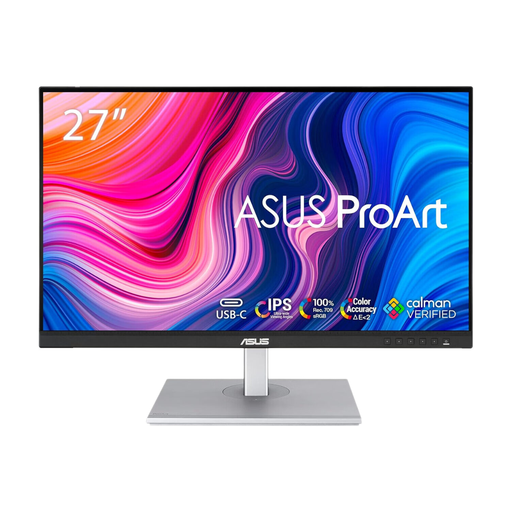
ASUS PROART PA278CFRV IPS QHD 100Hz
Consider this QHD IPS option if card-game interface detail matters and you also want a 100Hz screen. Check its available refresh-rate modes against your gaming device.
View on Joybuy
 No image available
Samsung Odyssey G6 S27DG612 27-inch QHD OLED 240Hz
This OLED model is more relevant if you also play fast games: its name specifies QHD resolution, 240Hz refresh and 0.03ms response time. For bright-room card play, check typical SDR brightness, reflection handling and guidance on static content for this exact variant.
View on Joybuy
 No image available
Samsung Odyssey Gaming OLED G8 LS32DG802SUXXU 32-inch Ultra HD
Consider this larger OLED gaming monitor if screen size and Ultra HD detail matter beyond card games. Before choosing it for a bright room, confirm typical SDR brightness, the screen treatment and guidance on static content for this exact model.
View on Joybuy
 No image available
BenQ GW2791 27-inch IPS Full HD 100Hz
This general-purpose IPS model may suit card games if Full HD detail meets your needs and you want a 100Hz screen. At 27 inches, compare its text detail with QHD alternatives and confirm the stand adjustment you need.
View on Joybuy
 No image available
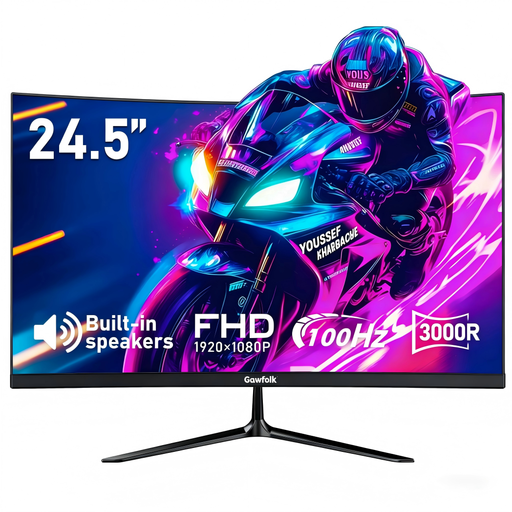
Gawfolk 24.5-inch Full HD curved 100Hz monitor
Consider this smaller curved screen if Full HD card-game play and a 100Hz refresh rate fit your setup. Its name specifies anti-glare treatment, AMD FreeSync and a 75 × 75 mm VESA mount; confirm typical SDR brightness and the stand movement you need for your room.
View on Joybuy
Frequently asked questions
What should I try before buying a brighter monitor?
Try moving the screen or light source to reduce direct reflections, then adjust brightness and contrast for the room. The Health and Safety Executive recommends matching those display controls to room lighting; if the screen is used for regular work, follow your employer’s display-screen-equipment process too.
Do card games need a 165Hz or 180Hz monitor?
Card games alone need not make a high refresh rate your deciding specification. If you also play faster games, compare refresh rates after checking the exact monitor’s coating, typical SDR brightness and positioning options for your bright room.
What does a UKCA or CE mark tell me about a monitor?
It is not a rating of bright-room performance. GOV.UK explains that these markings indicate the manufacturer’s belief that a product meets relevant requirements; check the documentation for the exact item rather than treating either mark as evidence of glare control or image quality.
What should I do with an old monitor?
Check the electrical-equipment collection or retailer take-back options available where you live rather than putting it in ordinary household rubbish. GOV.UK explains that UK waste electrical and electronic equipment rules aim to reduce electrical equipment going to incineration or landfill.


