What matters when buying?
Decide whether the extra screens will hold independent windows or form one continuous view before choosing their sizes and connections. AMD describes extended displays as separate desktop areas and Eyefinity as grouping displays into one desktop; the latter needs checking against the intended software and graphics setup.
Matching 27-inch QHD screens
Choose when: You want a main view alongside supporting windows with consistent screen size and native resolution.
Allow for: Every screen still needs a suitable graphics output, connection and physical position.
Larger QHD primary screen
Choose when: A physically larger main view matters more to you than equal-sized screens.
Allow for: More space around the primary screen and a less symmetrical arrangement beside auxiliary displays.
| Concern |
What to check |
Who this matters to |
| Display connections and workflow |
Count usable PC or dock outputs, match each to a monitor input and cable, and check the simulation’s display mode. |
I need my PC to recognise every screen so maps and controls can sit beside the main view; around 36% of consumers put connection and workflow compatibility first. |
| Readable workspace |
Compare native resolution and screen size at your intended viewing distance, then decide whether matching panels or a larger primary screen fit. |
When I keep detailed readouts open, I want to read them without making the main view awkwardly small; legibility comes first for around 29% of consumers. |
| Main-view motion |
Check refresh rate at the intended connection and graphics output; compare response-time figures only when their measurement labels match. |
For camera movement during manoeuvre practice, I care most about the main screen’s motion settings; around 21% of consumers make this their primary concern. |
| Mounting and desk fit |
Measure desk clearance and check each screen’s dimensions, mounting pattern and weight against the stand or arm. |
I need several screens positioned where I can use them without crowding the desk; physical fit takes priority for around 14% of consumers. |
Joybuy products for this setup
These choices cover a larger QHD primary screen, 27-inch QHD layouts and a 4K primary-screen option. Choose the role of each screen first: a fast main display and supporting windows need not have identical specifications, but every display must fit the connection and desk plan.
 Image unavailable
CRUA 32-inch 1500R curved QHD gaming monitor
Consider this for a larger main simulation view beside separate supporting screens.
The listed variant has 2560 × 1440 resolution, 165Hz refresh, HDMI and DisplayPort inputs, and 100 × 100 mm VESA mounting. Check the monitor’s dimensions and weight against your desk and arm, and confirm the connection needed for your intended refresh rate.
View on Joybuy
 Image unavailable
Samsung Odyssey G6 S27DG612 27-inch QHD OLED, 240Hz
The 27-inch QHD format is one option if you want repeatable screen sizes around the main view.
The product name lists an OLED panel, 240Hz refresh and 0.03ms response time. Check the response-time measurement label, intended connection and arm compatibility before planning several units.
View on Joybuy
 Image unavailable
HKC G27H2DPro 27-inch QHD Fast IPS, 220Hz
Its 27-inch QHD format is relevant to a same-size multi-screen arrangement.
The product name lists 2560 × 1440 resolution and 220Hz refresh. Check the inputs and cables for your PC, as well as mounting compatibility and dimensions if the screens will share an arm-based layout.
View on Joybuy
 Image unavailable
LG UltraGear G8 27G850A 27-inch 4K dual-mode monitor
Consider this as a 4K primary screen rather than assuming it matches a QHD array.
The product name lists a Nano IPS panel, 240Hz/480Hz dual-mode operation, DisplayPort 2.1 and HDMI 2.1. Confirm which resolution and connection apply to the mode you intend to use, and check the screen’s physical fit before placing others beside it.
View on Joybuy
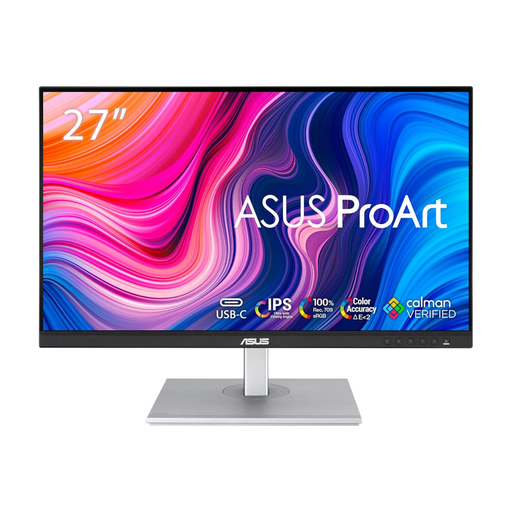 Image unavailable
ASUS ProArt PA278CV IPS WQHD monitor
Consider this for a workspace screen holding maps or other supporting windows, rather than choosing it solely for high-refresh main-view play.
The product name identifies an IPS WQHD monitor. Confirm its refresh rate, connections and mounting arrangement against the role you have planned for it.
View on Joybuy
Questions about multi-monitor setups
Do all my orbital-practice monitors need to match?
No: an extended desktop can use displays with different resolutions, refresh rates and orientations, according to AMD. Matching models are a practical choice if equal screen sizes and consistent native settings matter to your layout, not a requirement for separate supporting windows.
Should I extend the desktop or group the screens?
Extend the desktop when maps, checklists or telemetry need their own windows. AMD describes Eyefinity as grouping displays into one desktop; choose that approach only after checking the exact simulation, graphics card and driver for the view you want.
What should I check before adding a third or fourth screen?
Check that your exact graphics card or dock can drive the intended number of displays, then match an output, cable and monitor input for each one. NVIDIA advises connecting additional displays to appropriate graphics-card connections; monitor input counts alone cannot answer this question.
How do I arrange the screens in Windows?
After connecting them, open Settings, then System and Display, and arrange the numbered screens to reflect their physical positions. Microsoft Support describes adjusting settings for connected displays; test that the pointer moves between screens in the direction you expect.


