Who each monitor route suits

High-frame-rate tactical competitors

If a compact view and refresh-rate headroom drive your choice, consider the FHD esports route. ZOWIE specifies a 400Hz Fast TN panel with DyAc 2 for the XL2566X+; Dell lists the 24.5-inch FHD Fast IPS AW2524HF with a 500Hz headline specification. Check the operating mode available through your chosen connection.

QHD ranked-and-everyday players

If you want 2560 × 1440 detail for games and desktop use without giving up a high-refresh specification, consider a QHD competitive monitor. ASUS lists the 27-inch PG27AQN at 360Hz and includes a smaller 25-inch FHD display mode.

Dark-room contrast prioritists

If dark-scene contrast matters more to you than pursuing the highest-refresh FHD route, QHD OLED may suit your priorities. LG specifies a 240Hz QHD OLED panel for the 27GS95QE-B. Persistent HUDs and desktop elements also make the static-image precautions described in ASUS’s general OLED guidance relevant to your decision.

What matters when choosing

Compact FHD esports LCD

Choose it when: ranked tactical play, a compact view and refresh-rate headroom take priority over QHD detail. ZOWIE lists the XL2566X+ at 400Hz, while Dell gives the AW2524HF a 500Hz headline specification.

Trade-off: FHD has fewer pixels than QHD, and the available refresh mode depends on the connection; Dell lists different HDMI and DisplayPort modes for the AW2524HF.

27-inch QHD competitive IPS

Choose it when: you want QHD detail alongside a high-refresh competitive specification. ASUS lists the PG27AQN as a 27-inch QHD 360Hz monitor with an optional smaller FHD display mode.

Trade-off: reaching similarly high game frame rates at QHD places greater demands on your GPU than at FHD; this ASUS model also has a lower stated maximum refresh rate than the cited 400–500Hz FHD models.

QHD OLED

Choose it when: dark-scene contrast is a leading priority. LG lists its 27GS95QE-B as a 240Hz QHD OLED monitor, though refresh specifications differ between OLED models.

Trade-off: prolonged static, high-contrast content at high brightness can cause image retention or burn-in, according to ASUS’s general OLED guidance. Check the exact monitor’s care features and warranty terms if HUDs stay on screen for long sessions.

Concern What to check Who this matters to
Motion and refresh headroom Check the refresh mode available through your chosen input and the frame rates your PC delivers in your games. When tracking movement in ranked matches, I would put a motion-focused specification ahead of extra image detail. Around 36% of consumers put that need first.
QHD detail Check your expected game frame rate at 2560 × 1440 and whether a smaller competitive display mode matters to you. I want clearer map, text and desktop detail, but still care about a high refresh rate. For around 29% of consumers, that balance is the primary concern.
Dark-room contrast and OLED care Check the screen finish, available panel-care settings and warranty terms for the exact model. Dark scenes matter to me, but a persistent HUD makes static-image habits part of the choice. Contrast and its ownership trade-offs come first for around 21% of consumers.
Connection and desk setup Match the monitor’s per-input modes to your graphics-card output; check stand adjustments and any mounting needs. I need the intended refresh mode to work with my PC and the screen to fit my desk. Around 14% of consumers treat setup compatibility as their deciding need.

Buying pitfalls

  • Assuming the headline refresh rate works through every input

    Dell lists different HDMI and DisplayPort operating modes for the AW2524HF. The connection you use can therefore change which refresh setting is available.

    Before ordering, match the exact monitor’s per-port modes to your graphics-card output, cable and intended game settings.

  • Comparing response-time figures without their test modes

    Dell distinguishes a 0.5ms grey-to-grey minimum from 1ms in Extreme Mode for the AW2524HF, while LG states 0.03ms grey-to-grey for its 27GS95QE-B OLED. Those manufacturer figures alone do not establish which complete display setup will look clearer in your games.

    Read the mode beside each figure, then consider refresh rate, resolution, motion settings and the frame rate your PC can sustain.

  • Choosing OLED contrast without considering static content

    ASUS’s general OLED guidance warns that displaying the same high-contrast image at high brightness for a long time can lead to image retention or burn-in. That matters when HUDs, menus or desktop elements remain in place.

    Use the chosen model’s panel-care features, avoid leaving bright static content on screen for prolonged periods and read its exact warranty terms.

  • Overlooking the old monitor when replacing it

    An old monitor needs an appropriate electrical-waste route. GOV.UK states that retailers must offer take-back of waste of the same type as the electrical item purchased, including for online purchases.

    Ask the retailer how its take-back arrangements work for your replacement order, or check a local electrical-waste collection route.

Relevant monitor brands

ZOWIE

An FHD esports route for players considering a compact, very-high-refresh screen.

  • ZOWIE specifies a 400Hz Fast TN panel and its DyAc 2 technology for the XL2566X+.
  • Its FHD focus will not meet a preference for QHD detail; ZOWIE’s FPS optimisation claim is not an independent measure of competitive advantage.

ASUS ROG

A QHD competitive route represented by the 27-inch PG27AQN.

  • ASUS specifies 360Hz, an Ultrafast IPS panel and an optional smaller FHD esports display mode for this model.
  • Choose its QHD resolution with your achievable game frame rate in mind rather than assuming the higher pixel count suits every competitive setup.

Alienware

A compact FHD Fast IPS option represented by Dell’s AW2524HF.

  • Dell lists a 24.5-inch panel, a 500Hz headline refresh specification and an adjustable stand.
  • Dell lists 255Hz over HDMI and 480Hz in the specified DisplayPort mode, so check the connection before relying on the headline figure.

LG UltraGear

A QHD OLED route represented by the 27GS95QE-B for players prioritising dark-scene contrast.

  • LG specifies a 240Hz OLED panel, a stated 1.5M:1 contrast ratio and anti-glare, low-reflection treatment for this model.
  • Static-image habits and the exact model’s care and warranty terms matter; ASUS’s general OLED support guidance describes the image-retention risk, not a durability finding about this LG model.

Joybuy monitors for ranked play

These monitors offer different ways to balance ranked-play refresh specifications with resolution and dark-room priorities: QHD OLED models, a dual-mode IPS model and a larger OLED screen. Compare the exact operating mode and screen format with your PC, desk and preferred tactical-game view.
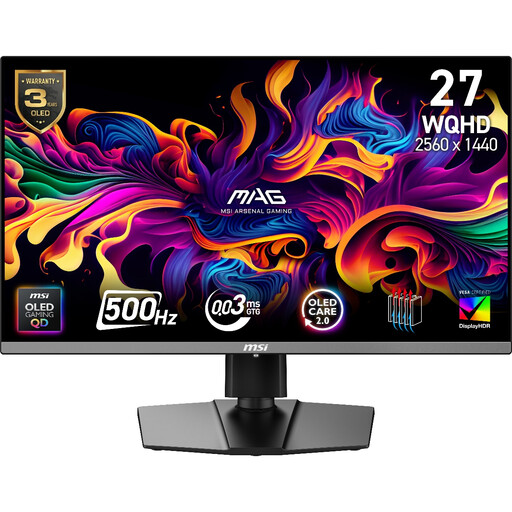
MAG 272QP QD-OLED X50 monitor

MAG 272QP QD-OLED X50 27-inch WQHD 500Hz

Consider this if QHD detail and a very high stated refresh rate both matter to your ranked-play setup.

27-inch 2560 × 1440 QD-OLED display; 500Hz, 0.03ms and AMD FreeSync are stated in the product name. Check that your graphics card and chosen connection support the mode you intend to use, and review OLED-care settings and warranty terms for persistent HUD use.

View on Joybuy

Samsung Odyssey G6 S27DG612 monitor

Samsung Odyssey G6 S27DG612 27-inch QHD OLED 240Hz

Consider this if a 27-inch QHD OLED screen fits your dark-room priorities and 240Hz meets your ranked-play target.

The product name states OLED, QHD, 240Hz and 0.03ms. Check the supported mode for your PC and read the exact warranty and panel-care terms if you regularly display a fixed HUD.

View on Joybuy

Acer X Predator X27U W3 monitor

Acer X Predator X27U W3 26.5-inch QD-OLED 240Hz

Consider this if you want QHD resolution in a 26.5-inch OLED format rather than a larger screen.

The product name states 2560 × 1440, 240Hz, 0.03ms, HDR10, FreeSync Premium Pro and G-Sync Compatible. Check how its screen finish handles reflections in your room, alongside the exact OLED-care and warranty terms.

View on Joybuy
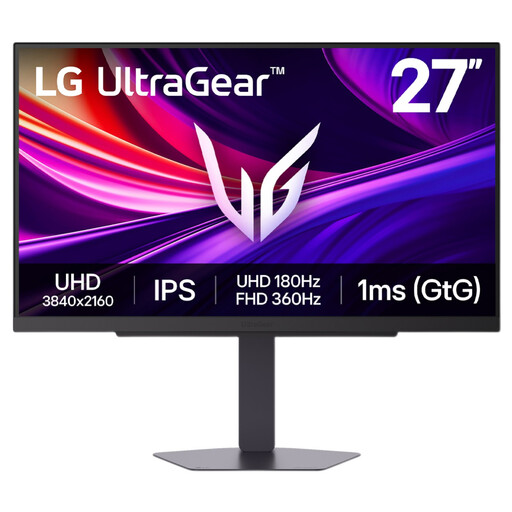
LG UltraGear 27G810A-B monitor

LG UltraGear 27G810A-B 27-inch IPS 4K dual-mode

Consider this if switching between resolution modes appeals more than choosing an OLED panel for dark-room contrast.

The product name states a 27-inch IPS 4K UHD screen and a dual-mode maximum of 360Hz. Confirm which resolution, input and graphics-card output deliver the mode you plan to use; do not treat its dark-scene controls as evidence of OLED-like contrast.

View on Joybuy

LG UltraGear 34GX900A-B monitor

LG UltraGear 34GX900A-B 34-inch OLED WQHD 240Hz

Consider this larger OLED format only if it fits your desk and the view you prefer for tactical matches.

The product name states a 34-inch WQHD OLED screen at 240Hz. Check the exact resolution and supported game view before choosing a larger format, as well as OLED-care and warranty terms for persistent on-screen elements.

View on Joybuy

Questions about choosing a monitor

Should I choose FHD at 400–500Hz or QHD at 360Hz for ranked tactical matches?

Choose the compact FHD route if refresh-rate headroom is your deciding need and your PC can deliver the intended game frame rate. Choose QHD if 2560 × 1440 detail matters enough to accept a different refresh target. ZOWIE lists a 400Hz FHD model, Dell gives its FHD AW2524HF a 500Hz headline specification, and ASUS lists the QHD PG27AQN at 360Hz; check screen size and input modes as well as those figures.

Will HDMI deliver a monitor’s highest advertised refresh rate?

Do not assume it will: check the exact model’s input specifications. Dell lists 1920 × 1080 at 255Hz over HDMI and 480Hz in its specified DisplayPort mode for the AW2524HF, despite its 500Hz headline. Match the mode to your graphics-card output, cable and monitor settings.

Is OLED the right choice for every dark-room setup?

No; choose it when dark-scene contrast is a priority and you are comfortable following the exact model’s static-image-care guidance. LG specifies a QHD 240Hz OLED panel for the 27GS95QE-B, while ASUS’s general OLED guidance warns about prolonged bright, static, high-contrast images. Consider your HUD and desktop habits alongside refresh rate and warranty terms.

What should I do with an old monitor when buying a replacement in the UK?

Ask the retailer about its same-type electrical-waste take-back arrangements. GOV.UK states that retailers must offer take-back of waste of the same type as the electrical item purchased, including when the new item is bought online. Alternatively, check an appropriate local electrical-waste collection route.