Map-and-interface detail prioritiser
You regularly read map tiles, tooltips, unit statistics and menus. You want to compare screen size and resolution before treating a high refresh-rate figure as the deciding feature.


For long turn-based tactics sessions, start with a screen on which you can read maps and interface text comfortably and position the display to suit your desk. A 27-inch QHD IPS monitor is a straightforward option; consider 4K if finer detail matters and your PC can support it, or OLED if its contrast and motion characteristics matter to you enough to check panel-care guidance for persistent game interfaces. Screen positioning and breaks still matter alongside the monitor, as the Health and Safety Executive advises for prolonged display use.
You regularly read map tiles, tooltips, unit statistics and menus. You want to compare screen size and resolution before treating a high refresh-rate figure as the deciding feature.
You need a display that fits your desk position during extended play. The Health and Safety Executive advises paying attention to screen placement and taking breaks rather than relying on monitor features alone.
Turn-based games are central to your setup, but you also play faster-moving games. Refresh rate, adaptive sync and panel characteristics may therefore affect your choice alongside interface readability.
Check whether you can read your games’ interfaces at your usual viewing distance, then whether the screen can be positioned comfortably. Compare faster refresh modes or OLED features against those needs if you also play other genres.
| Concern | What to check | Who this matters to |
|---|---|---|
| Readable maps and text | Compare native resolution with screen size; check in-game UI scaling and whether your PC can run the resolution you want. | If I spend hours reading small map labels and unit panels, I want enough detail without making text awkwardly small. Roughly 42% of consumers put interface readability first. |
| Comfortable screen position | Check the stand’s adjustment or mount compatibility against your desk setup. The Health and Safety Executive advises placing the screen top around eye level and the display about an arm’s length away. | When a long session leaves me adjusting my posture to see the screen, I need a position that suits my chair and desk. Around 33% of consumers make viewing comfort their primary concern. |
| Performance across game genres | Check the refresh mode at your intended resolution and input, plus adaptive-sync compatibility with your gaming hardware. | If I use the same monitor for tactics and faster games, I want its motion features to suit both rather than choosing by a headline refresh rate alone. Approximately 25% of consumers prioritise this mixed-genre use. |
Monitor settings cannot correct a screen that sits at an awkward height or distance. The Health and Safety Executive links poorly arranged display workstations with fatigue and discomfort.
Check where the screen will sit on your desk and whether its stand or a compatible arm can put it in a comfortable position. Plan breaks during long sessions.
A monitor’s available modes can differ between connections. Dell specifies up to 180Hz through DisplayPort for the Alienware AW2725DM, while its HDMI maximum mode differs.
Confirm the resolution and refresh rate supported by the intended monitor input, graphics hardware and cable together.
Features intended to limit static-image wear are model-specific. ASUS describes a proximity sensor on the ROG Strix OLED XG27AQDMGR, but that does not establish equivalent protection on another OLED monitor.
Read the exact model’s panel-care instructions and warranty terms if your games leave interface elements on screen for long periods.
Diagonal size does not tell you the native resolution. Dell lists a 27-inch QHD AW2725DM and a similarly sized 4K AW2725Q, giving buyers different amounts of potential fine detail.
Compare size and resolution together, then check how your games scale text and menus at your viewing distance.
Relevant if you are comparing QHD Fast IPS with 4K QD-OLED at a similar screen size.
Relevant if QHD OLED and model-specific panel-care features are part of your decision.
Relevant to a desk shared between gaming devices or other connected equipment.
These monitors cover QHD and 4K options for tactics-focused gaming, including IPS and OLED models. Compare their size and resolution with your desk setup, and check connection modes and OLED care where relevant.
 Image unavailable
Consider this 27-inch 4K IPS model if fine interface detail is a priority and you want to check how an adjustable display fits your desk.
Its title identifies Dual Mode with a stated maximum of 360Hz; confirm which resolution, input and connection support the mode you intend to use.
 Image unavailable
Consider its larger curved 4K format if you have room to position a 32-inch screen comfortably for reading tactical maps.
The title states 3840 × 2160 resolution and 165Hz. Check desk depth, model-specific OLED care and warranty terms before choosing it for long sessions with static interface elements.
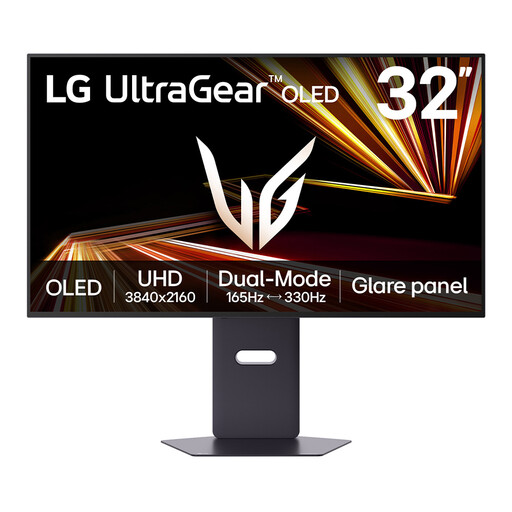 Image unavailable
This 4K OLED option is worth considering if you want a larger display for tactical detail and also play other game genres.
Its title gives a Dual Mode maximum of 330Hz; check the resolution and connection associated with your intended mode. The product information advises avoiding prolonged static images, so review its panel-care guidance and warranty terms.
 Image unavailable
Consider this QHD OLED model if tactics share your screen time with games where its stated 240Hz refresh rate matters to you.
The title also states a 0.03ms response time; that figure is a product specification, not a measure of tactics-game readability. Check UI scaling, OLED care and warranty terms for persistent interface elements.
 Image unavailable
This 27-inch QHD Fast IPS monitor suits a setup where QHD interface detail and use across other game genres are both relevant.
Its title states 2560 × 1440 resolution and 220Hz. Check the refresh mode available through your intended input and whether the stand or a compatible mount will position the screen comfortably.
No: a 240Hz specification need not lead the decision if turn-based tactics are your main use. Start with readable resolution, UI scaling and screen position; if you also play faster games, check the refresh mode available at your intended resolution and input.
Choose between QHD and 4K by checking the detail you want, your PC’s capabilities and how your games scale their interfaces. Dell lists the AW2725DM as a 27-inch QHD monitor and the similarly sized AW2725Q as 4K, but higher resolution alone does not ensure that small text will feel comfortable at your viewing distance.
No. Treat settings such as those ASUS describes for its Eye Care monitors as supplementary; the Health and Safety Executive advises suitable display positioning and breaks during prolonged display use.
Check the exact monitor’s panel-care instructions, settings and warranty terms. ASUS describes a proximity sensor intended to reduce burn-in risk on its ROG Strix OLED XG27AQDMGR, but you should not assume that another OLED model has the same feature or coverage.