For 2D sprite animation and gaming, choose a Windows desktop around the games and creative software you will actually use, rather than selecting the most powerful graphics card in isolation. If Blender is part of the workflow, its recommended Windows specification of 8 CPU cores, 32 GB RAM and 8 GB VRAM is a useful planning reference. For a quiet study, also check the complete cooling layout and the exact graphics card’s fan behaviour: a quiet fan specification does not establish how loud the finished PC will be.
Who this setup suits
Quiet-study sprite animators
If drawing, timing frames and editing lightweight assets take up much of your day, controllable cooling matters alongside gaming capability. Fan and case features described by Noctua, be quiet! and Fractal Design can inform component checks, but none establishes the noise level of a complete PC.
Animation-and-gaming all-rounders
If one Windows desktop must hold creative projects and games, consider memory and storage alongside the graphics card. Blender Foundation’s Windows recommendations and the complete component list in PCPartPicker UK’s gaming-and-streaming build provide planning references, not a specification every sprite project needs.
3D and GPU-rendering upgraders
If sprite work may expand into Blender scenes or rendering, check the intended workload before choosing a configuration with more headroom. Blender Foundation recommends 8 CPU cores, 32 GB RAM and 8 GB VRAM for Windows; the requirements of your games and projects still matter.
What to check when choosing
Start with the software and games you intend to run, then check whether the case, cooling controls and exact graphics card can meet your expectations for a quiet study. Extra rendering headroom is a separate decision from low noise at light loads.
| Concern |
Buying checks |
Who this matters to |
| Study noise |
Check case and cooler fit, PWM fan control and the exact graphics card’s low-load fan behaviour. Assess cooling under sustained use as well as at idle. |
If fan noise interrupts drawing or animation timing, keeping the desktop unobtrusive is my main concern; around 42% of consumers put quiet operation first. |
| Animation and gaming balance |
Check the software and games you use, available RAM and SSD capacity. For Blender, its recommended Windows specification includes 32 GB RAM. |
When projects, reference material and games share one PC, I want enough working room without choosing components solely for rendering; roughly 33% of consumers prioritise this balance. |
| Heavier-workload headroom |
Compare the chosen tools’ CPU and GPU requirements, including VRAM, then check power-supply and cooling compatibility for the complete build. |
If I expect to move into larger 3D scenes, GPU rendering or more demanding games, I care most about room to grow; around 25% of consumers place that headroom first. |
Buying pitfalls
-
Treating a software minimum as a comfortable target
Blender Foundation lists Windows minimums of 8 GB RAM and 2 GB VRAM, compared with recommendations of 32 GB RAM and 8 GB VRAM. A system that meets the minimum may leave less room for larger projects or other tasks running at the same time.
Use the recommended specification as a planning reference if Blender is central to your work, and check the requirements of your other animation tools and games separately.
-
Assuming one quiet component makes the whole PC quiet
Fan speed, airflow, the CPU cooler and the graphics card all affect a finished system. ASUS says fans on compatible 0dB graphics cards stop only while the required GPU temperature conditions are met; they start again as temperature rises.
Check case clearances, fan mounts and controls, CPU cooling and the exact graphics-card model. Ask how the complete cooling arrangement behaves during the games or renders you expect to run.
-
Choosing the graphics card before the rest of the configuration
A suitable GPU does not replace adequate memory, project storage or compatible cooling. PCPartPicker UK’s gaming-and-streaming build, for example, specifies memory and NVMe storage as parts of the complete configuration.
Set requirements for RAM, storage, cooling and power-supply compatibility before deciding whether a higher graphics-card tier serves your workload.
Brands worth considering for specific components
Noctua
A reference for builders choosing controllable 120 mm fans for a quiet desktop.
- Noctua specifies its NF-A12x25 G2 LS-PWM at 0–1,100 rpm and up to 11.8 dB(A) for the fan itself.
- That figure is not a whole-PC noise measurement. Check whether the fan’s airflow and mounting suit the components and case.
be quiet!
A reference when comparing case-fan and cooler options for a study desktop.
- be quiet! describes anti-vibration mounting on its Silent Wings 4 PWM fans and lists uses across cases, heat sinks and radiators.
- Check the chosen fan’s size and connection against the case, cooler or radiator and available fan headers.
Fractal Design
A reference for shoppers considering a case with sound-damping features.
- Fractal Design describes sound-damped panels on the Define 7 Compact.
- The case still needs an airflow plan. Confirm GPU length, CPU-cooler height and the intended fan or radiator arrangement for the exact build.
ASUS
A reference when checking an exact graphics-card model for low-load fan-stop behaviour.
- ASUS says compatible cards with 0dB technology can stop their fans when the GPU meets the feature’s temperature conditions.
- The feature does not apply to every ASUS card, and fans restart as temperature rises. Check the model rather than assuming silence during gaming or rendering.
Joybuy desktop options
These Windows gaming desktops include configurations for combined sprite work and gaming, with different memory, storage and graphics-card specifications. Check cooling and fan behaviour on the exact model before choosing one for a quiet study.
 No image available
CyberPowerPC JOYB1013 Ryzen 7 9800X3D, RTX 5080 16GB, White
Consider this Windows 11 Home desktop if your games or creative work call for the listed graphics-card configuration. It has 32GB DDR5 RAM and a 2TB NVMe SSD. Before choosing it for a quiet study, check the complete cooling layout, fan controls and graphics-card behaviour.
View on Joybuy
 No image available
Stormforce Defiance Ryzen 7 5700X, RTX 5070, 32GB RAM
This Windows 11 desktop is an option for combining sprite work with gaming. Its listed configuration includes a 2TB SSD. Check the exact cooling arrangement and noise behaviour, along with any upgrade options or supplied accessories that matter to your setup.
View on Joybuy
 No image available
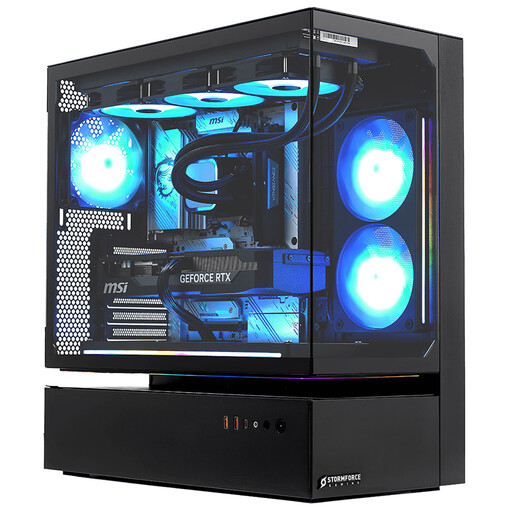
Stormforce Cyclone Ryzen 7, RTX 5080, 32GB RAM
Consider this desktop if its listed graphics card matches your intended games or creative tools. It also lists a 2TB SSD. Confirm cooling and fan behaviour for study use, and check which monitor and peripherals you will need.
View on Joybuy
 No image available
CyberPowerPC JOYB1010 Core Ultra 7 265KF, RTX 5070 12GB, Black
This Windows 11 Home desktop offers a listed configuration for creative work alongside gaming, with 32GB DDR5 RAM and a 1TB NVMe SSD. Check whether that capacity fits your projects and games, and confirm the cooling setup before relying on it in a quiet room.
View on Joybuy
 No image available
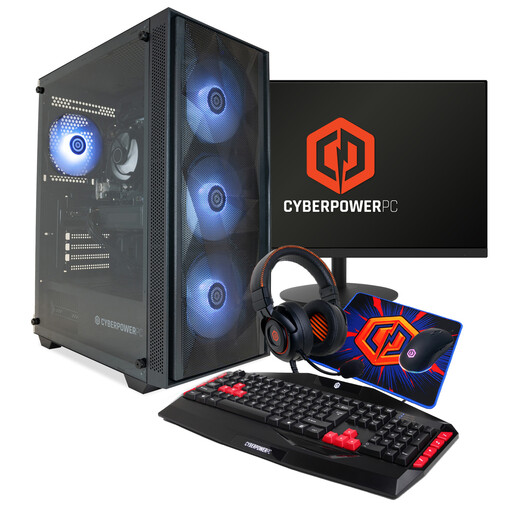
CyberPowerPC JOYB1004 Ryzen 5 7500F, RTX 5060 8GB bundle
Consider this Windows 11 Home bundle if you also need a monitor, keyboard, mouse, headset and mousepad. The PC lists 16GB DDR5 RAM and a 1TB NVMe SSD; compare its memory with the requirements of your creative software. Confirm the supplied monitor’s specifications and the PC’s cooling behaviour before buying for animation work in a quiet study.
View on Joybuy
Common questions
Do I need a high-end gaming PC to animate 2D sprites?
Not necessarily: choose for your sprite software and games first, then allow for any 3D or rendering work you plan to add. If you use Blender, Blender Foundation recommends 8 CPU cores, 32 GB RAM and 8 GB VRAM for Windows; its lower minimum requirements are not a promise of comfortable performance for every project.
Will a graphics card with 0dB technology stay quiet while gaming?
Do not count on its fans remaining stopped during a game. ASUS says the feature works on compatible models only while GPU temperature meets its conditions, with the fans starting again as temperature rises. Check the exact card model and consider the cooling demands of the games you play.
What maintenance matters for a quiet gaming desktop?
Keep airflow paths clear and check that fans can operate without obstruction. ASUS advises regularly inspecting graphics-card fans for blocked blades or nearby cables; also review your system’s fan settings if you change components or its operating environment.
What should I do with an old PC when replacing it?
Arrange appropriate electrical-equipment recycling and remove personal data from storage devices before handing the PC over. GOV.UK describes the UK’s waste electrical and electronic equipment framework; check the collection options available through your local authority or a relevant retailer rather than putting the PC in ordinary household waste.


