
24/7 Customer Support

Free returns

Same-day & Next-day Delivery

Quality Guaranteed

Unlock Your Welcome Offers: FREE Delivery | Up to 80% OFF | Free 30-day JoyPlus trial
Download the APP
As our collection of devices grows, from laptops and tablets to smartphones and wireless earbuds, the humble charger has become more important than ever. The tangle of cables and the collection of bulky power bricks in our bags and on our desks is a common frustration. A GaN charger promises a solution: one compact, powerful plug to charge everything.
However, the market is flooded with options, and not all are created equal. Many UK consumers are caught out by misleading marketing and technical jargon, leading to purchases that are either underpowered, incompatible or, in some cases, unsafe. Before you buy, it's crucial to understand the common pitfalls that can lead to a disappointing and potentially costly mistake.
To make an informed choice, you need to look past the marketing and focus on a few key technical details. Understanding these will ensure you get a charger that is safe, efficient and right for your devices.
Wattage measures the rate of power transfer. The higher the wattage, the faster a compatible device can charge. A modern iPhone fast charger typically requires at least 20W, while a high-performance laptop might need a 100W laptop charger or more.
The key technology that enables this is USB Power Delivery (PD). This is a charging standard that allows a PD wall plug and your device to communicate, negotiating the fastest possible charging speed. For any device made in the last few years, a charger with USB-C PD support is essential for fast charging.
The future of charging is USB-C. It's reversible, supports high-power PD and can handle data transfer. A good multi-port GaN charger should prioritise USB-C ports. However, many of us still own devices or cables that use the older, rectangular USB-A standard. Consider your current and future needs:
GaN stands for Gallium Nitride, a semiconductor material that is replacing traditional silicon in modern chargers. In simple terms, GaN components are far more efficient. This means less energy is lost as heat, allowing manufacturers to build chargers that are significantly smaller and lighter without sacrificing power. This is what makes a powerful 100W charger fit in your pocket and why GaN is the go-to choice for a compact travel charger.
We've filtered through the options to find chargers that align with specific needs, helping you avoid the common traps and find a reliable match for your lifestyle.
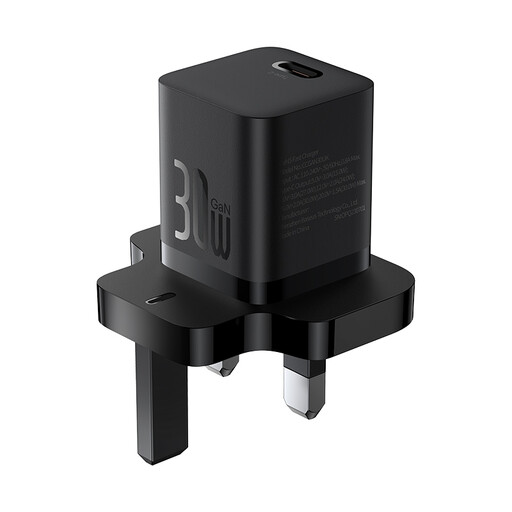
Why This Fits Their Persona: This charger is incredibly small and lightweight, making it perfect for slipping into a pocket or small bag for fast top-ups at the office, café or on the train. Its 30W output is ideal for rapidly charging a smartphone, tablet or Nintendo Switch.
It avoids the "mismatched power" trap by focusing on doing one job well. It's not trying to be a laptop charger; it's a dedicated, powerful and compact charger for personal electronics.
Its primary advantage is its exceptionally small size, thanks to advanced GaN5 technology. It provides 30W of power in a form factor barely larger than an old 5W plug.
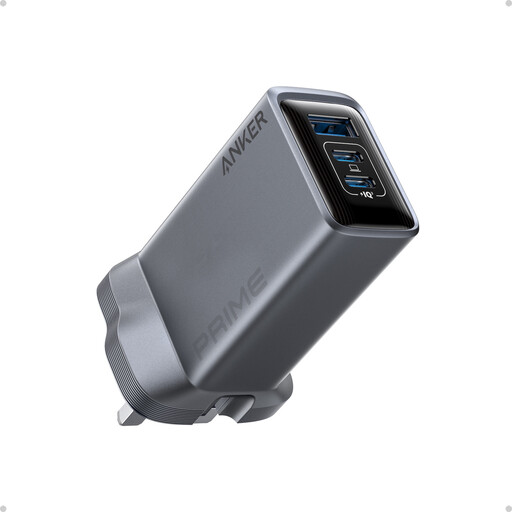
Why This Fits Their Persona: For those juggling a work laptop, personal phone and tablet, this charger consolidates three bulky power bricks into one. It's powerful enough to charge a MacBook Pro at full speed while simultaneously powering other devices, making it the perfect desk or travel companion.
This charger directly counters the "total wattage" trap by clearly stating its capabilities: it can deliver a full 100W from a single USB-C port, ensuring your high-power laptop gets the energy it needs.
Its main advantage is true high-power versatility. The ability to output 100W from one port makes it a genuine laptop charger replacement, not just a phone accessory. It also features foldable prongs for enhanced portability.
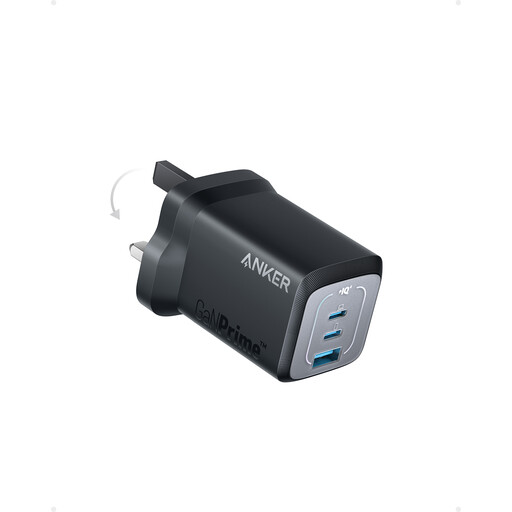
Why This Fits Their Persona: This is an ideal central charging hub for a family or shared living space. With two USB-C ports and one USB-A port, it can handle a mix of new and older devices simultaneously, from the latest iPhones and Samsung phones to iPads, Kindles and other accessories.
It avoids the certification gamble by being a product from a well-regarded brand that includes safety features like its ActiveShield 2.0 system, which monitors temperature to protect connected devices.
The key advantage is its smart port mix and intelligent power distribution. It can fast-charge a laptop up to 67W or split the power efficiently across three devices, making it a highly versatile solution for multiple users.
We have compiled a complete, real-time list of products that fully satisfy these strict selection criteria and UK safety regulations.
For most people, yes. The benefits of a smaller size, lighter weight and improved energy efficiency are significant. A GaN charger runs cooler than a traditional one, which can contribute to a longer lifespan for both the charger and your device's battery. If you need to power multiple devices or a high-wattage laptop, the compact power of GaN is a clear advantage.
Absolutely. Modern chargers that use the USB Power Delivery (PD) standard are intelligent. The charger and your phone will communicate to determine the correct amount of power needed. The charger will only supply the 20W (or less) that the phone requests, making it completely safe. You cannot "overpower" a modern device with a high-wattage charger.
To get the full benefit of fast charging, the cable is just as important as the charger. While any USB-C cable will charge your device, a standard cable may not support high-wattage charging. For charging above 60W, you should use a USB-C cable that is explicitly rated for 100W or more. Using an underrated cable will result in slower charging speeds and is not recommended for safety.