
24/7 Customer Support

Free returns

Same-day & Next-day Delivery

Quality Guaranteed

Unlock Your Welcome Offers: FREE Delivery | Up to 80% OFF | Free 30-day JoyPlus trial
Download the APP
If you're juggling a laptop, smartphone and tablet, you're likely familiar with the tangle of cables and bulky power bricks that come with them. A Gallium Nitride (GaN) charger promises a solution: one compact, powerful plug to charge everything. However, the market is flooded with options, and it's easy to make a poor choice. Many chargers over-promise on performance or hide critical design flaws.
As the Joybuy Product Recommendation Officer, my role is to help you see past the marketing noise. Before you buy a new GaN charger, be aware of these common traps that UK consumers often fall into:
To choose a reliable and effective USB C fast charger, you need to look beyond the headline features. Focus on these three core parameters to ensure you get a product that meets your needs.
The single most important factor is how a charger distributes power. A high-quality multi-port wall charger will clearly specify the output for each port and how that power is shared when multiple devices are connected.
Modern fast charging relies on specific communication protocols between the charger and your device. The most important one is Power Delivery (PD).
The physical design of a charger impacts its usability. GaN technology allows for smaller and lighter chargers, but other features enhance their practicality.
We've filtered through the options to find chargers that align with specific needs, focusing on clear specifications and certified safety.
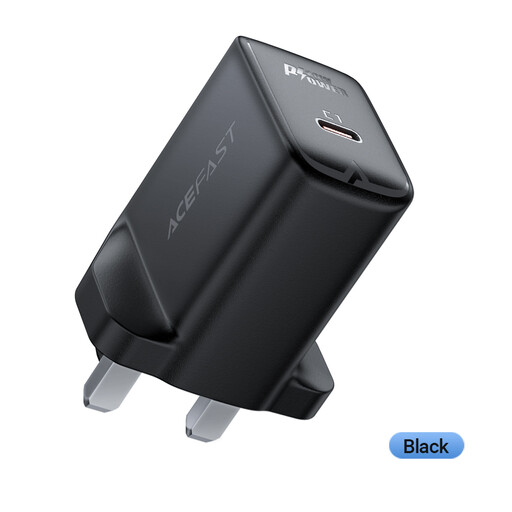
Why This Fits Their Persona: Ideal for those who primarily need a reliable, fast charger for their smartphone. It's compact, making it easy to slip into a work bag or pocket for charging at the office or a café without adding bulk.
This charger avoids the "one-size-fits-all" myth by being purpose-built for phones and tablets. It is also fully safety certified (PSE, 3C, ERP6), steering clear of the risks associated with unverified chargers.
Delivers 20W Power Delivery for fast charging modern iPhones and Androids. Its flame-retardant PC construction and multiple circuit protections ensure safe, dependable operation.
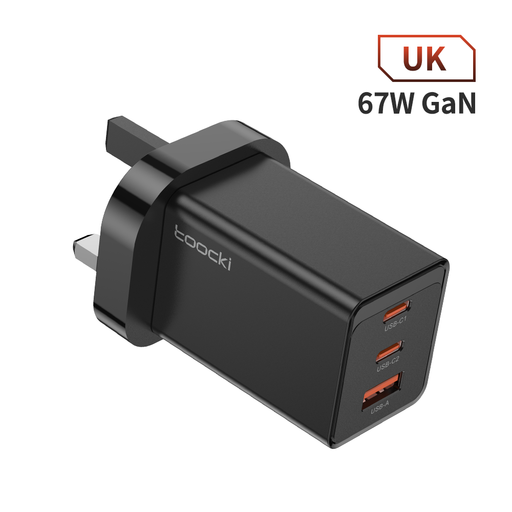
Why This Fits Their Persona: Perfect for students or professionals who need to charge a mid-size laptop (like a MacBook Air) and a phone simultaneously. It offers a great balance of power and port selection in a compact form factor.
This charger avoids the "total wattage" trap by providing a clear 67W maximum output from a single USB-C port, sufficient for many laptops, while intelligently distributing power when its other two ports are in use.
Features two USB-C ports and one USB-A port for maximum flexibility. Its GaN technology ensures it remains compact and runs efficiently, even when powering multiple devices.
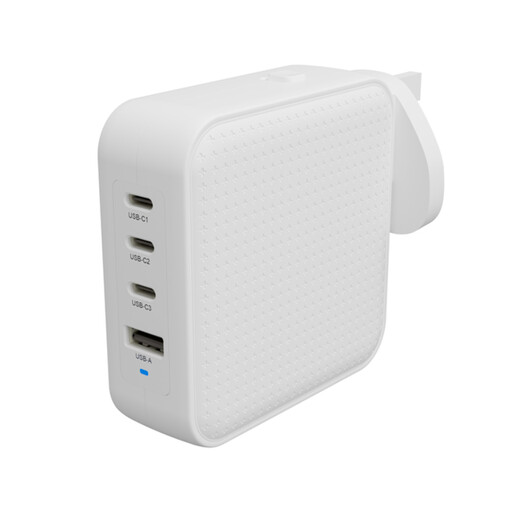
Why This Fits Their Persona: Designed for the tech-savvy professional or frequent traveller who needs to power a high-performance laptop, tablet and phone simultaneously. This is a true desktop and travel workhorse.
It provides a genuine 100W total output with intelligent power allocation, such as a 65W+30W split, ensuring your laptop and tablet both charge efficiently. It also includes interchangeable EU/UK/AU plugs, making it a true global travel solution.
Offers four ports (3x USB-C, 1x USB-A) to charge all your gear from one outlet. Advanced safety protections and CE/FCC/RoHS certifications provide peace of mind.
We have compiled a complete, real-time list of products that fully satisfy these strict selection criteria and UK safety regulations.
For most people with modern electronics, yes. GaN chargers are significantly smaller, lighter and more energy-efficient than traditional silicon-based chargers. This means you can carry one plug that does the job of three or four old ones, reducing clutter whether you're at home, in the office or travelling.
Yes, it is perfectly safe. A key feature of the Power Delivery (PD) standard is that the charger and your device communicate to determine the correct amount of power. The charger will only supply the maximum power your phone can safely handle (e.g., 20W), so there is no risk of damage.
A well-made GaN charger from a reputable brand, with proper safety certifications like UKCA and CE, should last for several years of regular use. Their advanced materials and construction lead to less heat generation, which contributes to a longer lifespan compared to cheaper, lower-quality alternatives. Always handle your charger with care and avoid exposing it to moisture or physical damage.