
24/7 Customer Support

Free returns

Same-day & Next-day Delivery

Quality Guaranteed

Unlock Your Welcome Offers: FREE Delivery | Up to 80% OFF | Free 30-day JoyPlus trial
Download the APP
The days of juggling a separate charger for your laptop, phone and tablet are quickly becoming a thing of the past. The promise of a single, compact fast wall charger that can power all your devices is compelling. Gallium Nitride (GaN) technology has made this possible, offering more power in a smaller package. However, the market is now flooded with options, and not all are created equal.
Many UK consumers find themselves disappointed with a new charger that fails to live up to its claims. Before you invest, it's crucial to understand the common pitfalls that lead to a bad purchase.
To choose a charger that will serve you well for years, focus on these core parameters instead of marketing hype.
The most critical factor is how much power the charger can deliver and how it's shared. This is measured in watts (W).
When looking at a multi-port USB charger, check the manufacturer's specifications for power distribution. It should clearly state how the wattage is split when multiple ports are in use. A good 100W charger, for example, should still be able to provide at least 65W to one port while others are active.
The future is USB-C, but many of our devices, from wireless headphones to older gadgets, still use the traditional USB-A port.
Consider your personal device ecosystem. If you only own modern USB-C devices, a charger with multiple USB-C ports may be more efficient. If you have a mix, a combination of USB-C and USB-A is more practical.
We've filtered through the options to find chargers that align with specific needs, helping you avoid the common purchasing traps.
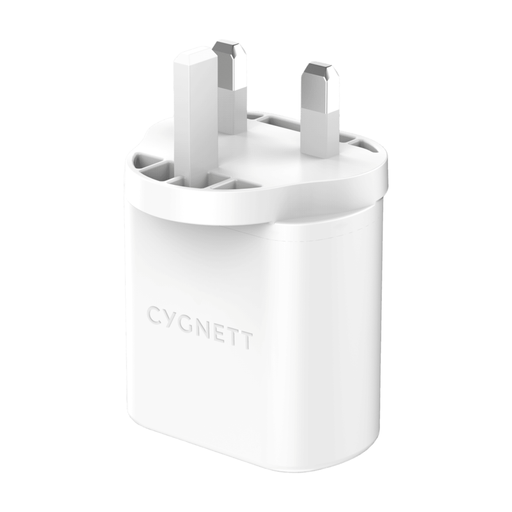
Why This Fits Their Persona: Ideal for those who need a reliable, space-saving charger for their phone and an accessory like headphones. Its compact size and foldable plug make it a perfect companion for the daily commute, office hot-desking or a weekend trip.
This charger has clearly defined outputs: a 20W USB-C PD port for fast charging a phone and a 12W USB-A port. There is no misleading "total wattage" figure to cause confusion.
The foldable UK plug is a standout feature for portability, protecting other items in your bag. It offers intelligent power allocation and built-in safety protections.
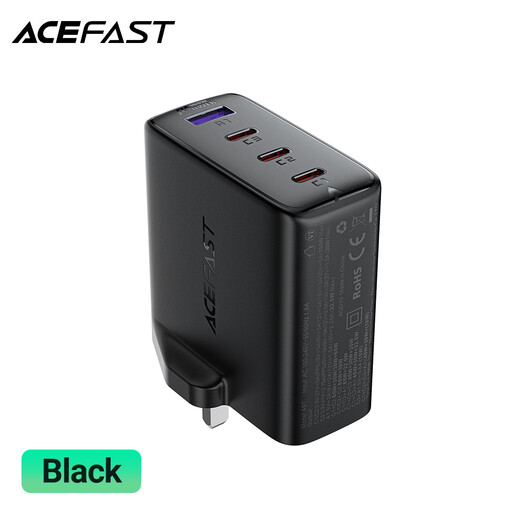
Why This Fits Their Persona: For the professional or student juggling a laptop, phone, tablet and more. This is a true desktop and travel adapter replacement, capable of powering a demanding setup from a single UK plug socket.
This is a genuine high-power GaN charger where the technology provides a clear benefit: consolidating four separate chargers into one compact unit without compromising on power for your main device.
Its 100W total output and versatile port mix (3x USB-C, 1x USB-A) provide future-proofing and the ability to charge a high-power laptop and multiple other devices simultaneously.
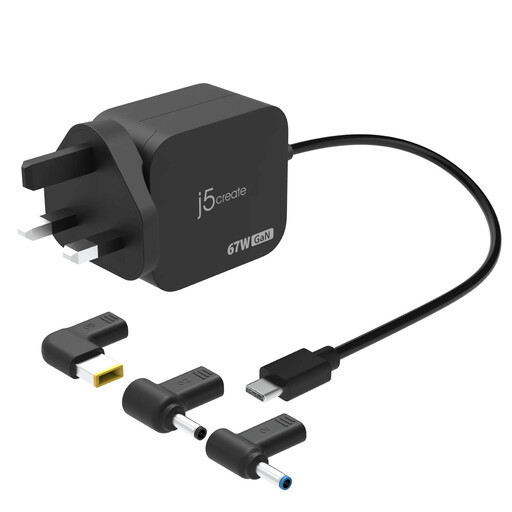
Why This Fits Their Persona: Perfect for the user who has a modern smartphone but also relies on an older work or personal laptop that uses a traditional DC barrel-style charging port, not USB-C.
It prevents the frustrating scenario of buying a powerful USB-C charger only to find it's incompatible with your main laptop. The included connectors bridge the gap between old and new tech.
The inclusion of 6 detachable DC connectors offers exceptional versatility, providing compatibility with a wide range of laptops from brands like Dell, HP and Lenovo.
We have compiled a complete, real-time list of products that fully satisfy these strict selection criteria and UK safety regulations.
For most people, yes. If you have more than one device to charge, especially a laptop, a GaN charger is worth considering. The main benefit is convenience: you can replace several bulky power bricks with a single, smaller and more efficient plug. This is particularly useful for travel and for keeping desk spaces tidy.
To charge both simultaneously at a good speed, you should look for a multi-port charger with at least 65W of total output. A good configuration would be one that can deliver 45W to your MacBook and 20W to your iPhone at the same time. For larger 15-inch or 16-inch MacBook Pro models, a charger that can supply 87W or more to a single port is advisable for charging at maximum speed.
No, the cable is just as important as the charger. To take advantage of high-wattage charging (above 60W), you need a USB-C cable that is rated for that power level, often marked as a "100W" or "E-Marker" cable. Using a standard, lower-rated cable with a powerful charger will result in the charger reducing its output to a level the cable can safely handle, meaning you won't get the fast charging speeds you paid for.