
24/7 Customer Support

Free returns

Same-day & Next-day Delivery

Quality Guaranteed

Unlock Your Welcome Offers: FREE Delivery | Up to 80% OFF | Free 30-day JoyPlus trial
Download the APP
As our collection of devices grows, so does the tangle of cables and bulky power bricks cluttering our bags and wall sockets. The promise of a single, powerful GaN charger to power everything from your laptop to your phone is appealing. However, the market is filled with options that often over-promise and under-deliver. Many buyers find themselves with a charger that is slow, overheats, or simply isn't as practical as advertised.
Before you invest in a new charging solution, it is important to understand the common traps that lead to disappointment and wasted money.
To choose a charger that truly meets your needs, focus on these three critical factors instead of just the marketing headlines.
The most important specification is not the total wattage, but how that power is distributed. Look for the single-port maximum output. If you need a 100W laptop charger, ensure that at least one USB-C port can deliver 100W on its own.
Modern devices use a standard called Power Delivery (PD) to negotiate charging speeds. A charger with PD can communicate with your device to supply the optimal amount of power. For a fast phone charger or a MacBook charger, a Power Delivery adapter is essential for achieving the quickest charging times safely. Always check the detailed specifications for how power is split when multiple ports are in use.
The ports on your charger determine its versatility.
The "GaN" in GaN charger stands for Gallium Nitride. This semiconductor material is more efficient than the traditional silicon used in older chargers. This efficiency means less energy is wasted as heat, allowing manufacturers to build smaller, more powerful chargers without them overheating.
However, not all GaN chargers are created equal. Always choose chargers that have clear safety certifications (like CE and UKCA markings). These certifications indicate that the product has been tested to meet UK safety, health and environmental protection standards, safeguarding against issues like over-voltage and short-circuiting.
Instead of providing a generic list, we have matched specific chargers to different user needs, helping you find a practical solution for your lifestyle.
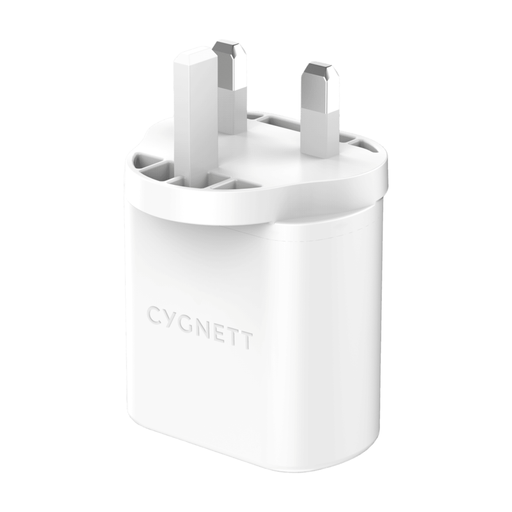
Why This Fits Their Persona: Ideal for students and professionals who primarily need to charge a phone and one accessory (like earbuds or a tablet) simultaneously. Its compact size and foldable plug make it perfect for throwing in a backpack without taking up space or snagging on other items.
It directly counters the "compact illusion" with a genuinely travel-friendly design. The foldable UK plug ensures it won't block adjacent sockets or get damaged in a bag.
Features a 20W USB-C PD port for fast charging modern phones and a 12W USB-A port for legacy devices. Intelligent power allocation optimises charging for both ports.
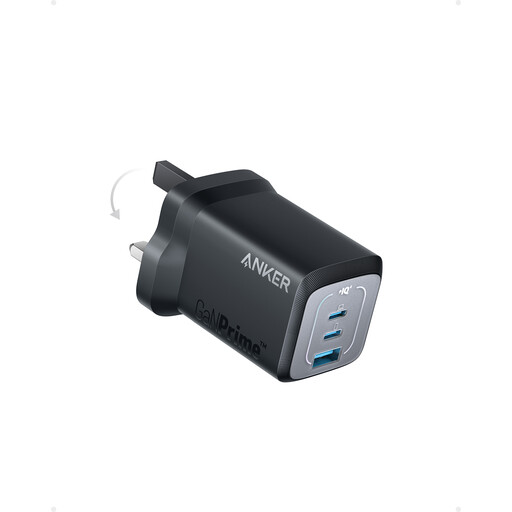
Why This Fits Their Persona: For the user juggling a work laptop (like a MacBook Air/Pro), a smartphone and a tablet. This charger provides enough power to charge a laptop from a single port while still having two other ports available for other essential devices, consolidating three chargers into one.
It avoids the "total wattage" myth by clearly stating its capability: connect a single device for up to 67W, which is ample for most modern ultrabooks. Its compact size is a genuine benefit of GaN technology.
Features two versatile USB-C ports and one USB-A port. According to Anker, its ActiveShield 2.0 safety system provides enhanced temperature monitoring for safer charging.
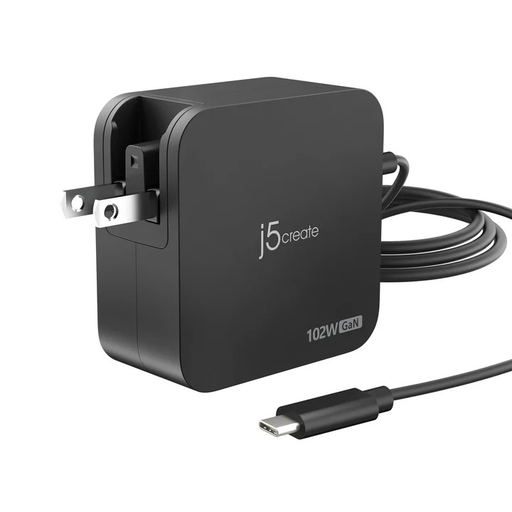
Why This Fits Their Persona: This is the ultimate **travel charger UK** residents can take abroad. It's for the person who travels frequently for work or leisure and needs a single, powerful charger that works in multiple countries without needing a separate, clunky travel adapter.
It solves the problem of regional plug incompatibility. Instead of being a bulky UK-only plug, its core feature is a set of changeable AC plugs, making it a truly global, space-saving solution.
Offers a high 102W total output across two USB-C ports, capable of charging two laptops or a laptop and a tablet simultaneously. The inclusion of changeable plugs is its standout feature.
We have compiled a complete, real-time list of products that fully satisfy these strict selection criteria and UK safety regulations.
Yes, it is perfectly safe. Modern chargers with USB Power Delivery (PD) are intelligent. The charger and your phone will communicate to ensure the phone only draws the amount of power it can safely handle. Using a higher-wattage charger will not damage your device; it simply provides the flexibility to also charge more power-hungry devices like laptops.
If you only ever charge a single smartphone, a simple 20W or 30W USB C fast charger will be sufficient and more cost-effective. The main advantage of a higher-wattage, multi-port GaN charger is its ability to replace multiple power bricks, reducing clutter and providing a single solution for all your devices, including future purchases. It is an investment in convenience and future-proofing.
A well-made GaN charger from a reputable brand should last for many years, often outliving the devices it charges. Key factors for longevity are build quality and internal safety protections against overheating and power surges. Look for products that come with a manufacturer's warranty, as this indicates the brand's confidence in its durability.