
24/7 Customer Support

Free returns

Same-day & Next-day Delivery

Quality Guaranteed

Unlock Your Welcome Offers: FREE Delivery | Up to 80% OFF | Free 30-day JoyPlus trial
Download the APP
Tired of a tangled mess of cables and a collection of bulky power bricks for your laptop, phone and tablet? If you're juggling multiple chargers or waiting ages for your devices to power up, you're not alone. The standard chargers that come with our gadgets often aren't powerful or versatile enough for a modern, multi-device lifestyle.
This is where a GaN charger comes in. These compact and powerful chargers use Gallium Nitride (GaN) technology to deliver faster, more efficient charging in a much smaller package. This guide will walk you through what to look for when choosing a GaN charger and present a few standout options to help you simplify your setup, whether at home, in the office or on your travels.
Before diving into specific products, it's helpful to understand a few key features. Keeping these points in mind will ensure you select a charger that perfectly matches your needs.
A charger's power output, measured in watts (W), determines how quickly it can charge your devices. A higher wattage doesn't automatically mean better; it's about matching the power to your device's requirements.
Always check your device's specifications to find its maximum supported charging speed.
One of the main advantages of a modern charger is the ability to power multiple devices at once. A multi-port USB charger can replace three or four separate plugs, making it an ideal desk charging station or travel charger adapter. Consider the types of devices you own. A mix of USB-C and older USB-A ports can offer great flexibility, but for future-proofing, prioritising USB-C is a smart move.
GaN technology allows chargers to be significantly smaller and lighter than traditional silicon-based models without overheating. This is especially useful for a laptop charger USB-C that you need to carry daily. Also, ensure any charger you consider has built-in safety protections, such as safeguards against over-voltage, over-current and overheating, to protect your valuable electronics.
Here are a few recommendations that cater to different needs, from the frequent traveller to the home office professional.
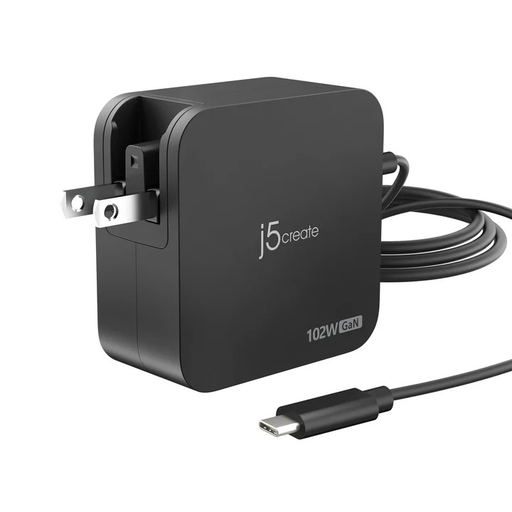
Why It Stands Out: This charger is built for power and travel. With a total output of 102W split across two USB-C ports, it can comfortably charge a powerful laptop and a tablet or smartphone simultaneously. Its standout feature is the set of changeable AC plugs, making it an excellent companion for international trips.
Pros:
Who is it for? This is a strong option for professionals and frequent travellers who need to power a high-performance laptop and another device without carrying multiple bulky chargers.

Why It Stands Out: If your goal is to declutter your workspace, this REMAX charger is designed to be a central hub. With four ports—two USB-C and two USB-A—it offers fantastic versatility for charging a mix of new and older gadgets at the same time. The 65W total output is ample for charging a standard laptop, phone and accessories all at once.
Pros:
Who is it for? Ideal for home or office use. If you want to create a tidy desk charging station for your laptop, phone, smartwatch and headphones, this is a practical solution.
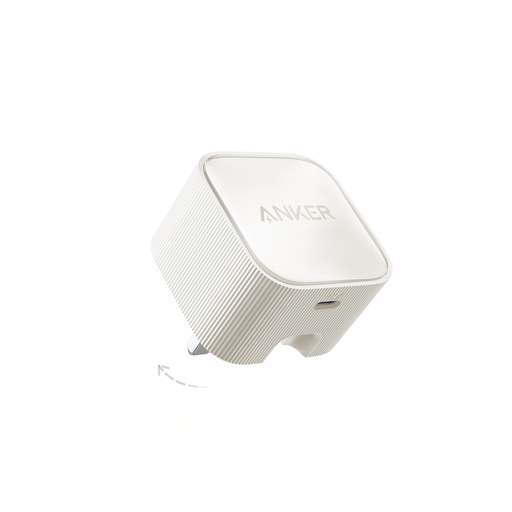
Why It Stands Out: Portability is the main attraction of the Anker Nano. This tiny charger is small enough to fit in any pocket, but its 30W output provides a significant speed boost for phones and tablets. The foldable prongs make it even more convenient for travel, preventing it from snagging or scratching other items in your bag.
Pros:
Who is it for? This is a great choice for commuters, students or anyone who prioritises a lightweight, pocketable USB-C fast charger for their primary mobile device.
If these specific models don't quite match what you're looking for, or if you need a different combination of power and ports, there are many other solutions available.
Explore our full range of modern charging solutions to find the perfect fit for your setup.
Browse our complete collection of Charger Plugs
1. What is a GaN charger and is it better? A GaN charger uses Gallium Nitride, a semiconductor material that is more efficient than the traditional silicon used in most chargers. This efficiency allows GaN chargers to be smaller, lighter and run cooler while delivering the same or even more power. For users, this means a more portable and powerful charging experience.
2. Can I use a 100W GaN charger for my phone? Yes, you can. Modern chargers and devices use protocols like USB Power Delivery (PD) to communicate. The charger will only supply the amount of power the device requests. So, a 100W charger will safely charge a phone that only needs 20W. It won't damage the battery; it simply has the capacity to charge more demanding devices like laptops as well.
3. Do I need a special cable for a GaN charger? To take full advantage of a high-wattage GaN charger, you need a cable that is rated to handle the power. For charging a laptop with a 65W or 100W charger, ensure you are using a USB-C to USB-C cable that is rated for 100W or has an "E-Marker" chip. Using a standard, low-quality cable may result in slower charging speeds or may not work at all for high-power devices.