
24/7 Customer Support

Free returns

Same-day & Next-day Delivery

Quality Guaranteed

Unlock Your Welcome Offers: FREE Delivery | Up to 80% OFF | Free 30-day JoyPlus trial
Download the APP
As our collection of devices grows, from smartphones and tablets to laptops and wireless earbuds, the humble wall plug has become a battleground for charging space. A GaN charger promises a solution: one compact, powerful plug to replace them all. However, the market is filled with confusing specifications and marketing claims. Many UK buyers find their new "fast charger" is anything but, or that it's surprisingly impractical.
Before you invest, it's crucial to understand the common pitfalls that lead to a disappointing purchase.
To choose the right GaN charger, you need to look beyond the headline numbers. Here are the three core parameters to check before you buy.
The most important specification is not the total wattage, but how that power is delivered. Look for a detailed breakdown of the power output per port and in combination.
For a charger to perform as a USB C fast charger, it must "speak the same language" as your device. The key protocols to look for are:
The ideal multi-port wall charger should match your device ecosystem and be practical for daily use.
Based on these practical criteria, we've matched several chargers to different user needs.
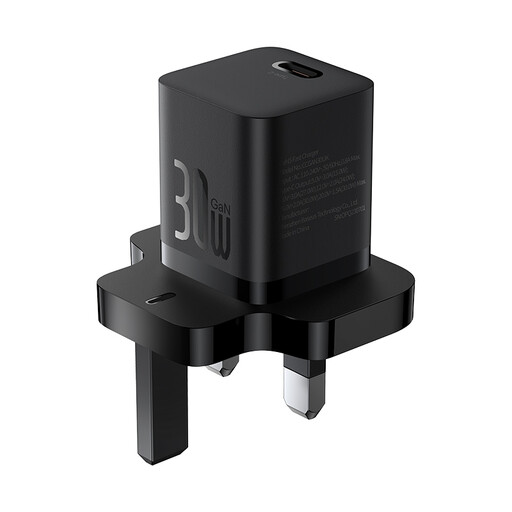
Why This Fits Their Persona: Ideal for the UK commuter or light traveller who needs to fast-charge a single device like an iPhone or Pixel. Its tiny form factor doesn't add bulk to a bag and won't block other sockets in a hotel or coffee shop.
Its purpose is clear: 30W from a single port. There is no confusing "total wattage" or complex power-splitting to worry about. It does one job and does it well.
Extremely compact and lightweight due to GaN5 technology. Supports PD fast charging for a wide range of modern smartphones.
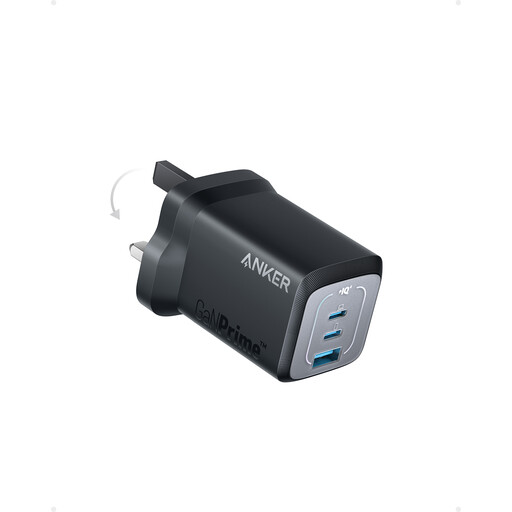
Why This Fits Their Persona: For the professional or student who carries a laptop, phone and tablet. This charger can power a USB-C laptop (like a MacBook Air/Pro) at a full 67W, or intelligently split the power to charge multiple devices efficiently from a single plug.
It directly addresses the "Total Wattage" trap by clearly stating its capabilities: "Connect a single device to charge up to 67W" and "65W Max Two-Port Charging". This transparency allows users to set correct expectations.
High single-port output for laptops and smart power distribution. Its compact size is significantly smaller than original manufacturer laptop chargers.
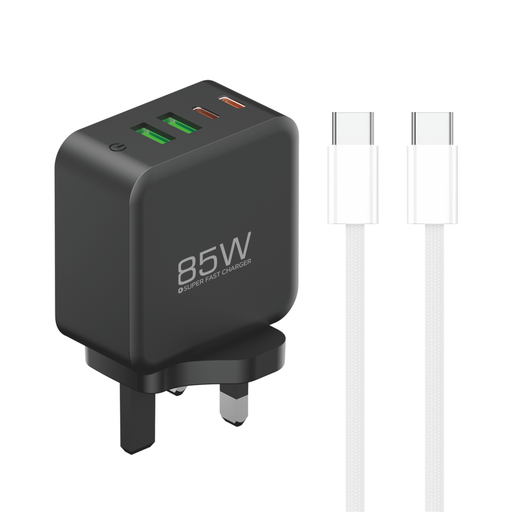
Why This Fits Their Persona: Perfect for a family kitchen counter or a shared office desk. With four ports (two USB-C, two USB-A), it can charge a mix of new and older devices simultaneously, from a modern laptop to a wireless headphone case that still uses USB-A.
The product details provide a clear power distribution map (e.g., "A2+C2=65W"), removing the guesswork of how much power each device will receive when the charger is fully loaded.
High port count (4) to reduce clutter. Supports a wide range of fast-charging protocols for multiple brands, including Samsung, Xiaomi and Apple.
We have compiled a complete, real-time list of products that fully satisfy these strict selection criteria and UK safety regulations.
For most modern ultrabooks and compact laptops, such as a MacBook Air, 13-inch MacBook Pro or Dell XPS 13, a 65W laptop charger is perfectly sufficient for both use and charging. However, for high-performance 15/16-inch models or gaming laptops, you should check the wattage of the original charger supplied by the manufacturer. These may require 90W or more for optimal performance under heavy load.
No. Modern chargers, including GaN models, are equipped with smart ICs (Integrated Circuits) that communicate with the connected device. The charger will only deliver the maximum amount of power the device can safely accept. You can safely plug an old Kindle or a set of wireless earbuds into a high-wattage GaN charger without any risk of damage.
It is normal for any charger to become warm to the touch during operation, especially when delivering high power. GaN technology is more energy-efficient than traditional silicon, meaning less energy is wasted as heat. While they generally run cooler than older chargers of equivalent power, they will still generate some warmth. Always ensure the charger is used in a well-ventilated area and is not covered.