
24/7 Customer Support

Free returns

Same-day & Next-day Delivery

Quality Guaranteed

Unlock Your Welcome Offers: FREE Delivery | Up to 80% OFF | Free 30-day JoyPlus trial
Download the APP
Tired of carrying a different charger for every device? A modern GaN USB C charger promises to be the single plug that powers your laptop, phone and tablet. Yet, navigating the market can be frustrating. Many shoppers end up with a charger that either underperforms or is simply the wrong fit for their needs. Before you buy, it's crucial to understand the common pitfalls that lead to wasted money and a drawer full of useless plugs.
As the Joybuy Product Recommendation Officer, my role is to help you see past the marketing jargon. Let's look at the frequent traps UK consumers fall into and how you can avoid them.
To choose the right GaN USB C charger, you need to look beyond the headline numbers. Here are the three non-negotiable factors to check.
The key to effective fast charging is the PD 3.0 power adapter standard. This technology allows the charger and your device to communicate and negotiate the optimal charging speed. But the most important detail is how that power is distributed across the ports.
Always check the manufacturer's specifications for multi-port output. A good charger will clearly state the wattage for different combinations, for example:
This information tells you if it can still provide enough power for your laptop (e.g., 45W) while also charging your phone. This is the only way to know if a 67W fast charger will truly meet your multi-device needs.
GaN, or Gallium Nitride, is a semiconductor material that has revolutionised charger design. Compared to traditional silicon, GaN components can handle higher voltages and run more efficiently.
For you, this translates to two practical benefits:
Finally, consider the ports you actually need. Modern devices, from the latest iPhones to a fast charger for MacBook Pro, predominantly use USB-C for high-speed charging. If all your main devices are new, a charger with multiple USB-C ports is the most future-proof option. However, if you still have devices that use the older, rectangular USB-A standard (like smartwatches, power banks or older phones), a model with a mix of USB-C and USB-A ports offers greater versatility.
Based on these practical criteria, we've matched a few options to different user needs. These selections prioritise clear specifications, safety compliance and real-world usability.
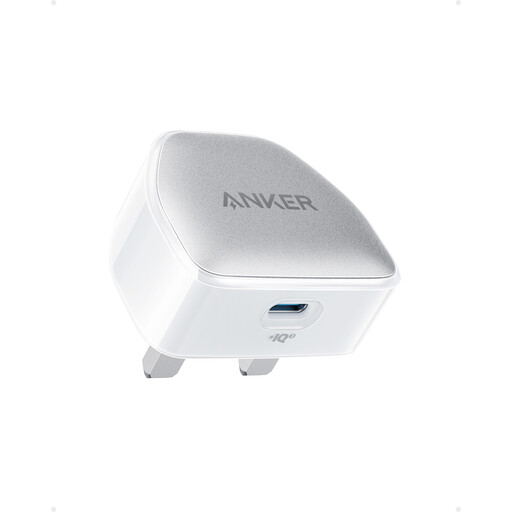
Why This Fits Their Persona: Perfect for the UK user who primarily needs a dedicated, high-speed charger for their smartphone. It's an ideal iPhone fast charger plug that doesn't take up unnecessary space in a bag or on a power strip.
It avoids the "Wattage Hype" trap by providing exactly what's needed for fast-charging a phone (20W) without the cost or bulk of a higher-power laptop charger.
Extremely compact and lightweight. Features ActiveShield safety monitoring for temperature control, addressing safety concerns.
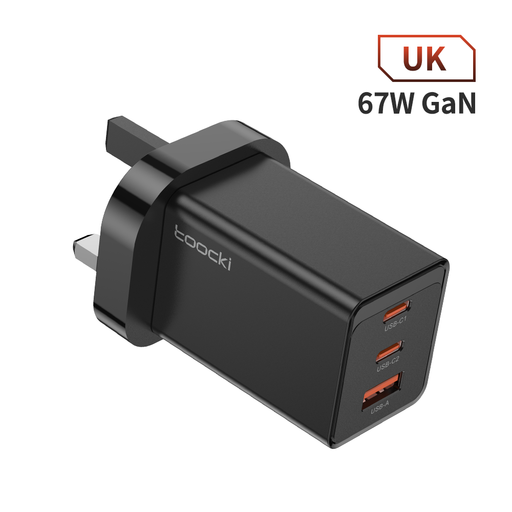
Why This Fits Their Persona: An excellent all-rounder for those juggling a laptop (like a MacBook Air or Dell XPS 13), a phone and another accessory. It's powerful enough for work or study, yet compact enough for the daily commute or library session.
This charger avoids the "Port Illusion" by using smart power distribution. It can deliver up to 67W from a single USB-C port for a laptop, or split the power intelligently (e.g., 45W+20W) when two devices are connected.
Versatile 3-port design (2x USB-C, 1x USB-A) covers both new and older devices. The GaN technology ensures it remains compact and cool despite its high power output.
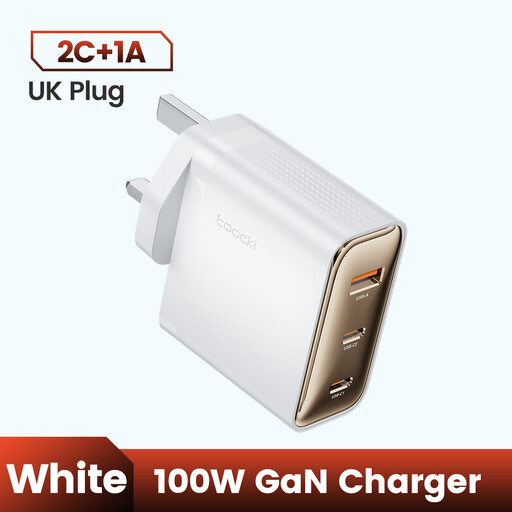
Why This Fits Their Persona: For the tech-savvy professional or traveller with a high-performance laptop (like a MacBook Pro 16"), a tablet and a smartphone. This is the single-brick solution for powering an entire mobile office.
This is a genuine 100W laptop charger that correctly manages its power. It delivers the full 100W via a single port for demanding laptops, and its specifications clearly outline how power is split when all three ports are in use.
Maximum power output for the most demanding devices. The foldable plug makes it an exceptionally practical travel wall charger UK, saving space and preventing damage in a bag.
We have compiled a complete, real-time list of products that fully satisfy these strict selection criteria and UK safety regulations.
A GaN charger that is certified with UKCA and CE markings is designed with multiple safety protections, including over-voltage, over-current and over-heating systems. These features make it generally safe for overnight use, just like any other certified electronic device. However, it is always good practice to ensure the charger is in a well-ventilated area and not covered by bedding or other materials.
To get the full benefit of a high-wattage charger, you need a cable that is rated to handle the power. For charging above 60W, you will need a USB-C cable that is specifically rated for 100W (or higher). Using an older, lower-rated cable with a powerful charger will limit the charging speed to what the cable can safely handle.
No, it will not. Thanks to the Power Delivery (PD) protocol, the charger and your phone "talk" to each other to determine the correct amount of power. The charger will only supply the maximum wattage that the phone is designed to safely accept. You can safely plug a low-power device into a high-power charger without risk of damage.