
24/7 Customer Support

Free returns

Same-day & Next-day Delivery

Quality Guaranteed

Unlock Your Welcome Offers: FREE Delivery | Up to 80% OFF | Free 30-day JoyPlus trial
Download the APP
As our collection of devices grows, so does the tangle of cables and bulky plugs behind the sofa. Finding one mains plug to power a laptop, phone and tablet efficiently can feel like a challenge. The market is flooded with options, but many fail to deliver on their promises. This guide cuts through the clutter, highlighting common pitfalls to help you choose a reliable GaN USB C charger that simplifies your setup.
Before you buy, be aware of these frequent issues that can lead to a disappointing purchase:
To ensure you get a charger that performs as expected, focus on these core specifications.
The total wattage of a charger determines how much power it can supply. A smartphone might only need 20W for a fast charge, but a modern laptop often requires a 65W laptop charger or even a 100W fast charger to power up efficiently.
The most important technology to look for is Power Delivery (PD). This is a charging standard that allows a charger and a device (like a fast charger for an iPhone or a MacBook Pro charger) to communicate and negotiate the optimal charging speed. A Power Delivery wall plug ensures your device receives the maximum power it can safely handle, without risk of damage.
A modern charger should offer flexibility. While USB-C is the new standard for fast charging and is found on most new laptops and phones, you likely still own devices that use the older USB-A connector (the classic rectangular one). A good USB C and A mains charger provides both port types, allowing you to charge older accessories like wireless headphones or power banks alongside your new USB-C gadgets.
This is the key innovation behind the latest generation of chargers. Gallium Nitride is a material that is far more efficient at conducting electricity than the traditional silicon used in older plugs. For you, this means a GaN USB C charger can be significantly smaller, lighter and run cooler while delivering the same amount of power. This technology is what makes it possible to have a powerful, pocket-sized charger that can replace multiple bulky power bricks.
Instead of a one-size-fits-all approach, we have matched a few standout options to different user needs.
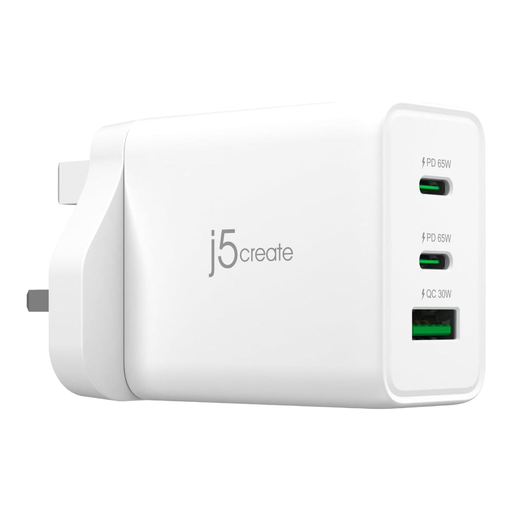
Why This Fits Their Persona: Perfect for those who carry a laptop, phone and one other accessory. It's compact enough for a backpack and powerful enough to charge a standard laptop and phone simultaneously without taking up multiple plug sockets in a crowded library or café.
It features intelligent power balancing, which automatically adjusts the output to each port. This avoids the "maximum wattage" myth by ensuring devices get a stable and efficient charge, even when all three ports are in use.
Its main benefit is versatility. With two USB-C ports and one USB-A port, it covers both modern and older devices in a single, compact GaN unit. It also includes built-in surge and overheating protection.
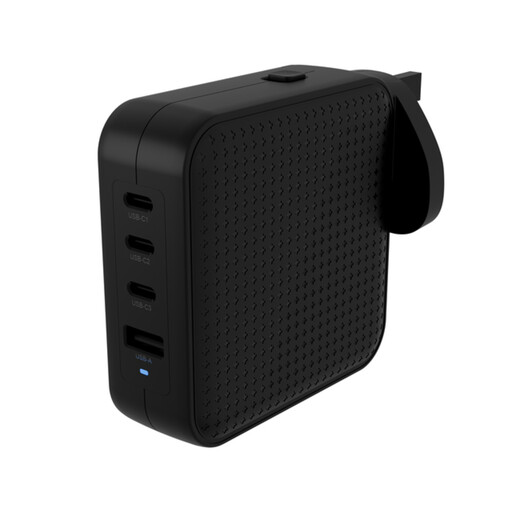
Why This Fits Their Persona: For the professional juggling a high-power laptop like a MacBook Pro, a tablet, a phone and headphones. This charger provides enough power and ports to charge everything from a single outlet, whether at a client's office, a hotel or a home workspace.
It offers transparent dynamic power distribution, clearly stating how its 100W output is shared (e.g., 65W + 30W). It also includes interchangeable plugs for the UK, EU and US, solving the flimsy travel adapter problem with a robust, integrated solution.
Its primary advantage is its combination of high power and port density. With three USB-C ports and one USB-A port, it can genuinely replace four separate chargers. It is CE/FCC/RoHS certified for safety.
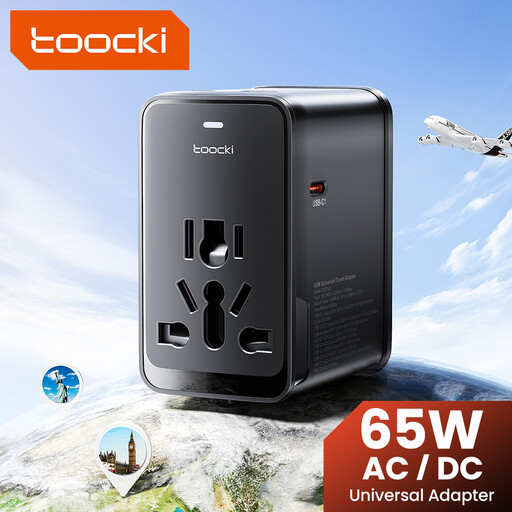
Why This Fits Their Persona: This is for the person who frequently travels abroad and wants a single, reliable plug for all their devices. It eliminates the need to pack a separate charger and a set of clunky travel adapters, saving valuable luggage space.
It directly solves the flimsy adapter problem by integrating sliders for EU, UK, US and AUS plugs into a single, sturdy unit. It also incorporates 65W GaN charging, providing laptop-level power that most generic travel adapters lack.
The all-in-one design is its greatest strength. It combines a powerful 65W multi-port charger with a true universal adapter, offering four ports (3x USB-C, 1x USB-A) for maximum convenience on the road.
We have compiled a complete, real-time list of products that fully satisfy these strict selection criteria and UK safety regulations.
No, a quality charger with Power Delivery (PD) technology is designed to be safe for lower-power devices. The charger and your phone will "negotiate" the correct amount of power. The charger will only supply the wattage your phone is designed to accept, so a 100W charger will not harm a 20W phone.
Yes, the cable is just as important as the charger. To get the full benefit of a 65W or 100W charger, you must use a USB-C cable that is rated to handle that amount of power. Using an old, low-wattage cable will create a bottleneck and your devices will charge much more slowly. Look for cables that are explicitly rated for 60W, 100W or higher.
Reputable GaN chargers that meet UKCA/CE safety standards are built with multiple protection systems. These typically include safeguards against over-voltage, over-current, short-circuiting and over-temperature. This allows them to be left plugged in, as they are designed to manage heat and power flow safely. However, as with any electronic device, it is good practice to unplug chargers when not in use for extended periods.