
24/7 Customer Support

Free returns

Same-day & Next-day Delivery

Quality Guaranteed

Unlock Your Welcome Offers: FREE Delivery | Up to 80% OFF | Free 30-day JoyPlus trial
Download the APP
Tired of a tangled mess of chargers for your phone, laptop and tablet? A modern GaN USB-C charger promises to be the single, compact solution. Yet, the market is flooded with options, and it's easy to buy a plug that either underperforms or, worse, is unsafe. Many UK consumers find themselves with a charger that can't power their laptop and phone simultaneously, or one that gets alarmingly hot.
As a Joybuy Product Recommendation Officer, my role is to help you navigate past the marketing clutter. Before you buy, be aware of these common pitfalls that lead to wasted money and frustration.
To choose a reliable GaN USB-C charger in the UK, focus on these core parameters instead of just the advertised headline features.
The wattage (W) determines how fast your device can charge. It's not one-size-fits-all.
The right mix of ports ensures you can charge all your gadgets without needing multiple plugs.
Never compromise on safety. A trustworthy charger is built with flame-retardant materials (often listed as flame-retardant PC) and includes multiple internal protections against over-voltage, over-current and overheating. Always check for the UKCA certification, which indicates the product complies with UK safety regulations.
We've filtered through the options to match different needs. Here are several chargers that align with our strict criteria for performance and safety.

Why This Fits Their Persona: For those who travel light between home and the office, this charger is ideal. It's a compact travel wall plug that can fast-charge an iPhone and an iPad simultaneously or a single device like a MacBook Air, without taking up much space in a bag.
It has a clear power distribution: 20W+20W when both ports are used. This avoids the trap of expecting full power from one port while another is active, providing consistent fast charging for two devices.
Its advanced GaN technology allows for a very small size despite its 40W dual-port output. It supports multiple fast-charging protocols for wide compatibility.
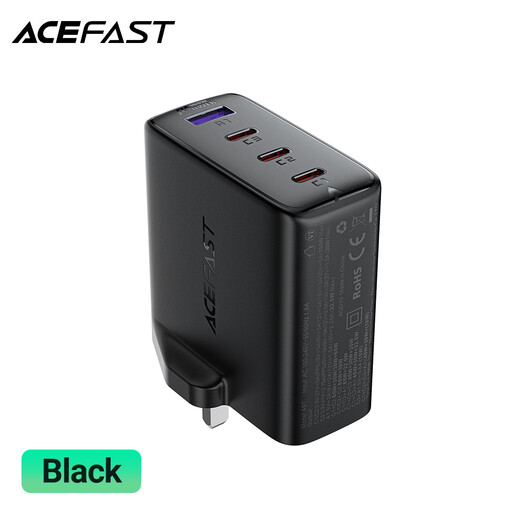
Why This Fits Their Persona: For professionals juggling a laptop, phone and other gadgets, this is a true desktop replacement. It acts as a powerful 100W laptop charger while still having three other ports to power a Samsung fast charger, an iPad and headphones simultaneously.
This charger offers a high single-port output of 100W, directly addressing the "Total Wattage" trap. It has intelligent power allocation to ensure a connected laptop receives priority power, even with other devices plugged in.
Its 4-port design (3x USB-C, 1x USB-A) offers maximum versatility, replacing up to four separate chargers. It is UKCA certified and made from flame-retardant materials for safety.
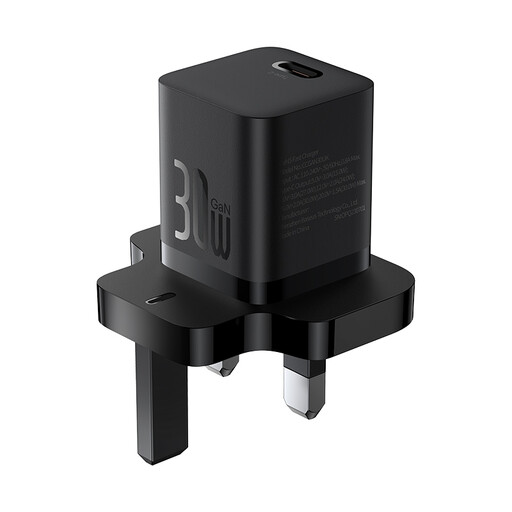
Why This Fits Their Persona: If you're simply looking for a reliable and affordable fast charger for an iPhone or Android device, this is an excellent starting point. It's a no-fuss, single-port compact phone charger that delivers a noticeable speed boost over standard plugs.
By focusing on a single port, it avoids any confusing power-splitting issues. You get a dedicated 30W output. It also features a 9-layer protection system, steering clear of the safety gamble associated with cheap, uncertified chargers.
It offers a great balance of price, performance and size. The GaN5 technology keeps it pocket-sized while Baseus Cooling Technology helps manage heat effectively during fast charging.
We have compiled a complete, real-time list of products that fully satisfy these strict selection criteria and UK safety regulations.
No. A certified PD power adapter uses the Power Delivery protocol to communicate with your device. The charger will only supply the amount of power that your phone, tablet or laptop can safely accept. A 100W charger will not harm a phone that can only take 20W.
Yes, the cable is just as important as the charger. To get the full benefit of a high-wattage charger, especially for a laptop, you need a USB-C cable that is rated for that power. For example, to charge at 100W, you need a USB-C cable specifically rated for 100W power delivery. Using an older, lower-rated cable will limit the charging speed.
Modern, certified GaN chargers are designed with safety features that stop drawing significant power once your devices are fully charged. While they are generally safe to leave plugged in, it is always good practice from a safety and energy-saving perspective to unplug chargers when they are not in use for extended periods.