
24/7 Customer Support

Free returns

Same-day & Next-day Delivery

Quality Guaranteed

Unlock Your Welcome Offers: FREE Delivery | Up to 80% OFF | Free 30-day JoyPlus trial
Download the APP
A chest freezer in the garage or an outbuilding is a practical solution for many UK households. It offers the space to bulk-buy groceries, store batch-cooked meals and handle seasonal overflow, helping you save time and money. However, placing a standard appliance in an unheated space can lead to costly problems. Before you buy, it is crucial to understand the common pitfalls that can make a seemingly good deal a poor investment.
As a Joybuy Product Recommendation Officer, my role is to help you navigate these choices by highlighting what truly matters. Many shoppers are caught out by a few key issues:
To ensure your new appliance performs reliably for years, focus on these non-negotiable specifications rather than marketing hype.
This is the single most important feature for an outbuilding chest freezer UK model. Look for appliances explicitly advertised with "Garage Ready," "Winter Security" or a similar term. This means the freezer is engineered to function correctly in low ambient temperatures, often down to -15°C or -18°C. Without this, your freezer is at risk of failing during the colder months. This technology ensures the compressor continues to run when needed, protecting your food regardless of the temperature in your garage.
Consider both the internal volume and the external footprint. A large capacity chest freezer is ideal for big families, but ensure you have measured the space where it will live.
Always measure the height, width and depth of the available space, leaving extra room at the back and sides for ventilation as specified by the manufacturer.
Beyond the basics, certain features significantly improve usability and running costs:
Based on these practical criteria, here are a few models suited to different UK household needs.
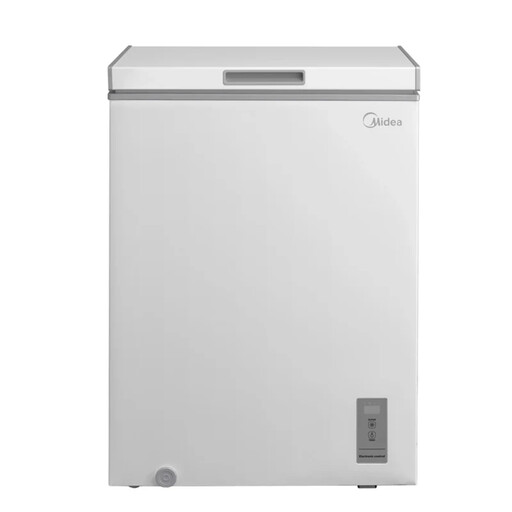
Why This Fits Their Persona: A great fit for smaller households or those with limited garage space who need reliable secondary storage without a huge footprint. Its 142-litre capacity is ideal for couples or as an overflow freezer.
It features explicit Winter Security technology, ensuring it operates reliably in ambient temperatures down to -18°C. This directly counters the common pitfall of standard freezers failing in cold UK winters.
Offers convertible fridge/freezer flexibility in a compact, quiet (41 dB) and efficient package. Includes a fast freeze function and a counter-balanced lid for safety.
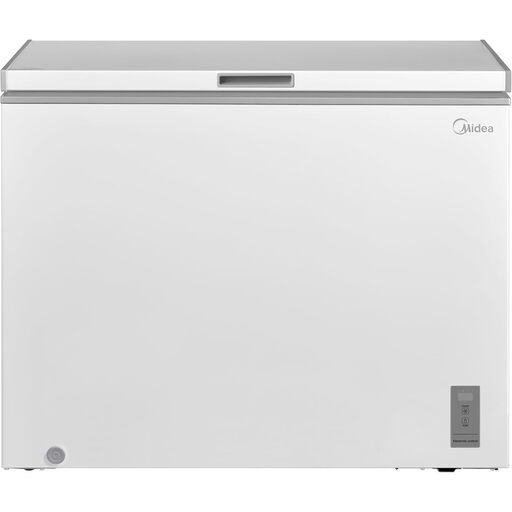
Why This Fits Their Persona: With a generous 249-litre capacity, this is ideal for families who take advantage of supermarket deals, batch cook for the week or need significant storage for homegrown produce.
Its Garage Safe design with Winter Security guarantees reliable operation in an unheated outbuilding. The convertible function also avoids the inflexibility of a freezer-only unit, adding value for seasonal events.
A large 249L capacity combined with the flexibility to switch to a fridge. It also includes electronic controls and a fast freeze function for ultimate convenience.
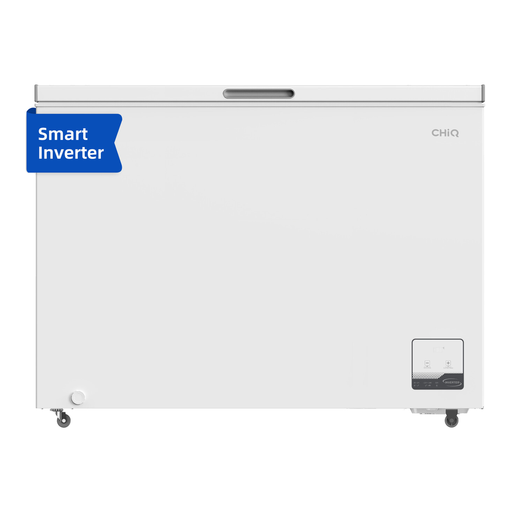
Why This Fits Their Persona: For those who need maximum storage and value advanced technology. The huge 299-litre capacity and inverter motor make it a powerful and efficient choice for serious bulk storage.
The advanced Inverter Compressor is more robust in fluctuating temperatures and more energy-efficient, directly tackling the pitfall of high running costs while providing reliable performance in a garage.
A very large capacity freezer with a powerful -32°C ultra-low freezing function. The inverter technology ensures it is also a quiet and energy-efficient choice.
We have compiled a complete, real-time list of products that fully satisfy these strict selection criteria and UK safety regulations.
No, it is not recommended. Standard chest freezers are typically designed for stable indoor ambient temperatures (usually between 10°C and 32°C). In a cold British garage, the external temperature can easily fall below this, causing the freezer's thermostat to switch off the compressor and your food to defrost. You must choose a model specifically designed as "garage ready" or with "winter security" to ensure it functions correctly in low temperatures.
The running cost depends on several factors: its size, its energy efficiency rating and how often you open it. Look for the official energy label; an energy efficient chest freezer with a better rating (e.g., D or E on the new scale) will be cheaper to run than one with a lower rating (F or G). Models with modern inverter compressors are also significantly more efficient than older, non-inverter types, helping to keep electricity bills down.
Chest freezers are generally considered more suitable for garage use. Because cold air is dense and sinks, less of it escapes when you open the top-loading lid of a chest freezer, making them more energy-efficient. They also offer a large, uninterrupted space that is perfect for bulky items. Upright freezers make it easier to see and organise contents on shelves, but they can lose more cold air when the door is opened.