
24/7 Customer Support

Free returns

Same-day & Next-day Delivery

Quality Guaranteed

Unlock Your Welcome Offers: FREE Delivery | Up to 80% OFF | Free 30-day JoyPlus trial
Download the APP
A garden bench cushion can make a wooden, metal or swing seat more comfortable, but choosing the wrong one often leads to wasted money. The most common problems are not always visible in product photos: an incorrect fit, a cover that cannot be washed and padding that shifts when people sit down.
UK weather adds another consideration. Even a cushion described as suitable for outdoor use may still need to be stored indoors or covered during prolonged rain. Before comparing colours and patterns, check the measurements, construction and care instructions.
A cushion that is too long may overhang the bench and become more exposed to moisture. One that is too short can leave hard edges uncovered and may move when used. Product dimensions can also describe the complete cushion rather than the usable seating area.
Measure your bench in centimetres, including:
Allow a small amount of tolerance, but avoid assuming that every “two-seater” or “three-seater” has the same dimensions.
Terms such as splash resistant and stain resistant describe how a cover may handle light spills or surface moisture. They do not mean the cushion can be left outside in persistent rain. A damp filling may take time to dry and can develop an unpleasant smell if stored without ventilation.
For most UK gardens, use a protective cover or bring the cushion indoors during wet weather. This is particularly important for a cotton-filled seat cushion, as the filling is designed for comfort rather than unrestricted outdoor exposure.
A removable cover is convenient, but not every padded bench seat cushion has one. Some covers can only be spot cleaned, while others may require specific washing temperatures or methods. Check this before buying if the cushion will be used by children, pets or near food.
A reversible decorative cushion may be more suitable for a covered patio or indoor seating area, where appearance and easy repositioning matter more than outdoor practicality.
A two-seater bench cushion is usually suited to a compact bench or swing seat, while a three-seater bench cushion provides a wider seating area. However, the stated seating capacity is only a guide. Compare the product’s exact width and depth with your furniture.
For a cushion with back support, check both the seat depth and back height. A cushion measuring 98 cm overall may include both the seat and back sections, so it is useful to review the individual measurements rather than relying on the headline size.
Padding affects how much support the cushion provides and how the seat feels over longer periods. Cotton filling can provide a soft, comfortable surface, while an 8 cm thickness adds noticeable cushioning over firm wooden or metal seating.
No filling remains identical indefinitely. Regularly shake out and reposition the cushion where possible, and do not compress it under heavy items during storage. If you need a replacement garden furniture cushion, compare its thickness with the original so the finished seat height remains practical.
Polyester covers are commonly chosen for outdoor seating because they are smooth, relatively easy to maintain and suitable for spot cleaning. Tie fastenings are useful on benches and swing chairs because they help hold the cushion in position when people sit down or when there is light movement.
Still, ties do not replace accurate sizing. Check whether the fastening points align with your furniture and keep knots secure without placing excessive strain on the fabric.
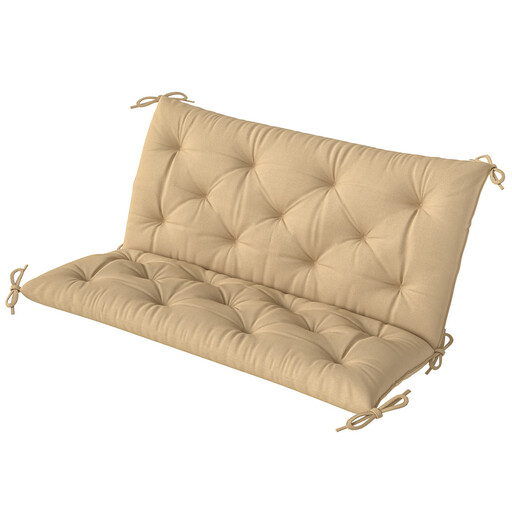
Why This Fits Their Persona: A practical size for a compact bench, balcony seating area or two-person swing chair, with a neutral khaki colour that works with wooden and metal furniture.
The listing gives the overall dimensions, seat depth and back height, while tie fastenings help limit movement. The cover is stated to be splash and stain resistant, but it is not machine washable, so spot cleaning and dry storage are required.
100 cm width; 8 cm padded construction; polyester cover; cotton filling; tie fastenings.
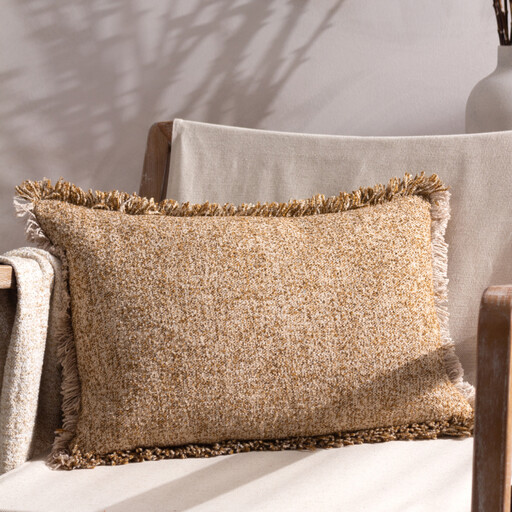
Why This Fits Their Persona: Designed for customers prioritising texture and appearance in a living room, reading corner or covered seating space rather than an exposed garden bench.
Its 40 x 60 cm rectangular format is clear, helping avoid assumptions about full bench coverage. The hidden zip supports care, but the instructions say not to machine wash or dry clean, so it should be maintained according to the label.
Reversible design; hidden zip fastening; 60% cotton and 40% polyester fabric; dual-toned woven finish.
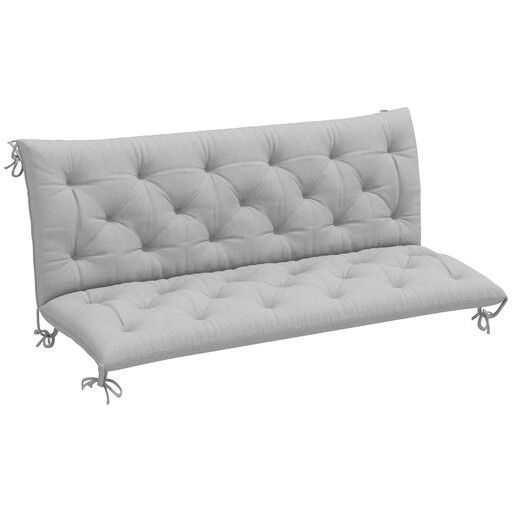
Why This Fits Their Persona: A wide option for family seating, larger garden benches and swing chairs used regularly for outdoor meals or relaxed afternoons.
The 150 cm width is specified for a broader seating layout, while ties help secure the cushion during use. It is splash and stain resistant and easy to spot clean, but the non-removable cover must not be machine washed.
150 cm width; 49 cm seat depth; 49 cm back height; 8 cm cotton-filled padding; light grey polyester cover.
We have compiled a complete, real-time list of products that fully satisfy these strict selection criteria and UK safety regulations.
Measure the bench seat’s usable width and depth, then measure the back section separately if choosing a cushion with back support. Compare these figures with the product’s listed overall dimensions, seat depth and back height. Also check whether arms, posts or hinges reduce the available space.
Outdoor cushions may handle light splashes, but they should not automatically be treated as waterproof. Follow the care instructions and store the cushion indoors or use a suitable protective cover during wet weather. Keeping the cushion dry can help preserve its fabric and filling.
Lifespan depends on use, storage, sunlight, moisture and cleaning. A cushion used daily on an exposed bench will experience more wear than one kept in a covered seating area. Correct sizing, regular repositioning and dry storage can help reduce avoidable damage, while the care label should guide all cleaning decisions.